Imagine an AI sifting through a virtual universe of one million potential battery electrolytes, all starting from a handful of initial data points. That’s precisely what Asst. Prof. Chibueze Amanchukwu’s team at the University of Chicago Pritzker School of Molecular Engineering (UChicago PME) has achieved.
The traditional approach to battery research is painstakingly slow. “Each experiment takes up to weeks, months to get data points ,” explains Ritesh Kumar, a Schmidt AI in Science Postdoctoral Fellow at UChicago PME. Millions of data points? Forget about it. That’s why this AI shortcut is so revolutionary.
Their findings, published in Nature Communications published , detail the development of an active learning model that identified four new electrolyte solvents that rival today’s best.
From Prediction to Experiment
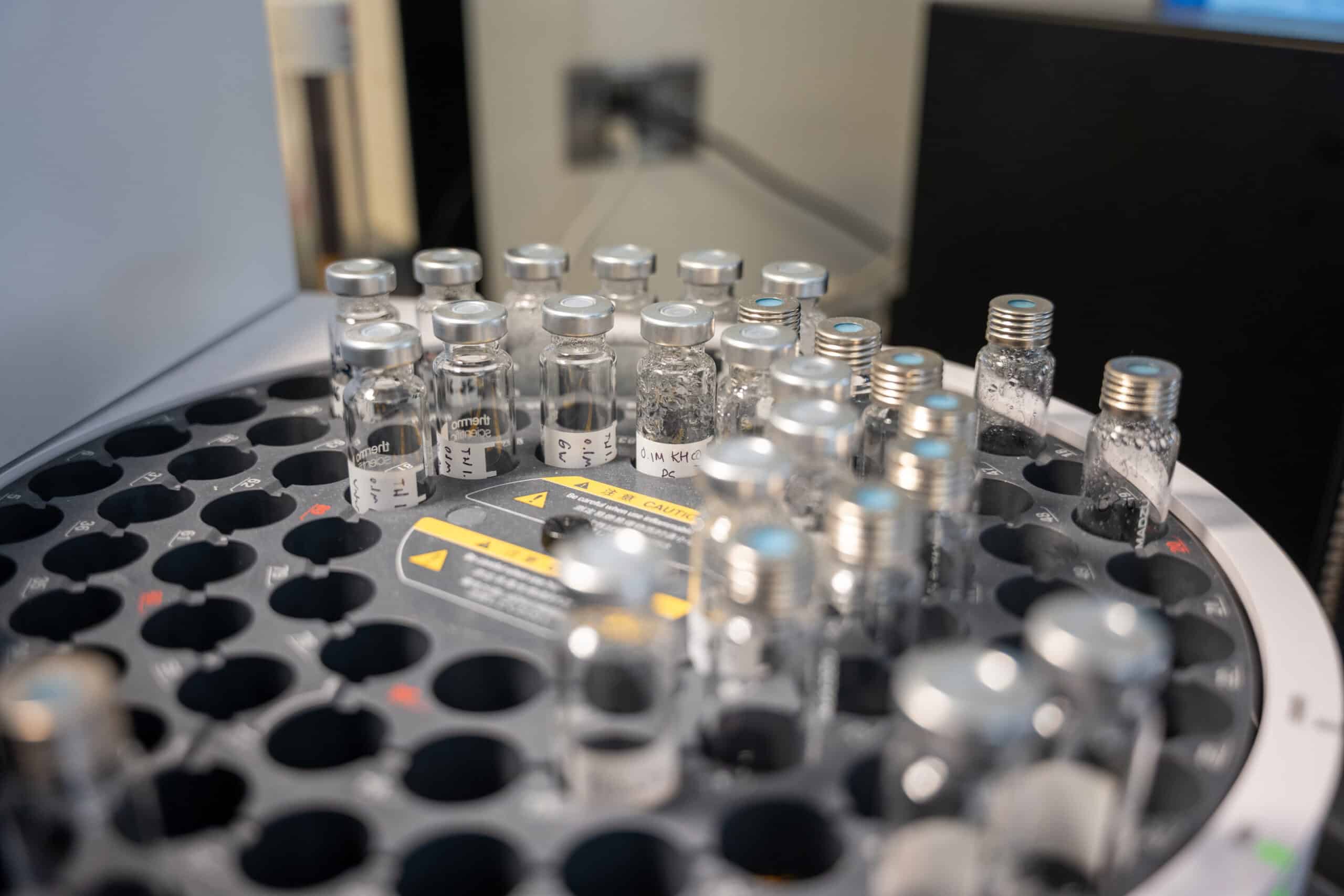
The secret sauce? Iterative refinement. The AI doesn’t just spit out predictions; it gets real-world feedback. The team actually built batteries with the AI-suggested electrolytes and tested them. Those experimental results are then fed back into the AI, creating a continuous loop of learning and improvement.
“Often in the literature, we see computational proxies as an output, but there is still a difference between a computational proxy and a real-world experiment. So here we bit the bullet and went all the way to experiments as a final output,” Kumar stated.
Extrapolating from a tiny dataset is inherently risky. The AI’s initial guesses are bound to be imperfect.
To combat this, the team employed a rigorous verification process. They continuously tested and retested the AI’s suggestions, focusing on electrolytes with the best discharge capacity.
After seven active learning campaigns, testing around 10 electrolytes each time, they homed in on those four top-performing candidates. As Kumar notes, “There’s no way we can remove the inefficiency of machine learning and AI models completely, but we should take advantage of what it’s good at, like we did in this case.” The alternative, of course, was testing one million electrolytes – an impossible task.
What if you could skip the initial 58 data points entirely? That’s the tantalizing prospect of a truly generative AI, according to co-first author Peiyuan Ma, Ph.D.
Instead of extrapolating from existing molecules, a generative AI could conjure entirely new configurations from scratch. Given the vastness of chemical space – potentially 10 to the 60th power – the possibilities are mind-boggling.
“That would mean we’re no longer limited,” Ma explains. “The model, in principle, can suggest some molecules that do not exist in any database.”
Beyond Cycle Life
Current AI models tend to focus on a single performance metric, typically cycle life. While crucial, it’s not the only factor that matters.
“For an electrolyte to be successfully commercialized, it needs to meet multiple criteria, like base capacity, safety, even cost,” Ma said. “We need future AI models to further filter the work, to pull the best electrolytes out from the best-performing electrolytes.”
“We are always biased toward what’s already available to us, but AI can provide us a way to come out of our bias,” Kumar said.
The UChicago team’s work highlights the transformative potential of AI in materials science. By removing human biases and accelerating the discovery process, AI could unlock a new generation of battery technologies, paving the way for a more sustainable energy future.