Over half of global operators are expected to deploy 5G standalone networks by the end of 2025, according to industry projections. 5G core spending rose 83 percent in Q4 2025 as communication service providers accelerate their infrastructure modernization. The 5G core itself is cloud-native and software-defined, comprising containerized network functions that handle session management, authentication, and policy control across distributed telco data centers.
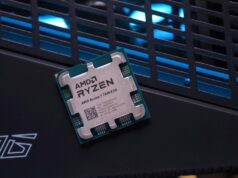
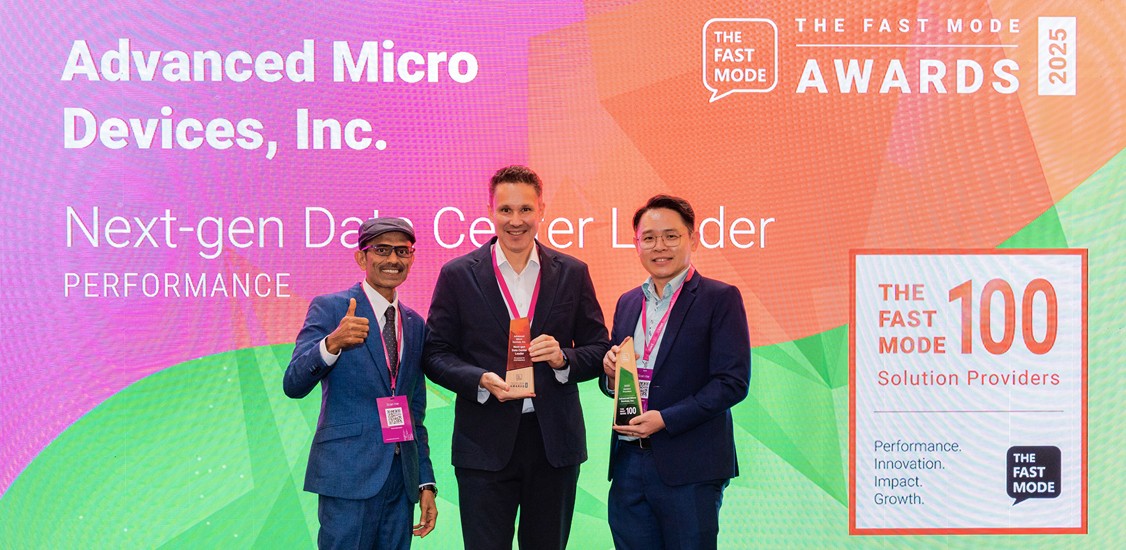
AMD’s EPYC processor family is engineered to address the compute intensity and low-latency requirements of 5G core networks. The processors boast over 300 world records for processor performance, earning AMD the Next-gen Data Center Leader title at The Fast Mode Awards in 2025. Key capabilities include industry-leading core counts, input-output bandwidth, and memory throughput designed specifically for containerized network function consolidation and virtual machine density optimization.
The processors integrate with AMD Instinct GPUs for real-time traffic analysis, predictive congestion management, and network-wide automated optimization. A recent HPE-AMD lab validation demonstrated cloud-native 5G core deployment using Red Hat OpenShift, confirming that high core density supports scalable, distributed architectures with centralized orchestration.
Indian operator Jio Platforms Limited rolled out 10 5G slices across its Jio True 5G network in 2025, leveraging a cloud-native 5G/4G Combo Core and Network Slicing Platform powered by AMD EPYC processors. The architecture achieved what the operator claims is the world’s most scalable 5G core User Plane Function, delivering 2.8 Tbps throughput per cluster. Network slicing enables telcos to provision tailored service-level agreements for different customer segments and use cases on a single physical infrastructure.
AMD achieved a 38x increase in node-level energy efficiency over five years. The company partnered with Tietoevry to optimize Kubernetes Power Manager, a solution that dynamically adjusts CPU core frequencies and workload placement to match compute demand without sacrificing performance.
Advanced cooling partnerships with Dell, HPE, and Lenovo enable immersion-cooled deployments. Energy company Shell deployed immersion-cooled AMD clusters, achieving smaller power density footprints and improved sustainability metrics. Energy efficiency is critical as 5G core workloads migrate from distributed edge locations to centralized data center racks.
AMD’s strategy centers on delivering high-performance, energy-efficient infrastructure as telcos prioritize programmability and power efficiency alongside raw performance. The company’s ecosystem approach, combining EPYC processors, Instinct GPUs, and open software stacks like ROCm, positions it as a comprehensive platform provider rather than a component supplier. Expect continued partnerships with major OEMs and telecom vendors as 5G SA adoption accelerates globally.
Follow Hashlytics on Bluesky, LinkedIn , Telegram and X to Get Instant Updates