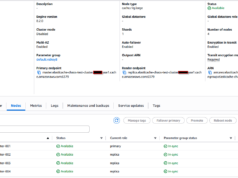
The attacks, detailed in an AWS threat intelligence report, did not rely on advanced malware. Instead, operators exploited a fundamental weakness in the cloud service model: misconfigured customer-controlled components. Attackers targeted edge devices and access gateways. such as routers and VPNs. that fall under the customer’s side of the shared-responsibility model. By targeting these weakly configured entry points, they gained access to critical infrastructure networks with less cost and risk, demonstrating that the primary vulnerability is often organizational governance, not sophisticated technology.
The incident reveals a fragmented and uneven regulatory environment for Critical Information Infrastructure (CII) protection in the region. The majority of ASEAN countries, including Indonesia, the Philippines, Brunei, Cambodia, and Laos, lack dedicated CII statutes. Instead, they rely on general cybercrime laws and personal data protection acts (PDPAs) as proxies for cybersecurity governance. This approach is poorly suited for protecting complex infrastructure, as PDPAs focus on data privacy rather than systemic resilience.
Some nations have more specific frameworks. Malaysia, for instance, empowers authorities to regulate critical information systems, but the model remains highly state-centric. In contrast, Singapore stands out as a regional leader. Its Cybersecurity Act is the only framework in ASEAN that extends enforceable obligations and liability directly to private-sector service providers, including cloud companies that support public services. This comprehensive approach reflects a regulatory maturity that most other member states, facing fiscal and institutional constraints, cannot currently replicate.
The core of the vulnerability lies in a mismatch between legacy regulations and modern cloud architecture. Existing CII protection regimes were designed for clearly defined systems under direct organizational control. However, modern critical services increasingly depend on cloud platforms and outsourced providers. This creates a regulatory “grey zone” where legal responsibility for customer-controlled components is formally assigned but operational oversight is weak. Attackers are actively exploiting this gap, which is widening as ASEAN governments accelerate their digital transformation initiatives.
The source material does not provide specific details regarding the Russian-led attacks on AWS, including the exact dates of the incidents, the specific government or commercial entities targeted, or the extent of any resulting data breaches or financial damages. Furthermore, the operational impact on the affected Western critical infrastructure was not quantified.
As ASEAN governments continue to pursue digitalization through smart cities, e-government platforms, and cross-border data flows, their collective attack surface is set to expand significantly. Without corresponding investments in cybersecurity skills and regulatory reforms that address the shared-responsibility model, these initiatives risk introducing new systemic vulnerabilities. The ASEAN Cybersecurity Cooperation Strategy aims to create a more coordinated regional approach, but its implementation remains dependent on the varying capacities of individual member states.
Based on the analysis, government agencies and enterprises in the region should consider the following actions:
- Update Legal Frameworks: Review and modernize national CII regulations to explicitly cover cloud services and the shared-responsibility model, assigning clear liability to both providers and customers.
- Enhance Technical Oversight: Implement mandatory risk assessments and security audits for all customer-controlled components within public-sector cloud environments.
- Invest in Human Capital: Increase funding and training programs to develop a larger pool of cybersecurity professionals with expertise in cloud architecture and security governance.
- Clarify Contractual Obligations: Ensure that contracts with cloud service providers clearly delineate security responsibilities, incident reporting requirements, and liability for misconfigurations.
Follow us on Bluesky , LinkedIn , and X to Get Instant Updates