
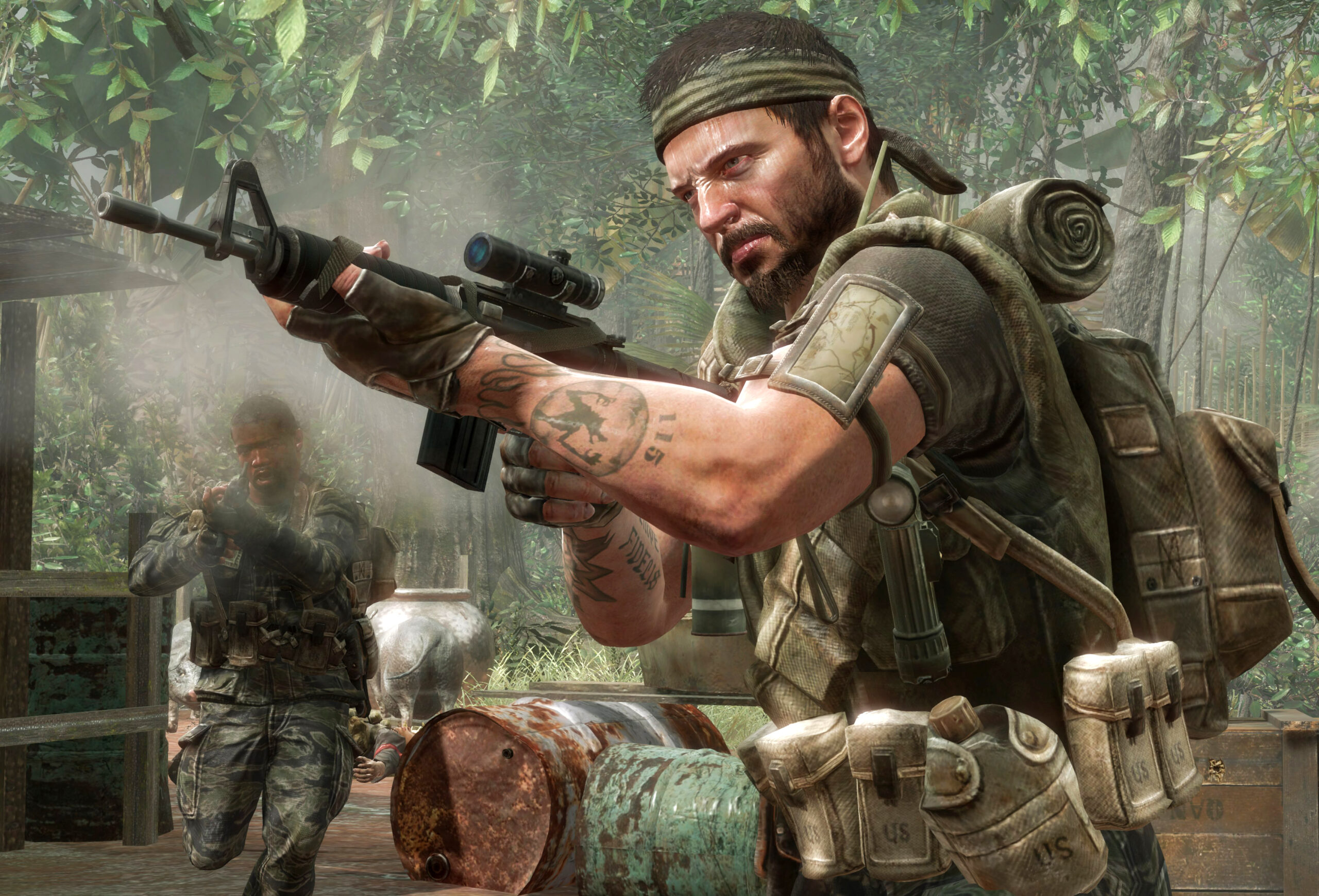
With Black Ops, Treyarch dared to venture beyond the well-trodden battlefields of World War II, plunging players into the shadowy world of the Cold War. This wasn’t just a change of scenery; it was a thematic and narrative revolution.
Instead of the typical silent protagonist, Black Ops gave us Alex Mason, a fully voiced operative grappling with fragmented memories and a conspiracy that reached the highest echelons of power. Imagine sharing screen time with Fidel Castro and John F. Kennedy – unheard of in Call of Duty at the time.
Unreliable Narrator
The genius of Black Ops lay in its unreliable narrator. Mason’s brainwashing blurred the lines between reality and illusion, forcing players to question everything they saw. As GameSpot’s review noted, the game created “a great tone of uncertainty that plays out in surprising and satisfying ways.”
From escaping a Soviet gulag to navigating the jungles of Vietnam, the narrative was a rollercoaster of paranoia and political intrigue. The story, co-written by The Dark Knight’s David S. Goyer, embraced the tropes of political thrillers like The Manchurian Candidate, trading the WWII movie inspirations for those of Vietnam War epics like Apocalypse Now. One sequence even mirrored the infamous Russian roulette scene from The Deer Hunter.
While the campaign may not have offered profound political commentary – JFK was just a mission giver, Castro a target – its impact was undeniable. The over-the-top action and gratuitous violence created a thrilling, if somewhat superficial, experience.
But Black Ops also revolutionized the multiplayer experience. Remember the addictive Dead Ops Arcade, the innovative theater mode, and the coveted customizable emblems? And who could forget the pulse-pounding Wager Matches with modes like One in the Chamber and Gun Game?
- Dead Ops Arcade: A top-down, Smash TV-inspired zombie shooter.
- Theater Mode: Allowing players to record and share their gameplay highlights.
- Wager Matches: High-stakes game modes with unique rulesets.
Treyarch not only proved its mettle but also laid the foundation for the future of Call of Duty. The studio established the now-essential Zombies mode, a cooperative experience filled with Easter eggs and intricate storylines. This addition became a staple across the franchise, even appearing in non-Treyarch titles like Infinite Warfare and WWII.
The release of Black Ops coincided with a period of turmoil at Infinity Ward. Following the release of Modern Warfare 2, Activision dismissed key personnel, leading to a mass exodus. Treyarch stepped up, proving that they could not only fill the void but also deliver a game-changing experience.
Call of Duty: Black Ops will forever be associated with Nuketown, the numbers, and the unforgettable Frank Woods. But its true legacy lies in its willingness to take risks, to experiment, and to redefine what a Call of Duty game could be.
Follow us on Bluesky , LinkedIn , and X to Get Instant Updates