-0.48%
-0.37%
+1.61%
-10.19%
-1.41%
-0.56%
Tokenization Converts Financial Assets Into Software
Tokenization represents a fundamental shift in how financial assets are managed. According to Lovell, tokenization means representing a legal claim in equity or fixed income into software which is a smart contract owned by the issuer of that asset.
This transformation enables new forms of financial interaction that were previously impossible in traditional systems. The shift extends across banking and capital markets, where institutions are exploring blockchain-based solutions for tokenized finance.
Chainlink Solves the Reliable Data Problem
The core barrier to blockchain application development has long been data reliability. Lovell emphasized that without reliable data onto a blockchain you can’t build an application, that’s the fundamental problem that Chainlink solved.
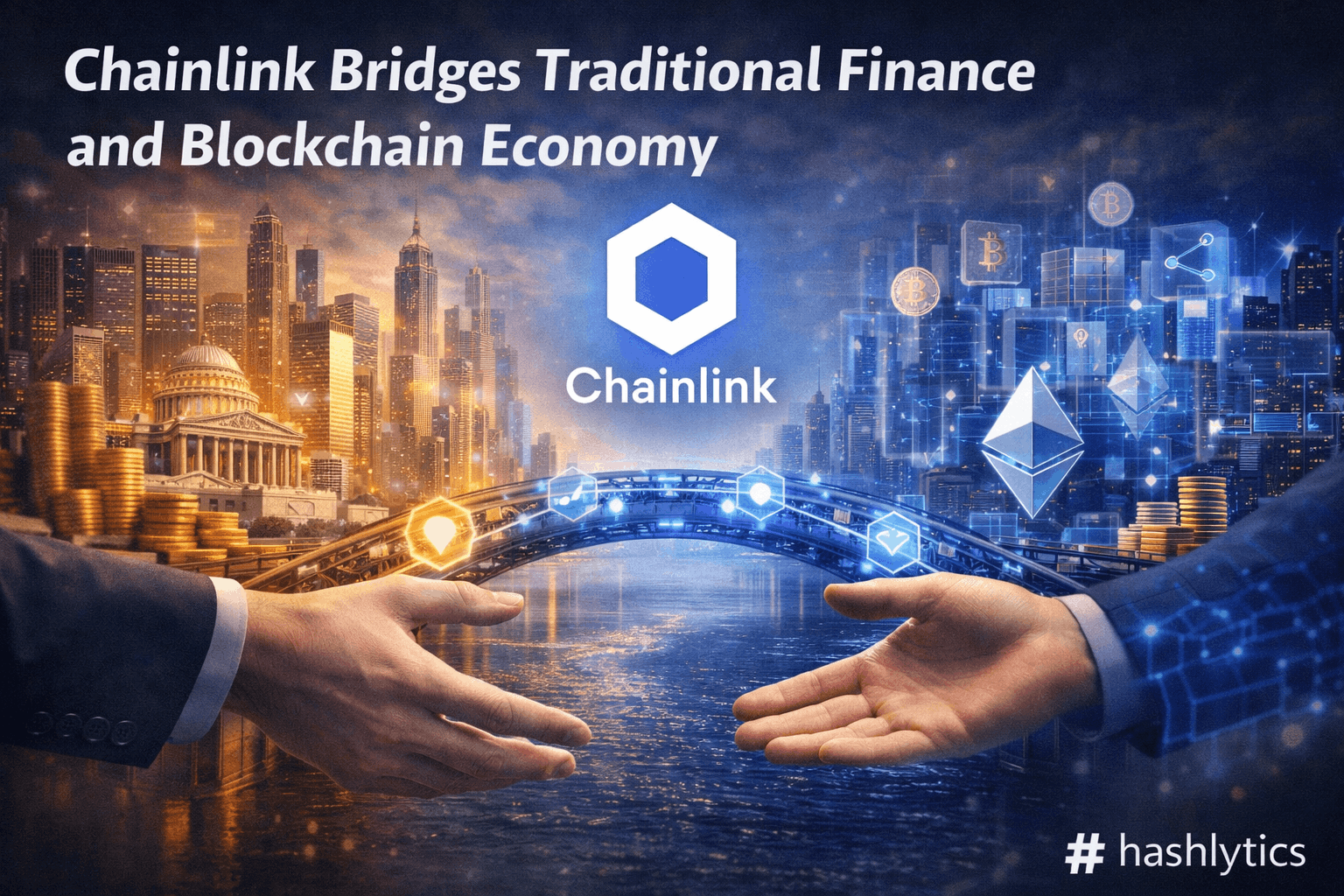
The oracle network acts as a secure conduit, delivering trusted information to blockchains in a compliant manner. Using a factory metaphor, Lovell described Chainlink as the pipes that carry oil to the factory in a highly secure, reliable, compliant way.
This middleware layer proves critical for developers navigating different blockchain technologies. Each blockchain presents unique features and complexities requiring extensive research and development. Chainlink’s integration dramatically increases the total value locked in blockchain systems by enabling token holders to access decentralized finance functions like borrowing, lending, and yield staking.
Financial Literacy Drives Blockchain Interest
Understanding traditional financial systems creates a natural pathway to blockchain adoption. Lovell noted that the closer and more curious you become on how the plumbing works, the bigger the gravitational pull that brings you to blockchain technology.
Financial professionals with existing domain expertise recognize how blockchain disrupts legacy infrastructure. This connection between finance and blockchain technology is significant for institutional adoption.
Blockchain Ecosystem Expansion Beyond Current Leaders
The blockchain landscape is expected to grow far beyond the current dominant chains. Lovell suggested that there’s probably going to be a lot more blockchains than just three,
indicating a future of diverse, specialized chains. This fragmentation creates complexity for developers but also opportunity for middleware solutions that simplify cross-chain development.
Middleware services have fundamentally shifted how finance can operate by providing developers with trusted, reliable data across multiple blockchain networks. As the ecosystem matures and diversifies, the role of oracle infrastructure becomes increasingly central to institutional blockchain adoption.
What Chainlink’s Role Means for Institutional Finance
Chainlink’s positioning as infrastructure for multi-chain finance aligns with broader institutional interest in tokenization. The network powers the majority of decentralized finance and continues expanding into traditional finance partnerships. As more assets move on-chain, reliable data infrastructure becomes non-negotiable for compliance, security, and operational efficiency.
Follow Hashlytics on Bluesky, LinkedIn , Telegram and X to Get Instant Updates