The choice between the Samsung Galaxy S26 Ultra and iPhone 17 Pro Max remains a battle of philosophies. Samsung doubled down on its quad-camera versatility and introduced the world’s first built-in Privacy Display. Apple completely redesigned its Pro lineup with aluminum unibody construction and an 8x optical-quality telephoto that’s the longest zoom ever on an iPhone.
Spec Comparison
| Feature | Samsung Galaxy S26 Ultra | Apple iPhone 17 Pro Max |
|---|---|---|
| Price | $1,299 (256GB) | $1,199 (256GB) |
| Display | 6.9″ QHD+ Dynamic AMOLED, 120Hz, 2600 nits peak, Privacy Display | 6.9″ Super Retina XDR, ProMotion 120Hz, 3000 nits peak outdoor |
| Processor | Snapdragon 8 Elite Gen 5 | Apple A19 Pro |
| RAM | 12GB (16GB on 1TB model) | 12GB |
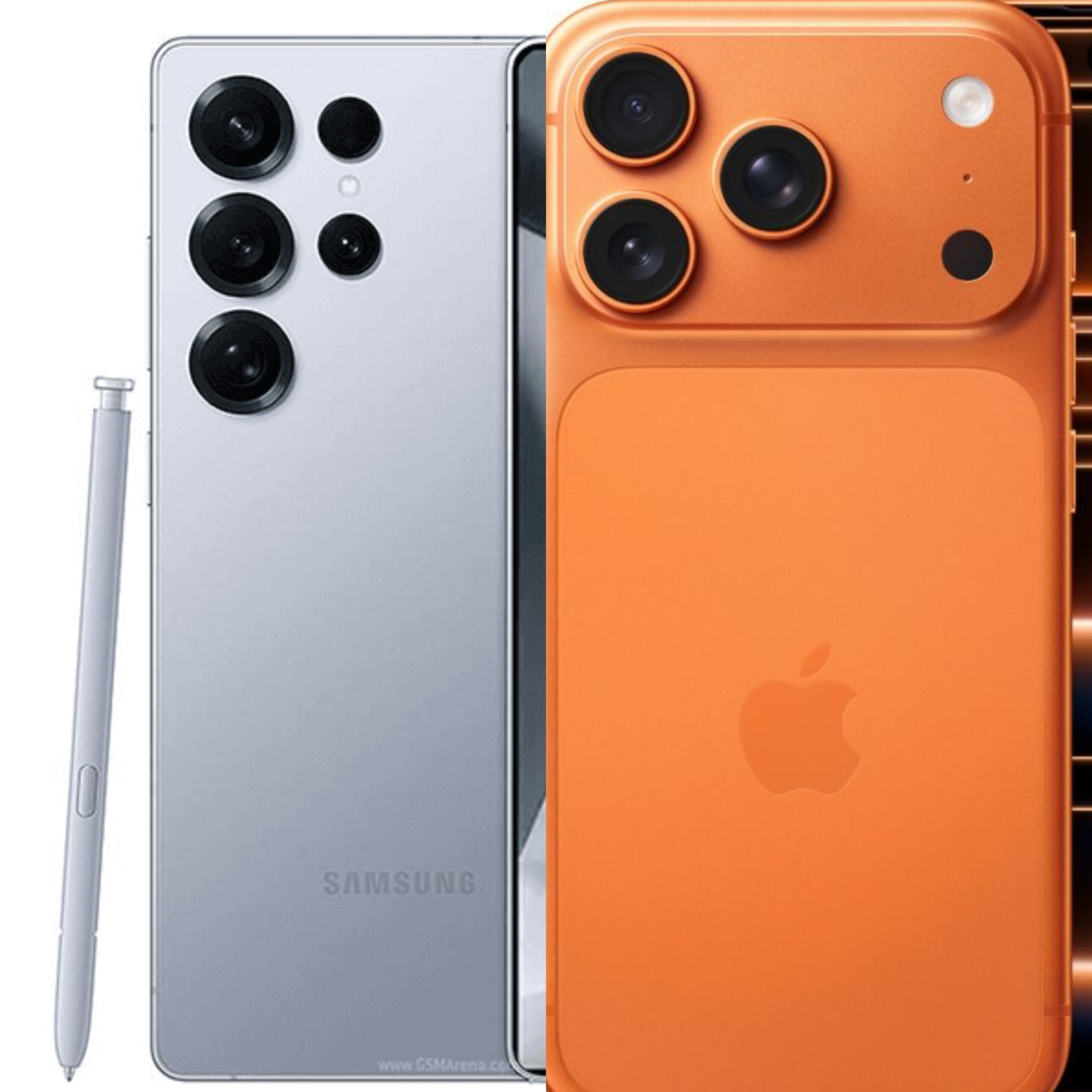
| Rear Cameras | 200MP Main (f/1.4), 50MP Ultrawide, 50MP 5x Periscope (f/2.9), 10MP 3x Telephoto | 48MP Main, 48MP Ultrawide, 48MP Telephoto (8x optical-quality zoom) |
| Front Camera | 12MP | 18MP Center Stage (square sensor, auto-expand field of view) |
| Battery | 5,000mAh, 60W wired, 25W wireless (Qi2) | 5,088mAh, faster than previous gen (exact wattage unspecified) |
| Dimensions | 163.6 x 78.1 x 7.9mm, 214g | Slightly larger than predecessor, 8.75mm thick |
| Build | Armor Aluminum frame, Corning Gorilla Armor 2 | Aluminum unibody with vapor chamber, Ceramic Shield 2 |
| Storage | 256GB, 512GB, 1TB | 256GB, 512GB, 1TB, 2TB |
Camera Strategy Differences
Samsung continues its hardware-first approach with four distinct lenses and massive megapixel counts. The 200MP main sensor now opens to f/1.4 (versus f/1.7 on S25 Ultra), allowing 47% more light. The 5x periscope telephoto improved to f/2.9 from f/3.4, capturing 37% more light. This gives photographers two dedicated optical zoom levels (3x and 5x) for maximum versatility.
Apple took a different route. The iPhone 17 Pro Max uses a triple 48MP system where the telephoto now offers 8x optical-quality zoom using a tetraprism design with a 56% larger sensor. This is the longest iPhone telephoto ever, providing 16x total optical zoom range (1x to 8x main, plus 0.5x ultrawide). The higher-resolution sensor enables sensor-crop zoom without quality loss.
The Privacy Display Advantage
The Galaxy S26 Ultra’s built-in Privacy Display is a genuine first-in-industry feature. Using Flex Magic Pixel technology, it can hide your full screen from side angles or selectively obscure specific apps, notifications, or PIN entries. This goes well beyond stick-on privacy filters by allowing customizable, app-specific protection without darkening your entire display.
Design Philosophy Split
Samsung kept its refined Galaxy S25 Ultra design language but shaved thickness to 7.9mm while maintaining the integrated S Pen. The S26 Ultra is now Samsung’s slimmest Ultra model despite packing a 5,000mAh battery and quad-camera system.
Apple made its most dramatic Pro design change in years, ditching titanium for an aluminum unibody with vapor chamber cooling. The shift back to aluminum reduces weight and dramatically improves thermal performance for sustained A19 Pro performance. It’s now thicker at 8.75mm but delivers the longest battery life of any iPhone to date.
Charging and Battery
Samsung made significant charging upgrades: 60W wired (up from 45W) and 25W wireless (up from 15W). The company claims 75% charge in 30 minutes with Super Fast Charging 3.0.
Apple improved charging speeds over iPhone 16 Pro Max but hasn’t disclosed exact wattage. The larger 5,088mAh battery combined with the A19 Pro’s efficiency delivers what Apple claims is the best Pro battery life ever.
Pros and Cons
✓ Galaxy S26 Ultra strengths: Quad-camera versatility with two distinct optical zoom levels, integrated S Pen, world’s first Privacy Display, faster charging, $100 cheaper than predecessor despite upgrades, Android customization.
✓ iPhone 17 Pro Max strengths: 8x optical-quality telephoto (longest ever on iPhone), aluminum unibody with superior thermal design, 18MP Center Stage front camera with auto-expand, seamless iOS ecosystem integration, Ceramic Shield 2 with 3x better scratch resistance.
✗ Both devices: Neither suits users wanting compact, one-handed phones. Both are massive 6.9″ flagships. Camera improvements are iterative rather than revolutionary compared to their predecessors.
The Ecosystem Decision
The fundamental divide between Android’s customizability and iOS’s simplicity remains the primary factor. If you’re deeply embedded in either ecosystem, switching requires evaluating whether the hardware differences justify abandoning years of app purchases, cloud services, and workflow integrations.
Choose Galaxy S26 Ultra if: You want maximum photographic flexibility with dedicated zoom lenses, need S Pen functionality, value Privacy Display for public use, prefer Android’s openness, or prioritize faster charging.
Choose iPhone 17 Pro Max if: You’re invested in Apple’s ecosystem, prioritize video production with advanced codecs (APV support), want the longest telephoto zoom on any iPhone, prefer iOS’s polish and simplicity, or need superior app optimization.
Skip both if: You’re committed to the opposing ecosystem, prefer smaller devices, want revolutionary hardware changes over incremental updates, or don’t need flagship-level specs and can save money on mid-range alternatives.
Follow Hashlytics on Bluesky, LinkedIn , Telegram and X to Get Instant Updates