+3.16%
+4.14%
+3.31%
+2.28%
+0.09%
-0.71%
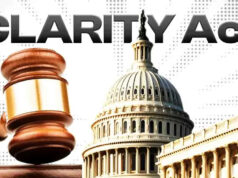
According to Ethnews, the White House is prioritizing the passage of comprehensive cryptocurrency regulation to facilitate large-scale institutional investment. Patrick Witt, speaking with Yahoo Finance, emphasized that the CLARITY Act is designed to create a secure and predictable environment for major financial players. The administration is reportedly aiming to have the legislation passed before the midterm elections.
The bill’s journey through Congress has seen mixed progress. The House of Representatives passed its version in . While sections of the bill related to the Commodity Futures Trading Commission (CFTC) have successfully cleared the Senate Agriculture Committee, provisions concerning the Securities and Exchange Commission (SEC) are currently stalled in the Senate Banking Committee.
The primary point of contention holding up the CLARITY Act is a dispute over stablecoin reward structures. According to the report, traditional banking institutions are concerned that high-yield stablecoins could lead to significant deposit outflows from the conventional banking system. In contrast, cryptocurrency firms argue that transaction-based rewards are essential for them to compete effectively. The White House has allegedly set a deadline for stakeholders to reach a compromise on this issue to ensure the entire legislative effort does not collapse.
Alongside the market structure bill, the administration is pursuing other digital asset initiatives. Following the introduction of the BITCOIN Act of 2025, federal agencies are conducting a Strategic Bitcoin Reserve Review. This includes a temporary halt on the sale of seized Bitcoin assets while the government evaluates potential reserve models.
The administration’s stated goal is to integrate digital assets into the existing U.S. financial framework rather than allowing them to operate in a regulatory gray area. Witt described the regulatory push not as a constraint but as a necessary gateway to unlock
institutional capital. He suggested that once legal certainty is in place, major firms like JPMorgan Chase would have a clear pathway to expand their participation in crypto markets. Witt also warned that failing to pass the bill with the current pro-crypto Congress could result in more restrictive legislation later, especially if a market downturn were to shift the political climate.
Several key details remain unspecified. The exact deadline set by the White House for resolving the stablecoin yield dispute has not been publicly disclosed. Furthermore, there is no definitive timeline for when the Senate Banking Committee will resume negotiations or vote on the SEC-related provisions of the bill. The “trillions of dollars” figure cited by Witt is an estimate, and the specific institutions or capital pools it represents have not been detailed.
The immediate future of U.S. crypto regulation hinges on the negotiations within the Senate Banking Committee. A resolution on stablecoin rewards is the critical next step to move the CLARITY Act forward. Should the bill pass, the focus will shift to implementation by regulatory bodies like the SEC and CFTC. If it fails, the industry may face continued uncertainty and the potential for more stringent regulations in the future, depending on market conditions and political changes.
Given the pending legislation and market uncertainty, individuals involved in the digital asset space should consider several steps:
- Monitor Legislative Updates: Keep track of the CLARITY Act’s progress through official congressional channels and reputable financial news sources.
- Understand Stablecoin Mechanics: Research the differences between various stablecoins and the potential risks and rewards associated with their yield-bearing structures.
- Review Exchange Policies: Stay informed about how exchanges and custodians might adapt their policies in response to new regulations, particularly concerning asset custody and reporting.
- Consult Financial Professionals: Before making significant decisions, consider seeking guidance from a qualified financial advisor who understands the digital asset landscape and its evolving regulatory environment.
Follow us on Bluesky , LinkedIn , and X to Get Instant Updates