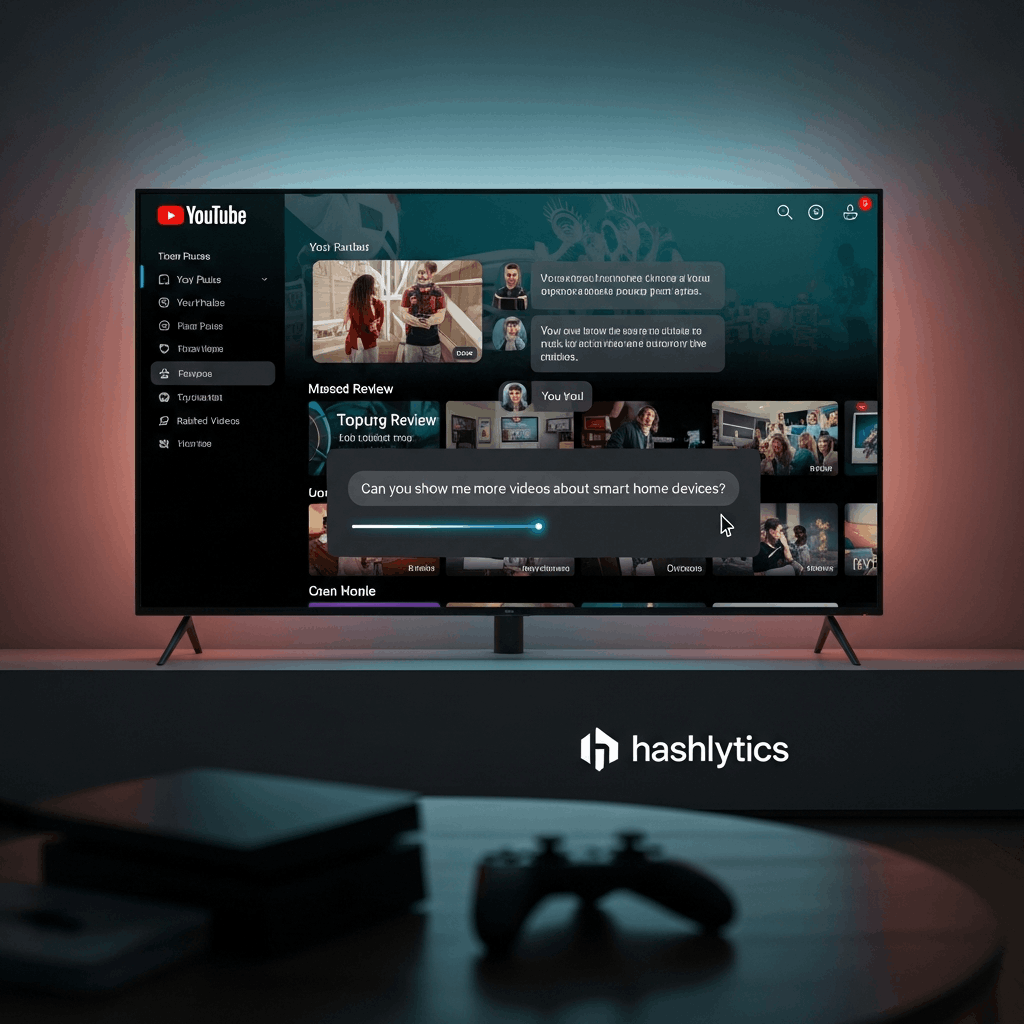
YouTube is escalating the battle for the living room by expanding its experimental conversational AI tool to smart TVs, gaming consoles, and other streaming devices. This move shifts the feature from a mobile and web novelty to a direct integration on the home’s primary screen, signaling a major push to make passive viewing an interactive experience.
- Platform Expansion: YouTube’s conversational AI is now being tested on smart TVs, game consoles, and streaming devices, moving beyond its initial mobile and web-only availability.
- Market Dominance: This strategic push comes as YouTube commands a significant portion of home screen time. According to Nielsen’s “The Gauge” media measurement report, streaming has consistently captured the largest share of television usage, with YouTube often leading as the top individual streaming platform.
- Competitive Landscape: Amazon has been actively integrating AI into its Fire TV experience, while Roku is also reportedly testing its own AI-powered search capabilities to enhance content discovery.
- Broader AI Integration: This test is part of a wider AI strategy at YouTube, which recently announced that creators will soon be able to generate Shorts using AI versions of themselves and launched a dedicated app for the Apple Vision Pro.
By embedding its conversational AI directly into the TV experience, YouTube aims to solve the “second screen” problem. Instead of viewers pulling out their phones to search for information about a documentary’s subject or an actor in a movie, they can now ask the platform directly without interrupting playback. This is a powerful mechanism for increasing user engagement and session duration. The AI acts as a built-in viewing companion, capable of providing context, answering questions, and potentially recommending related content, all of which keeps the user locked within the YouTube ecosystem. It transforms the viewing experience from a lean-back, passive activity into a more interactive, lean-in session, which is critical for retaining audience attention in a fragmented media landscape.
While promising, the success of this feature is far from guaranteed. As an experimental tool, its actual utility remains unproven at scale. The quality of the AI’s responses will be paramount; if it provides generic, inaccurate, or unhelpful information, users will quickly dismiss it as a gimmick. Furthermore, there’s the question of user interface and intrusiveness. A clunky or distracting AI overlay could detract from the viewing experience. Competitors like Amazon have a head start with Alexa’s deep integration into the smart home, creating a higher bar for YouTube’s tool to clear in terms of functionality and user adoption. There are also potential privacy implications to consider regarding how user queries are collected and utilized, which could become a point of friction.
The key indicator to monitor will be the scope and speed of the rollout beyond this initial experimental phase. We should watch for official announcements from Google or YouTube detailing a wider release timeline and specific device compatibility. Pay close attention to the initial user feedback and reviews, which will determine if the AI is genuinely useful or just a novelty. Another critical area is the potential for monetization. It’s plausible that YouTube could leverage this AI to surface sponsored product information or seamlessly recommend paid content, creating a new revenue channel. Finally, expect responsive moves from competitors like Roku, Amazon, and TV manufacturers such as Samsung and LG, who will likely accelerate their own AI-driven features to avoid ceding ground to YouTube on their native platforms.
- YouTube is bringing its conversational AI to the TV screen, aiming to make viewing more interactive and increase user engagement.
- The move is a direct challenge to other platform owners like Amazon and Roku, intensifying the race to build the smartest TV interface.
- This feature’s success will depend entirely on its practical utility, the quality of its AI-generated answers, and user adoption rates.
- Watch for the official rollout timeline, competitor responses, and any future plans for monetization integrated into the AI tool.
Follow us on Bluesky , LinkedIn , and X to Get Instant Updates