The job market split into two groups in late 2025: people building AI systems and people being replaced by them. If you’re reading this in February 2026, you still have time to cross that divide, but the window is closing faster than most realize. Six technical concepts separate the architects from the automated, and learning them now means thriving while others scramble to catch up later. Here’s what future you will thank you for mastering today.
RAG: The $9.3 Billion Skill Enterprises Can’t Build Fast Enough
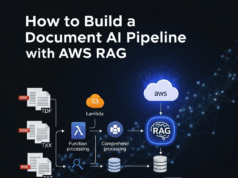
Retrieval-Augmented Generation isn’t just another AI buzzword, it’s the architecture powering the $9.3 billion market projected by 2033 that’s currently experiencing 30-70% efficiency gains wherever it’s deployed. While ChatGPT hallucinates facts and Claude invents citations, RAG systems retrieve verified information from your company’s actual documents, databases, and knowledge bases before generating responses. Think of it as giving AI a library card to your organization’s entire institutional knowledge instead of letting it make educated guesses.
Enterprises report that RAG adoption shifted from experimentation to production-critical infrastructure in 2026 because it solves the three problems blocking AI deployment: hallucinations that create legal liability, outdated outputs that damage credibility, and inability to cite authoritative sources that regulators demand. When a healthcare system needs clinical decision support that explains why it recommended a specific treatment, RAG provides the audit trail. When financial analysts synthesize regulatory filings across quarters, RAG delivers accuracy without retraining models monthly.
The practical skill: understanding how vector databases store embeddings, how retrieval layers rank relevance, and how orchestration logic manages the flow from query to generation. Companies building “AI Middle Platforms” centered on RAG engines are hiring aggressively, they need people who grasp why retrieving the right 10 documents from 10 million matters more than having the smartest model.
MCP: The Protocol That Just Won the AI Connectivity War
Model Context Protocol exploded from Anthropic’s November 2024 release to industry standard in 13 months—a speed that rival technologies like OpenAPI, OAuth, and Docker took years longer to achieve. When OpenAI’s Sam Altman posted “People love MCP and we are excited to add support across our products” in March 2025, the protocol’s dominance became inevitable. By December 2025, Anthropic donated MCP to the Linux Foundation’s Agentic AI Foundation, cementing its position as neutral infrastructure supported by OpenAI, Google, Microsoft, AWS, and Cloudflare.
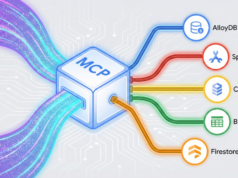
MCP solves the “N×M integration problem”—before it existed, connecting 10 AI tools to 10 data sources required 100 custom connectors. Now developers build one MCP server and it works everywhere. The community has built thousands of MCP servers, with 97 million monthly SDK downloads across Python and TypeScript. Enterprise systems like Google Drive, Slack, GitHub, Postgres, and Salesforce all have pre-built MCP connectors.
The thrilling part: MCP enables AI agents to maintain context as they move between tools and datasets, replacing fragmented integrations with sustainable architecture. When you understand MCP, you’re not just learning a protocol—you’re learning the infrastructure layer that every AI agent will use. The specification updates introduced asynchronous operations, statelessness, server identity, and streamable HTTP transport that made cloud-deployed agents practical. Knowing how to implement MCP servers, configure authorization frameworks, and optimize tool definitions for context efficiency makes you immediately valuable to any organization building production AI systems.
LLMs (High Level): Understanding What You’re Actually Building With
You don’t need to implement transformer architecture from scratch, but understanding how Large Language Models work at a conceptual level separates competent practitioners from people copying code without comprehension. The critical insights: LLMs predict the next token based on patterns in training data, they can’t access information beyond their training cutoff without retrieval systems (hence RAG), they consume context windows measured in tokens where each costs money, and they hallucinate confidently when uncertain rather than admitting ignorance.
This high-level knowledge shapes every decision. When GPT-4 costs $5 per million input tokens while GPT-3.5 costs $0.50, you need to understand which tasks justify the 10x price premium. When Anthropic’s Claude Opus 4.6 offers 1 million token context versus GPT-5.3’s 400,000, you grasp why certain use cases (analyzing entire codebases, cross-referencing months of legal documents) favor one over the other. When enterprises choose between fine-tuning proprietary models versus RAG systems, you recognize the trade-offs: fine-tuning creates static knowledge requiring expensive retraining, while RAG connects to live data without model updates.
The practical application: knowing when to use which model, how to optimize prompts for token efficiency, why context caching matters for repetitive workflows, and how to architect systems that switch models based on task complexity. These aren’t theoretical questions—they’re daily operational decisions worth millions in compute costs and developer productivity.
Agents: The Autonomous Execution Layer That’s Actually Shipping
AI agents aren’t science fiction anymore, they’re production systems handling customer support, writing code, managing workflows, and coordinating complex multi-step tasks autonomously. The shift from “AI assistant” to “AI agent” represents a fundamental capability leap: assistants respond to explicit instructions, agents plan multi-step approaches, execute autonomously, recover from errors mid-task, and coordinate with other agents without constant human guidance.
Enterprise adoption of agentic RAG accelerated in 2025, with simple domain-specific agents (parsing legal documents, updating SaaS fields, retrieving information from specific tools) seeing rapid deployment while complex agentic workflows requiring careful governance advance more cautiously. The pattern: organizations start with narrowly scoped agents where mistakes carry low consequences, then expand to higher-stakes automation as confidence builds.
Understanding agents means grasping their architecture: planning layers that decompose tasks into steps, tool-calling mechanisms that execute actions, memory systems that maintain state across sessions, and verification loops that catch errors before they propagate. When Anthropic’s Opus 4.6 introduced “agent teams” where multiple AI instances coordinate autonomously across frontend, backend, and migration tasks, it demonstrated where the technology is heading—collaborative AI systems that divide labor intelligently.
The career implication: companies are hiring “agent engineers” whose job is designing, deploying, and monitoring autonomous AI systems. This role didn’t exist two years ago; now it’s appearing in job postings at Fortune 500 companies paying $200,000+ for people who understand how to build reliable agentic workflows at production scale.
Fine-Tuning: When and Why to Customize Foundation Models
Fine-tuning adapts pre-trained foundation models to specific domains, writing styles, or organizational knowledge by continuing training on custom datasets. The critical distinction: fine-tuning creates specialized expertise at the cost of flexibility and requires retraining when knowledge changes, while RAG provides dynamic access to current information without model updates. Most enterprises choosing between them opt for RAG—30-60% of enterprise use cases use RAG because it offers accuracy, transparency, and security without the computational expense of frequent retraining.
But fine-tuning excels for specific scenarios: organizations with proprietary domain languages (medical specialties, legal terminology, industry jargon) where foundation models lack training data, applications requiring consistent tone and formatting that prompting alone can’t achieve, and latency-sensitive deployments where retrieving documents adds unacceptable delay. Financial institutions fine-tune models on decades of regulatory filings to understand nuanced compliance language. Healthcare providers fine-tune on medical literature to improve diagnostic accuracy.
The practical skill: recognizing when fine-tuning justifies its cost (computational resources, data labeling, ongoing maintenance) versus when RAG, prompt engineering, or hybrid approaches deliver better ROI. Understanding techniques like LoRA (Low-Rank Adaptation) that enable parameter-efficient fine-tuning, quantization that reduces model size for deployment, and evaluation frameworks that measure fine-tuning effectiveness prevents wasting resources on unnecessary customization.
Quantization: Making Models Fast Enough and Cheap Enough to Deploy
Quantization reduces model precision from 32-bit floating point to 8-bit, 4-bit, or even lower representations, dramatically shrinking model size and accelerating inference speed with minimal accuracy loss. This isn’t academic optimization—it’s the difference between models that run only on $50,000 GPU clusters versus models that execute on consumer hardware, edge devices, and mobile phones. When Meta releases Llama models with quantized versions, they’re enabling deployment scenarios impossible with full-precision weights.
The impact: a quantized model might run 4x faster while consuming 75% less memory, making real-time applications feasible where full-precision models cause unacceptable latency. For enterprises deploying AI to thousands of endpoints, quantization determines whether infrastructure costs become prohibitive or manageable. For developers building local-first AI applications that preserve privacy by running entirely on user devices, quantization makes previously impossible architectures viable.
Understanding quantization means knowing techniques like post-training quantization (apply to trained models), quantization-aware training (optimize during training), and mixed-precision approaches (quantize some layers more aggressively than others). You learn to evaluate trade-offs: 4-bit quantization might reduce model size by 75% but degrade accuracy by 2%—acceptable for summarization, unacceptable for medical diagnosis. The skill lies in matching quantization strategies to deployment constraints and accuracy requirements.
Why These Six, Why Now
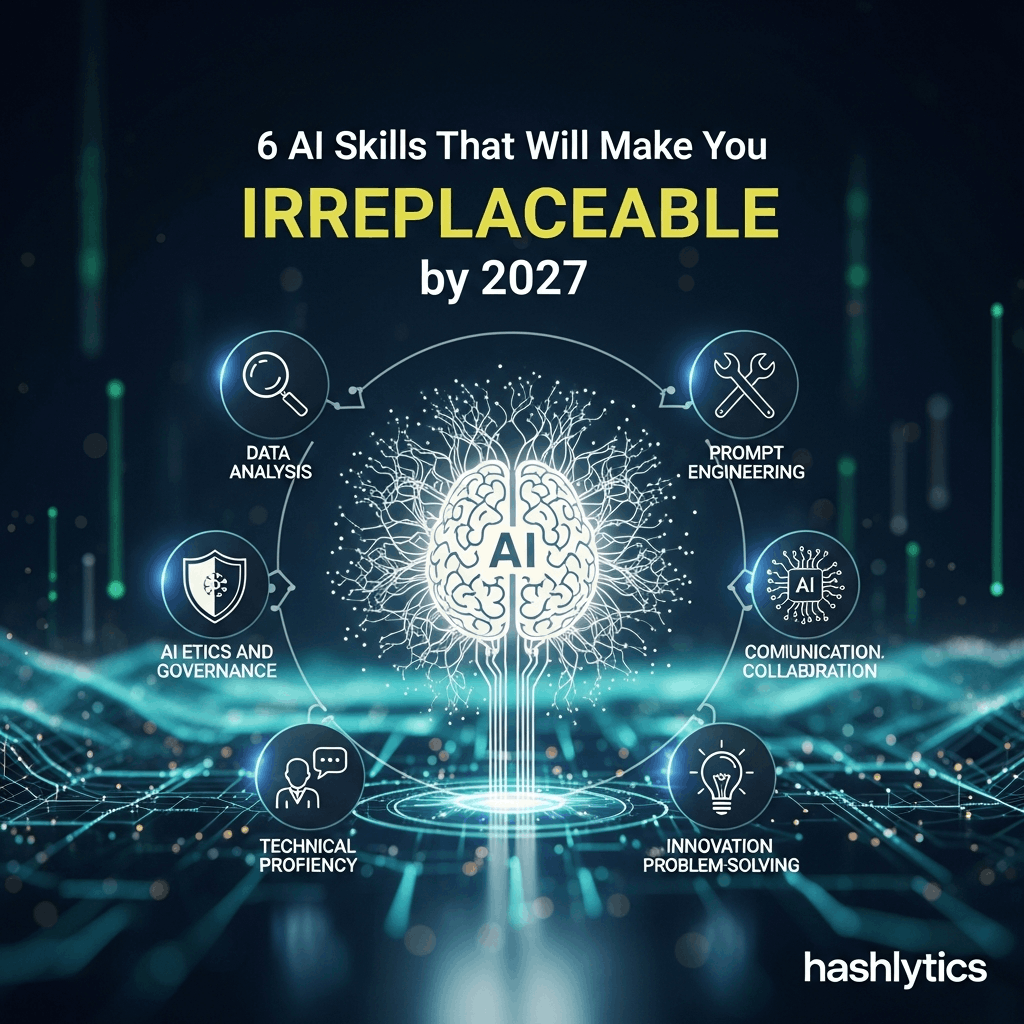
The common thread: these aren’t theoretical AI research topics, they’re production infrastructure skills that companies are hiring for today and will desperately need tomorrow. RAG architects command premium salaries because enterprises can’t deploy trustworthy AI without them. MCP specialists are rare because the protocol just reached critical mass—early expertise compounds as adoption accelerates. LLM fluency (high-level understanding, not PhD-level implementation) separates people who use AI tools from people who build AI products. Agent engineers design autonomous systems that replace entire job categories. Fine-tuning experts optimize model performance for specific domains. Quantization specialists make AI deployment economically viable at scale.
The urgency: AI capabilities are doubling faster than workforce skills. RAG evolved from experimental to production-critical in 2025; by 2027 it’ll be assumed baseline knowledge. MCP went from Anthropic’s internal experiment to industry standard in 13 months; anyone not learning it now faces steeper learning curves as complexity increases. The window where getting ahead is relatively easy closes quickly—these technologies mature, best practices solidify, and late adopters struggle to catch up while early learners leverage institutional knowledge.
Start with RAG and MCP—they’re immediately applicable and ecosystem adoption guarantees longevity. Build high-level LLM fluency through hands-on experimentation with different models and architectures. Explore agent frameworks to understand autonomous execution patterns. Investigate fine-tuning and quantization when specific use cases demand them. Six months of focused learning on these topics positions you ahead of 95% of the workforce as AI transforms from experimental technology to production infrastructure that every company depends on. Future you will thank you for starting today rather than explaining to 2027 employers why you waited.
Follow us on Bluesky, LinkedIn, and X to Get Instant Updates