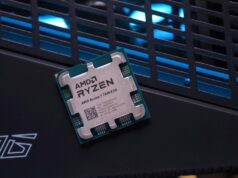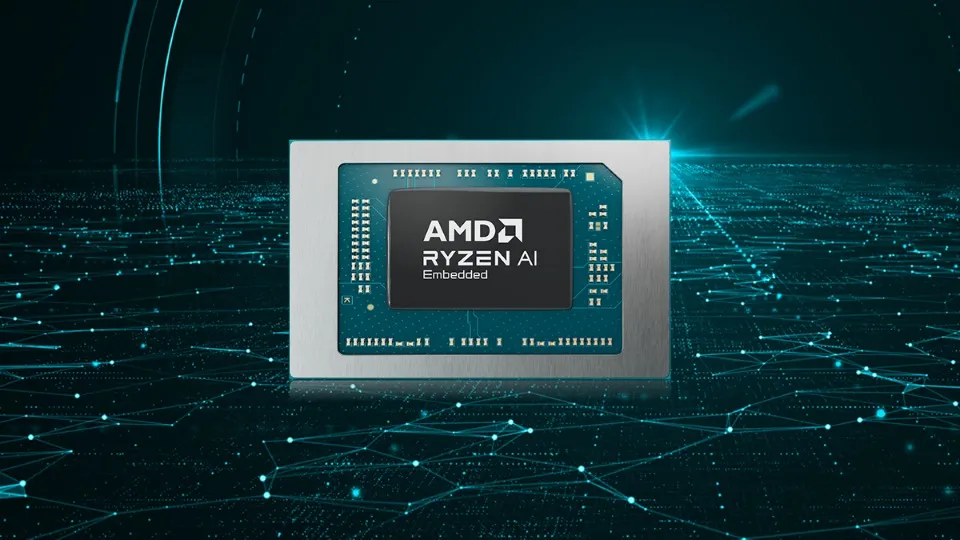
AI for everyone. During the presentation, AMD officially introduced the Ryzen AI 400 Series, its latest generation of AI PC processors, succeeding the Ryzen AI 300 Series. The company also announced a new gaming-focused processor, the AMD X3D, alongside an updated version of its Redstone ray tracing technology, aimed at improving graphics performance without significant efficiency trade-offs. OEM partners including Acer, ASUS, Dell, HP, GIGABYTE, and Lenovo are expected to launch systems featuring these processors starting in .
The Ryzen AI 400 Series processors, codenamed Gorgon Point
, are manufactured using a 4 nm process and are based on the Zen 5 microarchitecture. The flagship model, the Ryzen AI 9 HX 475, features 12 Zen 5 CPU cores and 24 threads, with boost speeds reaching up to 5.20 GHz. A key focus of the lineup is AI performance, with up to 60 TOPS delivered through the integrated XDNA 2 neural processing unit (NPU), up from 55 TOPS in the Ryzen AI 300 Series. AMD claims gains of up to 1.3x in multitasking and 1.7x in content creation workloads compared to competing processors. The chips also support LPDDR5X memory speeds of up to 8533 MT/s. In the gaming segment, the Ryzen 7 9850X3D offers boost clocks up to 5.6 GHz and a 104 MB L3 cache.
According to AMD, the new processors reflect the view that AI is reshaping everyday computing
. Tikoo, an AMD executive, stated that AI enables PCs to understand context, automate routine tasks, and deliver more personalized user experiences. This perspective aligns with broader industry forecasts. Olivier Blanchard, research director of devices at The Futurum Group, projects that AI PCs will gradually replace most traditional PCs, driven by a projected compound annual growth rate of 38% for the global AI PC market over the next five years. A Counterpoint Research report dated , estimates that AI-advanced PC shipments will grow 52% year over year in , accounting for roughly 59% of global PC shipments.
AMD did not disclose individual pricing for the Ryzen AI 400 Series or AMD X3D processors, noting that final costs will depend on OEM configurations. Independent benchmark results were also not available at the time of announcement, leaving the company’s performance claims unverified by third-party testing.
OEMs are expected to begin shipping systems featuring the new processors in the first quarter of . The launch positions AMD to compete aggressively in the expanding AI PC market, with Gartner Research forecasting that AI PCs will surpass 50% of total PC sales by . AMD also confirmed that the Ryzen AI PRO 400 Series, aimed at commercial and enterprise customers, will arrive later in .
Readers interested in AI-enabled PCs are advised to follow upcoming announcements from OEMs such as Acer, ASUS, Dell, HP, GIGABYTE, and Lenovo for specific models and configurations. Comparing published specifications, pricing, and independent performance reviews will be essential for evaluating real-world value once systems become available.
Follow us on Bluesky , LinkedIn , and X to Get Instant Updates