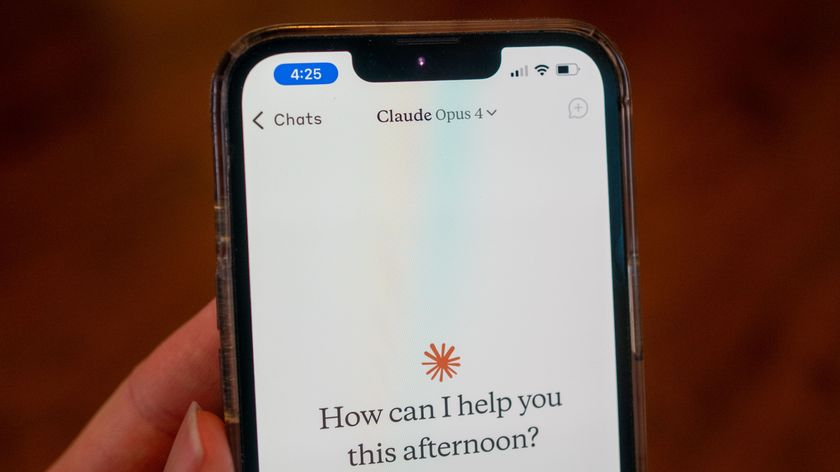
Anthropic announced that Claude free tier users can now access file creation, third-party app connectors, and custom Skills — features previously restricted to paid subscribers. The expansion comes two days after OpenAI began rolling out advertisements to ChatGPT free users, positioning the move as a direct competitive response emphasizing value over monetization.
New Free Tier Capabilities
Document Generation: Free users can now create, edit, and download Microsoft Office files and PDFs directly within Claude conversations using the Sonnet 4.5 model. Supported formats include PowerPoint presentations (.pptx), Word documents (.docx), Excel spreadsheets (.xlsx) with functional formulas, and PDFs. The feature, initially launched for paid users in September 2025, enables users to request formatted business proposals, budget spreadsheets, or presentation decks from text prompts. Anthropic’s official documentation details the file generation workflow.
App Integrations: The Connectors feature, which previously required a Pro subscription, now allows free users to link Claude with external services including Slack, Asana, Zapier, Stripe, Canva, Notion, Figma, WordPress, and Google Workspace applications. Users can request actions like summarizing Slack channel discussions, locating Google Drive files, or pulling data from connected platforms without leaving the chat interface. The Claude Slack app demonstrates deep workplace integration capabilities now accessible at no cost.
Custom Skills: Free users gain access to Skills, which are reusable instruction sets that train Claude to perform specific tasks consistently. Users can create Skills for repeatable workflows such as article summarization in particular formats, email drafting in specified tones, or document generation following organizational branding standards. Anthropic provides pre-built Skills for PowerPoint, Excel, Word, and PDF tasks, while users can develop custom Skills incorporating domain expertise.
Additional Improvements: The update includes conversation compaction, which automatically summarizes earlier context to extend effective conversation memory without requiring users to restart sessions. Free tier users also received enhanced voice features, improved image search precision, and more interactive UI elements. However, Anthropic did not increase the free tier usage cap, meaning users still encounter rate limiting during peak demand periods.
The announcement arrived three days after OpenAI confirmed it would introduce advertisements to ChatGPT’s free tier and ChatGPT Go plan ($10/month), with ads beginning to roll out to select users. Anthropic committed to keeping Claude ad-free in a February 8 blog post, explicitly positioning against OpenAI’s monetization strategy. The company subsequently launched advertising campaigns featuring messaging like “You wouldn’t show ads on your brain,” directly contrasting with OpenAI’s approach.
OpenAI CEO Sam Altman responded to Anthropic’s marketing on February 11, calling the ads “dishonest” and claiming Anthropic targets “rich people.” The public exchange highlighted philosophical differences between the companies regarding AI monetization. Anthropic’s founders, including siblings Dario and Daniela Amodei, left OpenAI in 2021 over concerns about commercial direction and safety priorities, establishing Anthropic with an emphasis on “constitutional AI” principles and user welfare over aggressive monetization.
The free tier expansion transforms Claude from conversational assistant into productivity hub, directly competing with Microsoft’s Copilot and Google’s Workspace AI offerings. By embedding workflow automation and enterprise data access features into the free tier, Anthropic lowers onboarding friction for small and medium businesses testing AI-assisted workflows without subscription commitments.
Market Implications
According to MarketsandMarkets, the AI market is projected to reach $407 billion by 2027, with Gartner predicting 75% of enterprises will use AI orchestration platforms by 2026. Anthropic’s strategy addresses this enterprise adoption trend by providing free access to connectors that integrate AI into existing workflows, potentially accelerating deployment in cost-sensitive organizations.
McKinsey’s 2025 analysis indicated companies implementing AI automation in report generation and document workflows saved approximately 30% in operational costs. The availability of Claude’s file creation and Skills features at no cost enables small businesses and individual professionals to capture these efficiency gains without upfront subscription investments.
However, the unchanged usage cap on the free tier limits practical application for high-volume users. Free tier users report encountering rate limits after relatively light usage, with some claiming restrictions activate after single complex prompts. This suggests Anthropic’s strategy prioritizes user acquisition and trial experiences over providing unlimited free access, with usage volume serving as the primary differentiator driving conversions to paid tiers.
Technical Architecture
Free users access file generation through Claude’s Sonnet 4.5 model, while Pro subscribers utilize the more capable Opus model for computationally demanding tasks. This tiered model access creates performance differentiation without removing features entirely from free users.
The Skills implementation uses filesystem-based resources that store instructions, scripts, and organizational knowledge, allowing Claude to maintain consistent output standards across interactions. Unlike traditional prompt engineering where users must manually include context in each message, Skills load relevant instructions automatically when processing related requests.
Connectors operate through authenticated API integrations that Claude accesses with user permissions, enabling data retrieval and action execution within connected platforms. The architecture preserves data privacy by processing requests through Anthropic’s infrastructure while respecting access controls from integrated services.
Strategic Assessment
Anthropic’s free tier expansion represents a deliberate counter-positioning against OpenAI’s advertising-based monetization strategy. By offering previously premium features at no cost while maintaining an ad-free experience, Anthropic creates a clear value proposition for users frustrated with platform monetization shifts.
The move carries financial implications for Anthropic, which must cover computational costs for increased free tier usage. The company raised $4 billion from Amazon in 2024 and secured additional funding from Google, providing runway to sustain generous free tier offerings as a customer acquisition strategy. The unchanged usage cap suggests cost management remains a consideration despite expanded features.
For the broader AI assistant market, the divergence between Anthropic’s feature-driven approach and OpenAI’s ad-supported model creates distinct user experiences. OpenAI’s larger market share and brand recognition provide competitive advantages, but Anthropic’s differentiation through generosity and ad-free positioning may resonate with privacy-conscious users and professional audiences.
The expansion also intensifies competition with established productivity suites. By embedding document creation and app integrations directly into conversational AI, Anthropic challenges the workflow separation between AI assistants and traditional office software. This convergence could accelerate the adoption of AI-native work patterns where users generate and manipulate documents through natural language rather than dedicated applications.
Follow us on Bluesky , LinkedIn , and X to Get Instant Updates