+2.74%
+4.81%
+2.63%
+4.38%
-2.67%
+2.21%
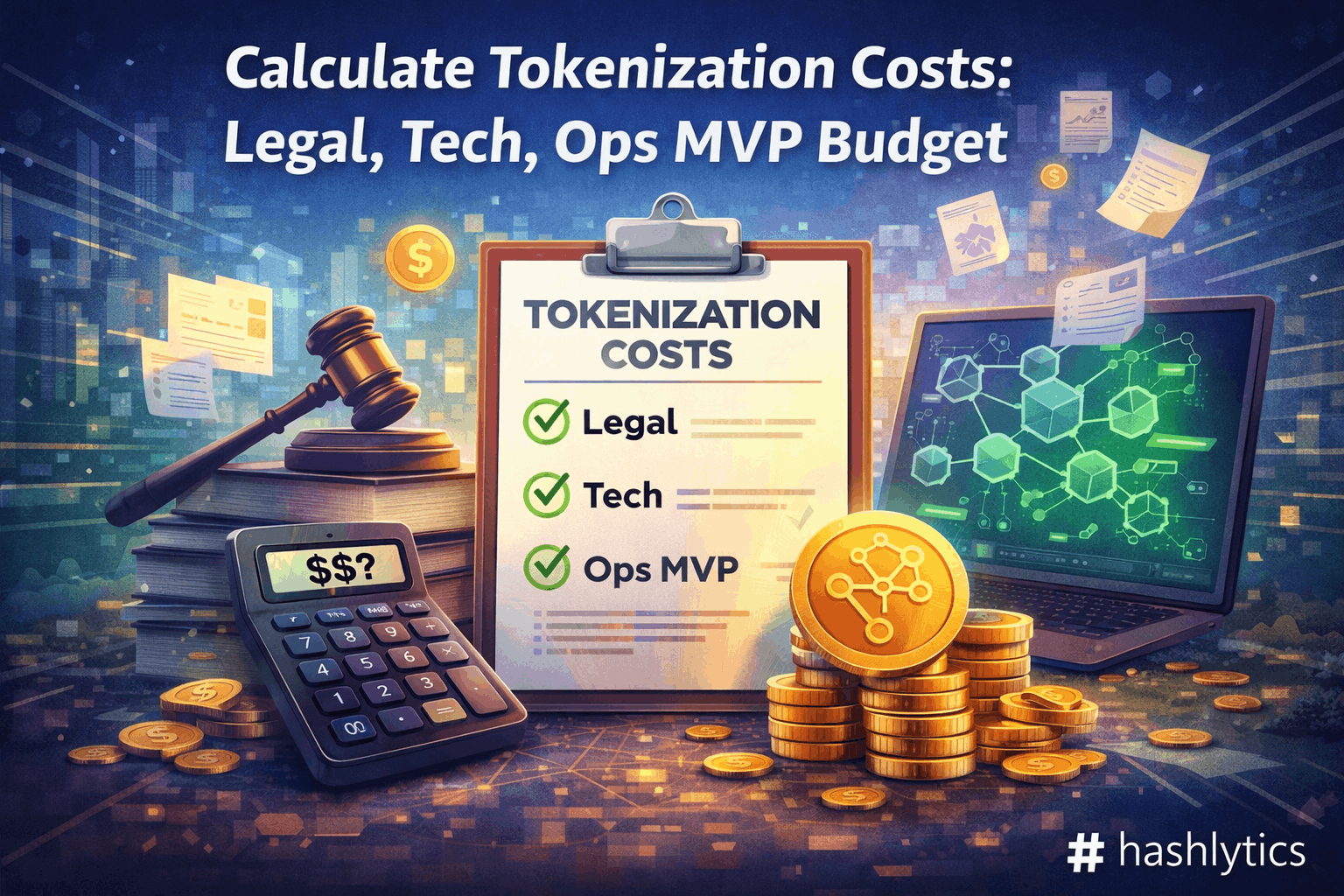
Understanding the true cost of asset tokenization, particularly for a Minimum Viable Product (MVP), is crucial for businesses entering the burgeoning real-world asset (RWA) space. A new story by Alex Hebultivskiy, published on April 1st, 2026, aims to demystify these expenses across legal, technology, and operational fronts.
Tokenization projects involve a multifaceted budget, with costs varying significantly based on complexity and jurisdiction. Industry analyses highlight three primary areas for an MVP budget: legal and regulatory, technology infrastructure, and ongoing operations. The total cost for RWA tokenization can range from approximately $50,000 for basic setups to over $3 million for more complex, multi-asset platforms.
Legal & Regulatory Costs
Legal and regulatory compliance is often a substantial and unpredictable expense. These costs typically involve engaging legal experts to navigate securities laws, establish proper legal structures, and ensure ongoing adherence to regulations. For straightforward projects, legal fees can range from $5,000 to $50,000, but complex offerings with international investors may incur six-figure fees, potentially $50,000 to $350,000. Additionally, asset valuation and due diligence, crucial for verifying ownership and assessing risks, can add another $5,000 to $100,000 depending on asset complexity.
Technology & Platform Costs
Developing or integrating a robust and secure blockchain infrastructure is central to tokenization. This includes building smart contracts, establishing secure storage, and implementing consensus mechanisms. According to InvestaX, developing a secure blockchain platform typically costs between $10,000 and $100,000 for the infrastructure alone. Furthermore, token development and issuance, including writing and deploying smart contracts and integrating investor identity checks, can add $20,000 to $100,000. Security audits are also a critical component to build stakeholder confidence.
Operational & Ongoing Costs
Beyond initial setup, ongoing operational costs are vital for long-term project success. These expenses cover continuous compliance, platform maintenance, security monitoring, and investor relations. InvestaX estimates that ongoing compliance and maintenance can cost $5,000 to $50,000 per year for typical tokenized asset projects, varying with project size and complexity. Marketing and investor outreach, essential for liquidity, also contribute to operational expenses, potentially ranging from $5,000 to $1 million depending on the target audience and geographical scope.
Real-world asset (RWA) tokenization, which converts ownership rights of physical or traditional financial assets into digital tokens on a blockchain, is rapidly gaining traction. Experts project the tokenized asset market could reach $16 trillion by 2030, driven by benefits such as fractional ownership, 24/7 trading, and faster settlement. This growth underscores the increasing need for clear frameworks to understand and manage the associated costs.
Effectively calculating tokenization costs requires a thorough understanding of expenses across legal, technological, and operational domains. While the initial investment can be significant, ranging from tens of thousands to millions of dollars, a well-planned MVP budget is essential for successful project launch and sustainable growth in the tokenized asset landscape.
Follow Hashlytics on Bluesky, LinkedIn , Telegram and X to Get Instant Updates