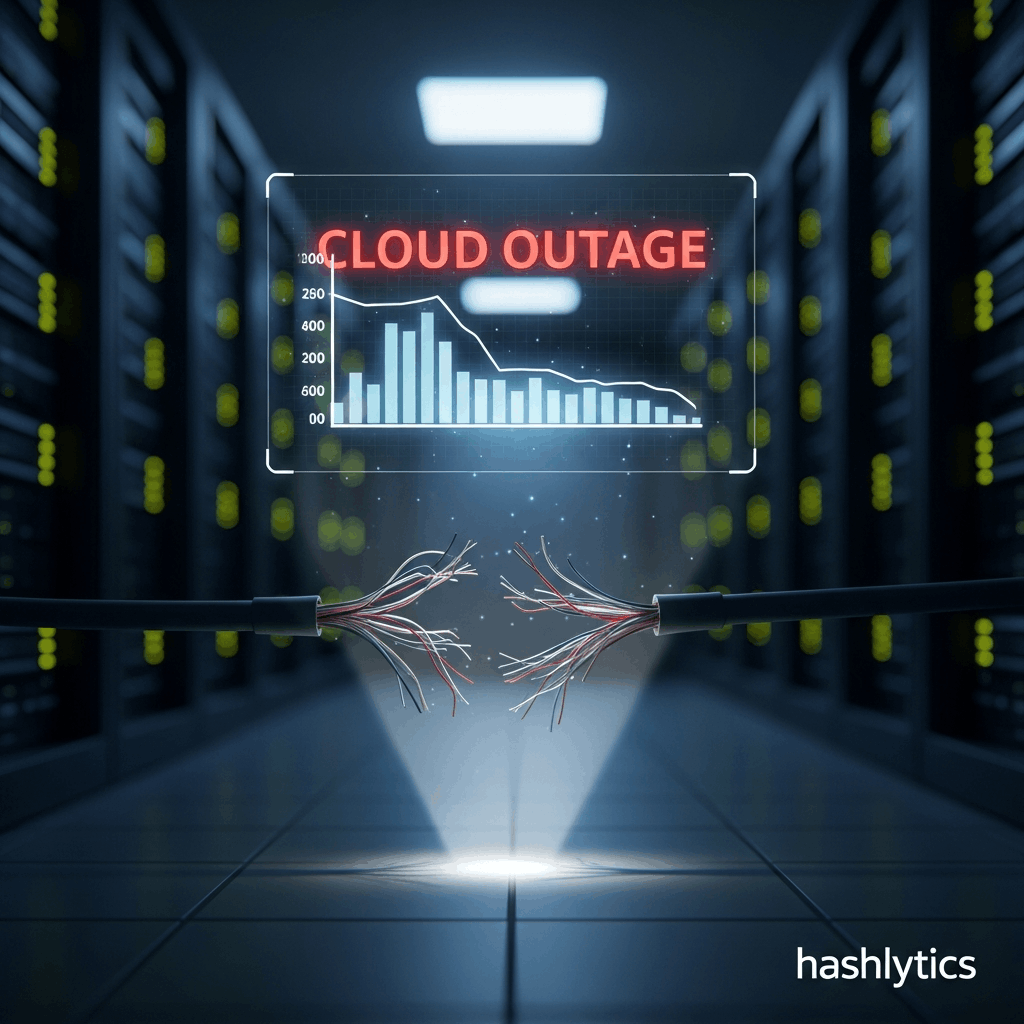
In response to significant cloud service disruptions, including a major Amazon Web Services (AWS) outage in , industrial automation and maintenance companies are increasingly advocating for and implementing hybrid cloud architectures and robust local backup solutions. These strategies aim to ensure operational continuity for sectors like food and beverage manufacturing, minimizing downtime that can range from minutes to over a day due to communication failures. The shift emphasizes resilience against potential internet service provider (ISP) or cloud platform outages.
During , several large cloud service providers experienced outages, garnering widespread attention. Jason Pennington, Endress+Hauser (E+H) USA director of digital solutions, noted that these events highlighted the reliance on cloud-first systems for scalability, response, and ease of administration. A prominent incident occurred on , when a massive AWS outage affected its US-EAST-1 region for over 15 hours. This disruption, attributed to a Domain Name System (DNS) error preventing applications from locating DynamoDB, a core cloud database, impacted over 1,000 companies and generated more than 4 million user reports on Downdetector across 60 countries.Charles Lim, head of digital security solutions at Yokogawa East Asia, identified five key vulnerabilities exposed during such cloud service failures. These include production disruptions, inability to monitor critical quality and safety parameters, supply chain blind spots, cybersecurity risks, and a loss of operator confidence. Food and beverage manufacturers, who often depend on cloud-based manufacturing execution systems (MES), quality management platforms, maintenance, ERP, and scheduling tools, face risks such as lost access to batch instructions or halted automated production lines due to missing cloud-hosted recipe data.Yokogawa East Asia’s Charles Lim outlined six best practices for food and beverage businesses to protect themselves against cloud outages:
1. Adopt Hybrid Cloud Architectures
This approach involves retaining critical, real-time control functions on-premises while utilizing the cloud for analytics and long-term optimization. It ensures plant operations can continue even during extended cloud outages. Pennington of Endress+Hauser noted that hybrid architectures, while potentially more expensive, offer invaluable benefits for continuous operation by leveraging traditional PLC/DCS and SCADA systems with historians that synchronize data post-connectivity restoration.
2. Implement Local Edge Computing
Edge devices can cache vital recipes, production schedules, and quality parameters locally, continuing control logic execution during cloud downtime. Data is automatically synchronized with the cloud once connectivity is restored, reducing dependency on constant cloud availability.
3. Build Redundant Network Paths
Utilizing multiple internet carriers and SD-WAN technology helps maintain stable connectivity, even if one provider experiences failure.
4. Maintain an Offline-Ready Operating Model
Critical systems should be designed to operate autonomously without cloud access, log data locally, and reconcile changes upon system reconnection. Regular testing of these offline capabilities is crucial for readiness.
5. Strengthen OT Cybersecurity
Operational Technology (OT) environments are particularly vulnerable during outages. Strengthening OT networks, implementing role-based access controls, and securing remote access mitigates the risk of exploitation during disruptions.
6. Use Digital Twins and Simulation Tools Locally
Having local simulation capabilities allows operators to plan, troubleshoot, and maintain plant operations even if cloud-based engineering tools become unavailable.
Endress+Hauser offers Netilion, an Industrial IoT (IIoT) ecosystem designed for industrial processes. Pennington stated that Netilion provides automatic asset management enrollment and product updates in its Library and Analytics services. With live connections, it continuously monitors asset health using the Namur NE107 framework. Netilion Connect is an embedded service that securely shares master data and performs functions like creating work orders in maintenance systems based on asset health status, including a standardized connector to the CMMS System FiiX.
Festo provides cloud-based and hybrid solutions, including the Festo AX (Automation Experience) platform for AI-based analytics, and Smartenance, a cloud-based digital maintenance manager. Jonas Schimmele, Festo business driver digital business, explained that Smartenance includes a mobile app allowing operators to perform maintenance tasks, access documents, and view videos at the machine even without continuous cloud connectivity. Its offline mode enables local execution and recording of tasks, with data syncing once connection is restored. Smartenance is available as a subscription-based SaaS with Basic, Advanced, and Premium packages.
HMS Networks offers the Red Lion FlexEdge™ Intelligent Edge Automation platform, powered by Crimson® software. Courtney Peel, strategic product manager at HMS Networks, stated that this IIoT device provides advanced network security at the edge with local control and visualization, cloud connectors with intelligent buffering, and connectivity to Ewon Talk2m cloud for secure remote monitoring. This hybrid approach protects against data loss during unplanned outages, which can disrupt remote diagnostics and predictive maintenance. FlexEdge devices log data and run critical control logic locally, ensuring uninterrupted production processes.
Specific cost implications for implementing these hybrid architectures across various scales of operations are not detailed in the provided information. The exact percentage of food and beverage manufacturers that have already adopted these comprehensive resilience strategies also remains unspecified.
The industry is moving towards integrating cloud scalability with local control reliability. Peel suggests that food processors should plan digital transformations around hybrid architectures, incorporating MQTT cloud connectors with intelligent data buffering, local control and visualization, and hybrid cloud/edge systems for real-time local control and cloud-based advanced analytics. Schimmele emphasizes edge computing for local data processing, mobile-first tools for decentralized access, and redundant connectivity paths, alongside AI-driven predictive maintenance via Festo AX deployable on-premises or in the cloud. Yokogawa’s Lim confirms that their distributed control systems (DCS), local SCADA platforms, and modular automation solutions ensure critical production and safety systems remain fully functional even without cloud connectivity, ensuring real-time control remains onsite and deterministic.
Follow us on Bluesky , LinkedIn , and X to Get Instant Updates