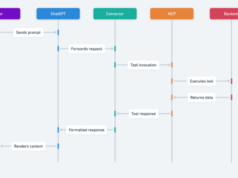
A recent Cloudflare outage disrupted access to several popular online services, including ChatGPT, X (formerly Twitter), and Canva, underscoring the increasing reliance on a small number of infrastructure providers and the potential consequences of even minor configuration errors. This incident highlighted the vulnerability of our interconnected world to single points of failure.
While the affected websites remained technically operational, millions of users were unable to access them. Cloudflare, a crucial component for DNS resolution, web security, content delivery, and traffic management, became a critical bottleneck during the outage.
Cloudflare attributed the disruption to a routine configuration update that inadvertently triggered a dormant software bug within its bot-mitigation and challenge systems. This error propagated throughout Cloudflare’s global edge network, resulting in a surge of 500-class errors for users. The company clarified that the outage was not the result of malicious activity, such as a DDoS attack, but rather an unforeseen consequence of a software update.
This incident follows similar outages affecting major providers like AWS and Microsoft Azure, reinforcing concerns about the concentration of dependencies in the digital infrastructure. Graeme Stewart, Head of Public Sector at Check Point Software, emphasized that while these large platforms offer performance and cost benefits, their failure can have widespread and rapid impacts.
Stewart cautioned that the disruption to news, payments, and public-information services demonstrates the deep integration of these systems into our daily lives. A single point of failure within a shared layer can effectively halt essential services. He also noted that outages can create security vulnerabilities, as any platform handling significant global traffic becomes an attractive target for malicious actors.
Even unintentional outages can create an environment of uncertainty that opportunistic threat actors can exploit. He emphasized the risk of organizations relying solely on a single provider without backup options, which can lead to widespread disruptions when that provider experiences issues. Stewart stated that the internet, originally designed for resilience through distribution, has become overly concentrated in a handful of cloud providers.
Oded Vanunu, Head of Vulnerability Research at Check Point Software, provided a technical explanation of the incident. He explained that Cloudflare’s DNS services, which translate domain names into IP addresses, are essential for website access. Disruptions in this area prevent browsers from locating the sites users are trying to reach. Furthermore, its content delivery network (CDN), designed to distribute cached content closer to users, becomes unavailable, leading to a surge in traffic to the origin servers, potentially overwhelming them.
Because Cloudflare functions as a front-end for DNS, CDN, WAF (Web Application Firewall), and access flows for a significant portion of the web, a failure in this inline path inevitably results in immediate, user-visible errors.
Vanunu stressed the importance of organizations treating CDN and DNS services as tier-zero dependencies, on par with critical systems like identity management or power. He suggested several strategies for mitigating risk, including: multi-provider authoritative DNS, multi-CDN architectures with health-based traffic steering, realistic TTLs (Time To Live), and resilient client-side fallbacks.
He also highlighted the importance of engineering controls such as overload protection, circuit breakers, and jittered retries – measures commonly employed in large-scale reliability engineering.
Both experts emphasized the need for greater dependency diversity, continuous failover testing, and gradual rollout of configurations to prevent correlated failures. Enterprises should consider dual DNS providers, active-active regional architectures, and well-documented runbooks for rerouting critical assets during CDN brownouts. Governments and critical-infrastructure operators should incorporate resilience frameworks from NIST and CISA and participate in cross-sector continuity exercises.
The Cloudflare outage, although brief, served as a stark reminder of the inherent vulnerabilities in our increasingly centralized digital ecosystem. As more services consolidate around a few global platforms, resilience strategies based on redundancy, diversity, and rigorously tested failover paths are becoming not just best practices, but essential requirements for maintaining availability in the face of unforeseen faults. The internet of the future needs to be built on stronger foundations, with multiple layers of defense against single points of failure.