Why This Partnership Matters
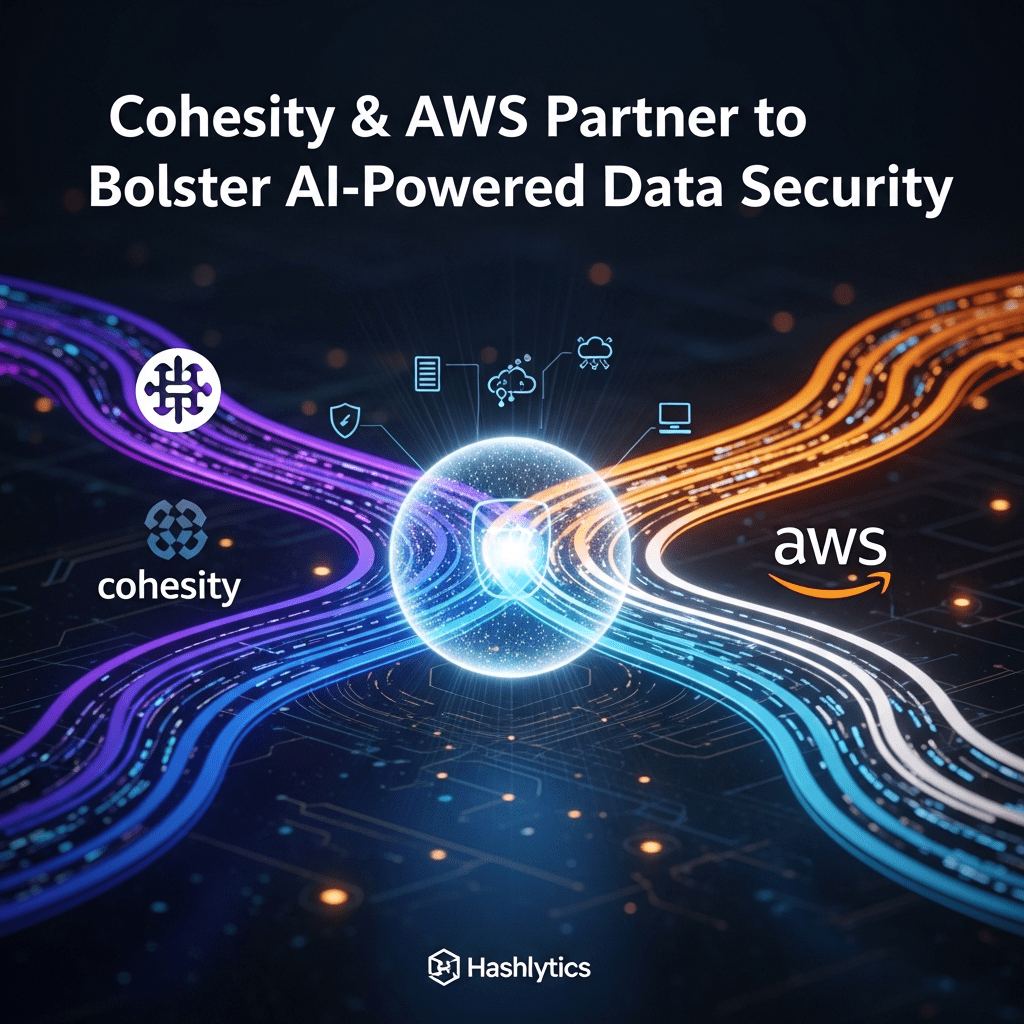
Traditional data backup treats protected information as static, idle storage, something to recover only when disaster strikes. This partnership takes a different approach: transforming backup data from a cost center into a strategic asset that organizations can leverage for AI insights while maintaining security and compliance.
For enterprises managing hybrid environments spanning on-premise infrastructure and cloud workloads, fragmented data protection creates operational complexity and security gaps. The collaboration addresses these challenges through native integration and AI-powered capabilities.
Three Core Capabilities
Cloud-Native Backup Integration
Cohesity‘s platform already supports over 1,000 data sources, but the partnership extends native integration with key AWS services:
| AWS Service | Protection Capability |
|---|---|
| Amazon EC2 | Compute instance backup with application-consistent recovery |
| Amazon RDS | Database protection across multiple database engines |
| Amazon S3 | Object storage backup with versioning and lifecycle management |
| Amazon DynamoDB | NoSQL database protection with point-in-time recovery |
Enterprise-grade deduplication and compression reduce storage costs while maintaining fast recovery times — critical for organizations managing petabytes of data across hybrid environments.
Immutable Cyber Vaults
Cohesity’s cyber vaults on AWS provide geographically isolated, tamper-proof backup storage designed specifically to defend against ransomware attacks. Key features include:
- Global reach: Available across 36 AWS regions worldwide
- Geographic isolation: Backup data separated from production environments to prevent lateral movement during attacks
- AWS-native immutability: Write-once-read-many (WORM) controls prevent data modification or deletion
- Private network isolation: Air-gapped architecture limits attack surface
- Instant accessibility: Rapid recovery capabilities when needed
- Compliance support: Meet stringent regulatory requirements for data retention and security
AI-Powered Data Intelligence
Cohesity Gaia, a generative AI assistant, transforms backup data into a queryable asset. Organizations can extract insights from petabytes of unstructured data spanning file shares, SaaS applications, and other sources while maintaining governance and security controls.
This capability addresses a fundamental challenge: enterprises generate massive amounts of unstructured data, but struggle to extract value from it. By making backup data AI-ready, organizations can leverage information that would otherwise remain dormant.
What This Means for Enterprises
| Challenge | Solution |
|---|---|
| Ransomware Protection | Immutable vaults with geographic isolation and air-gapped architecture |
| Multi-Cloud Complexity | Unified platform managing on-premise and AWS workloads |
| Storage Costs | Enterprise deduplication and compression reducing overhead |
| Compliance Requirements | AWS-native immutability controls meeting regulatory standards |
| Data Utilization | AI-powered insights from backup data with Cohesity Gaia |
| Recovery Speed | Rapid restoration across 36 global AWS regions |
The Cohesity-AWS collaboration represents a shift in how enterprises think about data protection. Rather than treating backups as insurance policies gathering dust, organizations can now leverage protected data as an active business asset while maintaining security and compliance.
For companies managing hybrid environments, the partnership solves practical problems: consistent protection across diverse workloads, ransomware defense through immutable storage, and cost optimization through intelligent deduplication. The AI capabilities add another dimension, making it possible to extract value from data that would otherwise remain inaccessible.
As ransomware attacks grow more sophisticated and data volumes continue expanding, the ability to protect, recover, and leverage information becomes a competitive differentiator. This partnership provides a framework for doing all three simultaneously — protecting data from threats, ensuring rapid recovery when needed, and unlocking insights that drive business decisions.
The question for enterprises isn’t whether to modernize data protection, but how quickly they can implement solutions that address security, recovery, and business intelligence in a unified platform.