
+1.39%
+3.01%
-0.16%
-3.67%
+39.59%
+5.07%
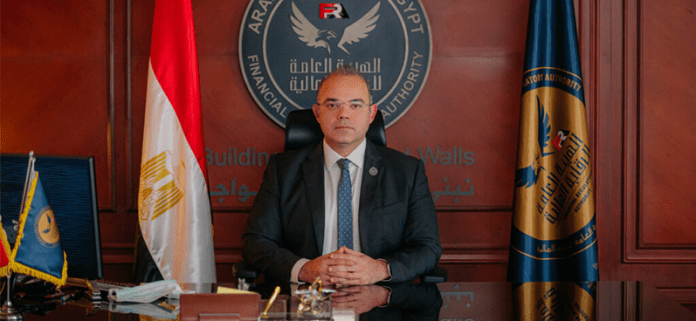
- Key Appointment: Mohamed Farid Saleh named Minister of Investment and Foreign Trade.
- Previous Regulatory Roles: Served as Executive Chairman of Egypt’s Financial Regulatory Authority (FRA), Chairman of The Egyptian Exchange (EGX) since , and sits on the board of the Central Bank of Egypt.
- International Experience: Held roles as president of the Arab Federation of Capital Markets and vice chairman of the International Organization of Securities Commissions (IOSCO).
- Fintech-Forward Policy: While at the FRA, extended a suspension on new licenses for traditional microfinance and consumer finance companies in , while explicitly exempting fintech-driven firms.
- Market Impact: This policy directly influenced a market serving over 10 million borrowers with a loan book exceeding EGP 112 billion, according to source data.
- Notable Reform: Led the overhaul of Egypt’s Special Purpose Acquisition Company (SPAC) framework to allow for more flexible structures like share swaps and credit-financed acquisitions.
The elevation of Mohamed Farid from a top regulator to a key cabinet minister is a clear endorsement of his technocratic, market-driven approach. His appointment is a powerful signal to international investors that Egypt is doubling down on its financial modernization agenda. Under his leadership at the FRA, policies deliberately created a pathway for technology-first financial models to scale, often at the expense of traditional incumbents. By placing him in charge of attracting foreign investment, the government is essentially making his regulatory philosophy a cornerstone of its national economic pitch. This suggests a future where venture capital exits, fintech innovation, and capital market depth are not just sectoral goals but are seen as primary engines for attracting the foreign capital Egypt urgently needs.
While Farid’s tenure at the FRA was praised for fostering innovation, it also drew criticism for potentially creating an uneven playing field. The decision to halt licensing for traditional consumer and microfinance companies while exempting fintechs was seen by some as regulatory favoritism that could lead to market concentration. Critics argued this approach risked protecting a new generation of technology-driven incumbents, like MNT-Halan and valU, from competition. In his new, more political role, Farid will have to balance the goal of attracting high-growth tech investment with the need to ensure a competitive and stable market for all participants, a task more complex than the insulated world of financial regulation.
Farid’s success will be measured by his ability to translate a regulator’s mindset into a national investment strategy. The key indicators to watch will be the flow of foreign direct investment into Egypt’s non-oil sectors, particularly technology and finance, over the next 12 to 18 months. His initial policy moves regarding import restrictions and foreign exchange shortages will be critical in restoring investor confidence. Furthermore, market observers will be watching for any new frameworks designed to attract foreign capital and whether he can effectively coordinate with the Central Bank and Ministry of Finance to create a predictable and stable macroeconomic environment. His ability to navigate these broader challenges, well beyond the scope of financial regulation, will determine if his appointment marks a true turning point for Egypt’s economy.
- Mohamed Farid Saleh’s appointment signals that fintech and capital market reform are now central pillars of Egypt’s national economic policy.
- His track record shows a clear preference for technology-driven financial models, which he successfully promoted through targeted regulatory actions at the FRA.
- The move aims to reassure and attract foreign investors by installing a credible, market-savvy technocrat in a critical investment role.
- Farid faces the challenge of applying his regulatory expertise to broader macroeconomic issues like trade policy and currency stability.
- While his policies have spurred innovation, concerns about market concentration and regulatory favoritism will likely follow him into his new ministry.
Follow us on Bluesky , LinkedIn , and X to Get Instant Updates