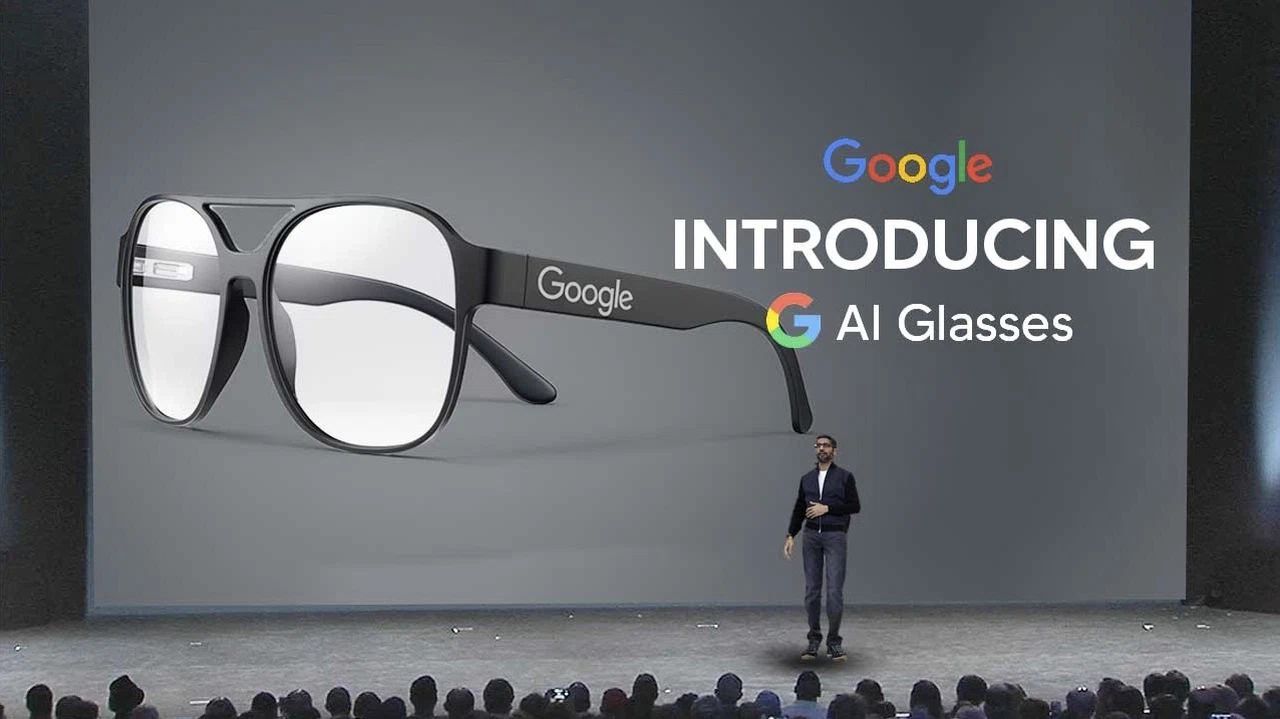
Google confirmed two product lines of AI glasses arriving in 2026 through partnerships with Samsung, Warby Parker, and Gentle Monster. Running on Android XR, the glasses integrate Gemini 2.5 Flash Lite to create context-aware assistants that see what wearers see and respond intelligently, not just with generic voice answers.
Two Distinct Models: Audio vs Display
| Feature | Audio-Only Glasses | Display Glasses |
|---|---|---|
| Screen | None (screen-free) | Monocular microLED in right lens |
| Core Function | Hands-free Gemini AI conversations | AR overlays for navigation, captions, notifications |
| Hardware | Cameras, mics, speakers | Same + 600×600 pixel display |
| Use Cases | Photography, real-time Q&A, ambient computing | Turn-by-turn maps, live translation, private messaging |
| Target Launch | 2026 (likely earlier in year) | 2026 (confirmed dev kits shipping now) |
Why This Matters: Context Over Commands
Unlike Meta’s Ray-Ban glasses that require explicit voice prompts, Gemini on Android XR understands environmental context. The AI processes what cameras capture in real time, enabling conversational queries like “What type of tree is that?” or “Remind me to buy this when I’m near a store” without rigid command syntax.
Display Capabilities Surprise Industry
Early demos reveal sharp microLED resolution with vibrant colors at close range. Navigation shows compact pill-shaped directions when looking straight ahead, expanding to full map overlays when tilting your head down—transitions feel fluid and game-like. Third-party apps like Uber already demoed step-by-step airport navigation with visual cues.
Android XR: The Unifying Platform
Google’s Android XR ecosystem ties glasses and headsets into one OS, letting mobile apps project to eyewear without developer work. The latest SDK (Developer Preview 3) enables optimization through the Glimmer design language, which incorporates Material Design principles for spatial interfaces.
Cross-Device Integration
- Watch sync: Display-less glasses send photo previews to Android Wear watches instantly
- Gesture control: Wearables communicate for hands-free navigation
- App continuity: Notifications and media controls sync across phone, glasses, headset
Competing With Meta’s $799 Display Glasses
Meta’s Ray-Ban Display glasses launched September 2025 with 600×600 displays and Neural Band EMG wristbands for gesture control, priced at $799. Google’s display version targets similar functionality but leverages Android’s app ecosystem advantage, developers already building for Android automatically support XR glasses.
Key Competitive Differences
- Pricing: Google hasn’t disclosed costs; expect $299-$799 range across models
- Platform: Android XR supports iOS devices; Meta requires Meta accounts
- AI model: Gemini multimodal reasoning vs Meta’s Llama 3 custom variant
- Partnership scale: Samsung, Warby Parker, Gentle Monster vs Meta’s exclusive EssilorLuxottica deal
What Sergey Brin Learned From Google Glass
Co-founder Sergey Brin acknowledged past mistakes during Google I/O 2025: less advanced AI in 2013, poor supply chain knowledge leading to expensive price points, and social stigma from bulky hardware. Android XR addresses these, mature Gemini capabilities, established eyewear partnerships, and fashion-forward designs that don’t scream “tech prototype.”
Developer Access Begins Now
Google ships monocular dev kits to developers today, expanding access over coming months. Early partners include Uber, GetYourGuide, and other location-based services. The goal: launch with rich third-party experiences on day one, avoiding the app desert that plagued earlier AR attempts.
Sample Use Cases in Development
- Retail: Price comparisons and reviews displayed over products in-store
- Travel: Real-time flight updates and gate directions in airports
- Education: Contextual information overlays during museum visits
- Accessibility: Live captions for conversations, sign language translation
Google positions this as building “cognitive scaffolding” for everyday computing—the decision-making layer that understands context before displaying information. With Meta selling over 2 million Ray-Ban smart glasses since 2023 and displays advancing rapidly, 2026 marks smart eyewear’s mainstream moment.