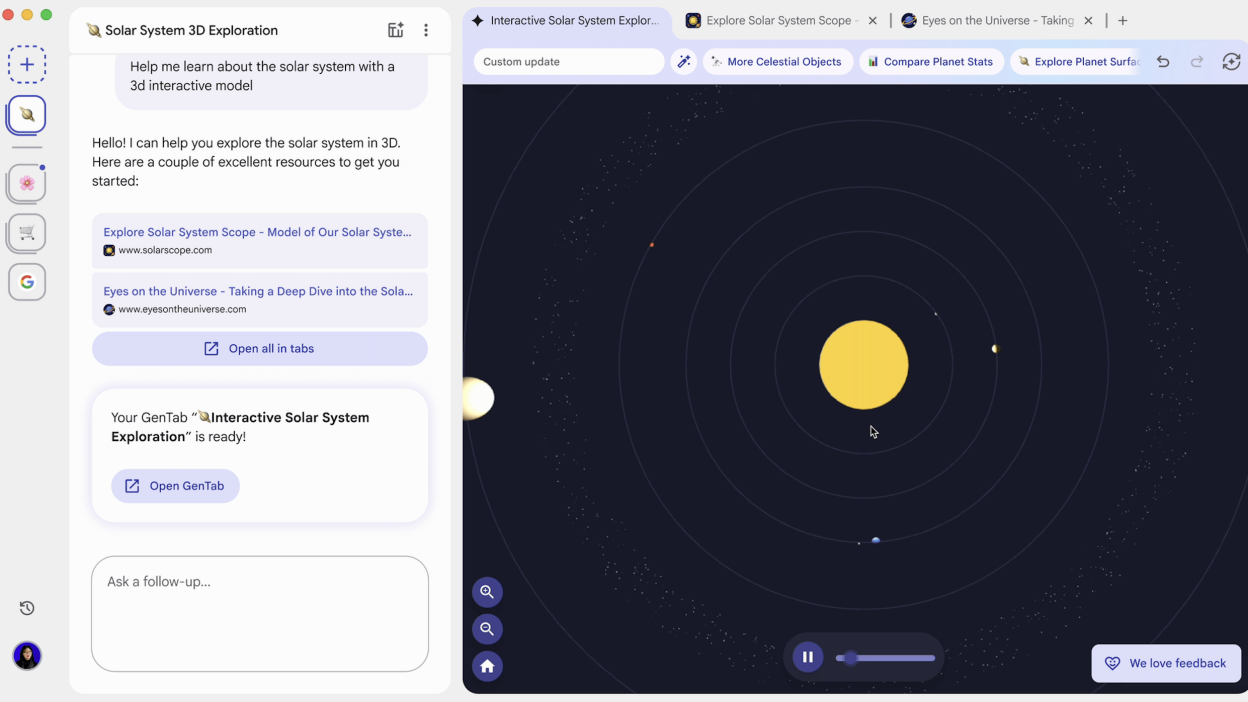
Imagine planning a complex project, not by sifting through endless search results, but by having an AI assistant weave those resources into a functional web application tailored to your specific needs. That’s the core idea behind Google’s GenTabs technology.
Disco isn’t just about summarizing information; it’s about transforming it. The system analyzes your browsing history, identifies relevant data, and then dynamically generates a web app complete with interactive elements.
Consider these examples:
- An interactive meal planner that pulls recipes, nutritional information, and even shopping lists from various sources.
- A vegetable garden planner that combines planting guides, soil recommendations, and local weather data into a single, easy-to-use interface.
Beyond Summarization: Interactive Web Apps
The crucial distinction is that Disco isn’t just regurgitating information. It’s creating interactive tools. Instead of passively reading about different tomato varieties, you can use the garden planner to visualize your plot, calculate planting schedules, and track your progress.
This moves beyond simple aggregation. It enables a more active and engaged relationship with the information we consume online.
While many AI companies are focusing on enhanced web browsing capabilities via large language models, like Artificial Intelligence Google Gemini, Disco takes a different approach. It’s about building specific, functional tools that directly address user needs.
This could signal a shift in Google’s AI strategy – a move towards more practical, task-oriented applications of the technology.
The implications are intriguing. Will Disco become a standard feature in future versions of Chrome? Could it spawn a new ecosystem of AI-powered web app generators? The possibilities are vast, and the potential impact on how we interact with the web is significant.