Huawei’s HarmonyOS is strategically expanding beyond smartphones and tablets, now targeting the lucrative government and enterprise sectors. The unveiling of the HarmonyOS Enterprise Edition represents a significant shift, aiming to deliver a secure and efficient operating system tailored to the unique needs of these demanding environments. The question is: can HarmonyOS disrupt the established order and become the preferred OS for sensitive government and corporate data?
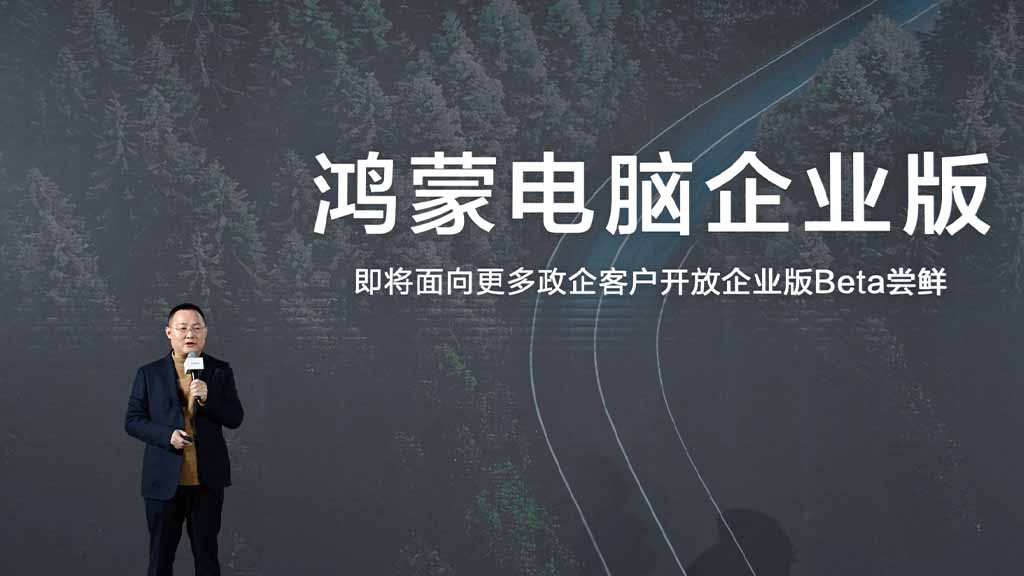
The announcement occurred during Huawei’s HarmonyOS Office New Product Technology Communication Conference. There, Zhu Dongdong, President of Huawei Devices Tablet and PC Product Division, revealed an early beta program designed to onboard government and enterprise clients. This isn’t simply a consumer OS with a new look; it’s a fundamental reimagining of how an operating system can cater to the specific requirements of large organizations.
The Enterprise Edition is built upon the robust foundation of HarmonyOS 6, which has already undergone extensive testing in consumer devices such as smartphones, tablets, and PCs. This prior validation is crucial, offering a level of confidence and stability that is paramount for enterprise adoption. It’s a strategic move by Huawei to leverage their existing ecosystem as a springboard into a new market.
Security is, of course, paramount, and Huawei is emphasizing a range of features designed to protect sensitive data. A key feature is the “enterprise digital dual-space feature,” which allows users to seamlessly switch between enterprise and personal environments with a simple swipe.
Dual-Space: Balancing Security and Efficiency
This dual-space approach offers more than just convenience; it physically isolates enterprise data within the dedicated Enterprise space. This isolation ensures that sensitive information remains protected while still allowing employees the freedom and efficiency they need for personal tasks and communication. It’s a well-considered solution to a common challenge: balancing security with usability.
Furthermore, the OS integrates AI capabilities, including a business-focused version of the Celia voice assistant. This AI assistant can handle tasks such as launching PC applications and answering queries, streamlining workflows and boosting productivity. The commitment to cross-device file transfers, a core feature of HarmonyOS, remains intact, further enhancing collaboration and efficiency.
Huawei isn’t acting alone in this endeavor. The company states that over 30 leading companies have joined its “Quingyun Xinhe” commercial services platform. This ecosystem spans a diverse range of industries, including manufacturing, construction, education, finance, power, and retail. This wide-ranging adoption indicates a significant level of interest and potential for growth.
For large enterprises, the HarmonyOS Enterprise version employs a HarmonyOS Meta services mode. Compared to the traditional Hook mode, it decouples from the kernel, improving system stability. It supports enterprise digital spaces, eliminating the need for separate sandbox adaptations for applications and enabling synchronization with the HarmonyOS ecosystem.
Small and medium-sized enterprises (SMEs) are also within Huawei’s sights. HarmonyOS Enterprise offers an out-of-the-box experience for SMEs. Administrators can configure the system in the cloud, and employees can automatically initiate the computer after turning it on. This streamlined deployment process aims to reduce the burden compared to traditional setups, improving the user experience.
Huawei’s push into the enterprise market with HarmonyOS is a calculated gamble with potentially massive rewards. The success of this venture hinges on convincing governments and corporations that HarmonyOS offers a secure, reliable, and efficient alternative to established operating systems. The next few years will be critical in determining whether Huawei can truly carve out a significant share of this lucrative market. The company’s existing ecosystem, combined with a focus on security and AI-powered features, gives them a fighting chance.