
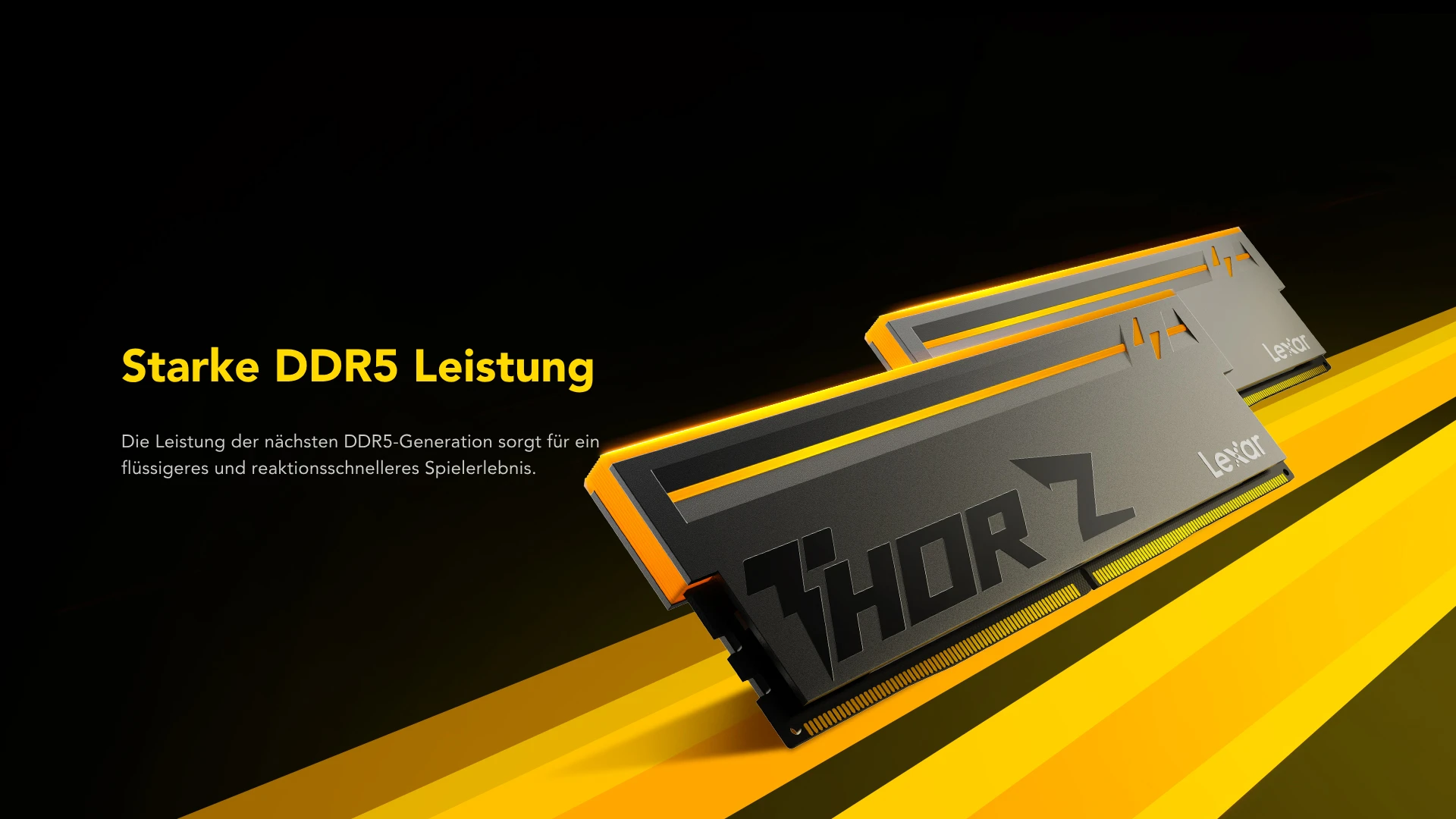
Lexar has introduced its new THOR Z RGB DDR5 RAM, a memory kit designed for PC enthusiasts and gamers, featuring a minimalist aesthetic and integrated RGB lighting. The modules offer speeds of up to 6000 MT/s and support for both Intel XMP 3.0 and AMD EXPO for simplified overclocking. This launch comes amidst reports of rising DDR5 memory prices, driven by increased demand from AI data centers and shifts in manufacturing priorities.
Lexar announced the THOR Z RGB DDR5 RAM, a 32 GB kit consisting of two 16 GB modules. The memory modules are engineered to achieve clock rates of up to 6000 MT/s with CAS latencies ranging from CL36 to CL38, operating at voltages between 1.35 V and 1.4 V. The design emphasizes a minimalist approach, intended to complement various PC build aesthetics, from colorful RGB setups to more subdued systems. The RGB lighting is designed to provide an even and intense glow, compatible with major synchronization ecosystems like ASUS Aura Sync, MSI Mystic Light, Gigabyte RGB Fusion 2.0, and ASRock Polychrome Sync.
The THOR Z RGB DDR5 RAM supports both Intel XMP 3.0 and AMD EXPO profiles, which enables users to activate higher memory speeds with minimal configuration changes in the BIOS. This feature aims to make overclocking accessible for a broader range of users. While Lexar describes the performance as fierce DDR5 performance
, external analysis suggests the kit offers solid speed and stable latency, making it suitable for gaming and everyday PCs rather than extreme overclocking scenarios. The modules are compatible with standard DDR5 slots and major Intel and AMD motherboards, incorporating a heat spreader for heat dissipation and stability during continuous operation.
The introduction of the THOR Z RGB DDR5 RAM aligns with the ongoing demand for high-performance memory that also offers aesthetic customization options for PC builders and gamers. The market for DDR5 memory continues to grow as new platforms adopt the standard, despite broader market challenges. According to IPC2U Worldwide, global memory demand, particularly from AI data centers and DDR5 platforms, currently exceeds supply, leading manufacturers to prioritize more expensive high-end segments. This shift influences the types of products released to cater to varying consumer needs and market availability.
The release of Lexar‘s new memory modules is expected to contribute to the competitive landscape of the DDR5 RAM market. However, industry analysts, including TrendForce, project that DRAM contract prices could jump by approximately 55% to 60% in the first quarter of due to tightening supply. This trend, driven by increased demand for High Bandwidth Memory (HBM) for AI accelerators, may affect the retail pricing of standard DDR5 kits throughout , with some forecasts suggesting prices could continue to climb through mid-.
Follow us on Bluesky , LinkedIn , and X to Get Instant Updates