
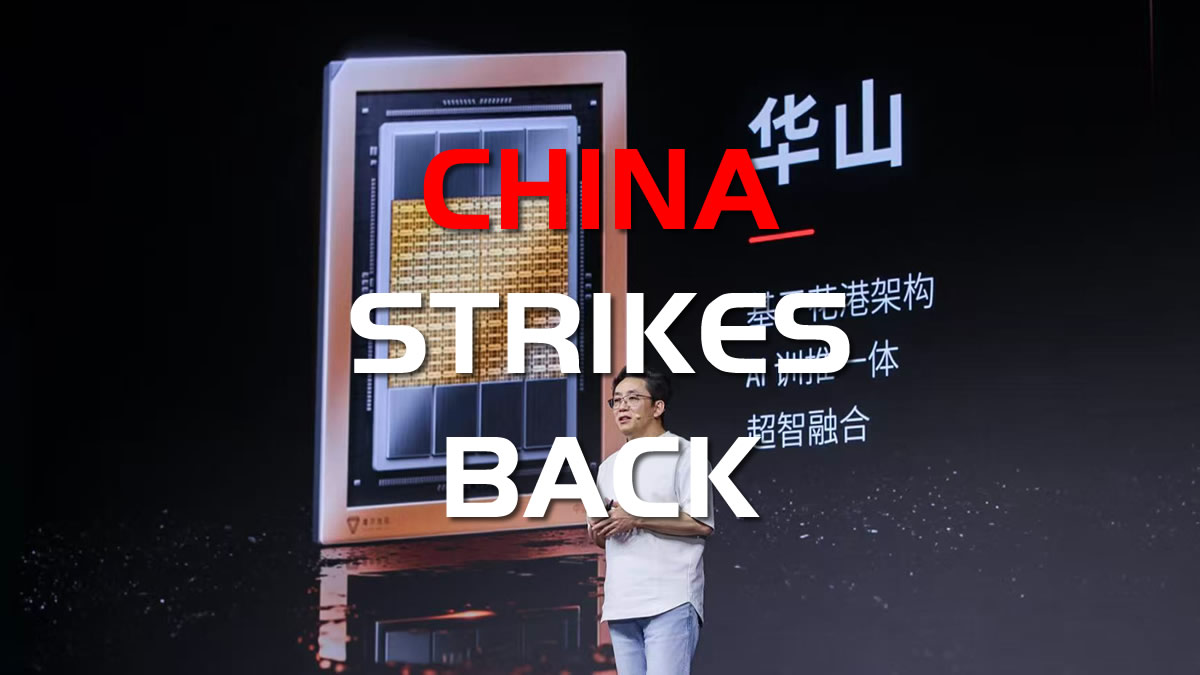
The global GPU market has spent years as a comfortable oligopoly, but Moore Threads just threw a silicon-sized wrench into the machinery of Nvidia and AMD. At the developer conference, the Beijing-based manufacturer unveiled its Huagang architecture, a design that doesn’t just aim for incremental gains but claims a staggering 15x performance leap in AAA
gaming.
While Western manufacturers have focused on refining existing processes, Moore Threads is attempting to leapfrog several generations of development in a single bound. The announcement marks a pivotal moment for the Chinese tech industry, signaling an aggressive move toward self-sufficiency in both the high-end gaming and artificial intelligence sectors.For years, the prospect of a third or fourth player in the graphics space was a pipe dream relegated to tech forums and enthusiast wishlists. Intel’s entry into the market provided some friction, but the real disruption might be coming from the East. Moore Threads is no longer content with being a regional alternative; they are positioning themselves as a direct threat to the status quo.
The narrative of China striking back
is often hyperbole, but the metrics shared at MUSA 2025 suggest a company that has finally found its footing. By targeting the most demanding workloads—ray tracing and high-fidelity gaming—Moore Threads is sending a clear message: the days of Nvidia and AMD’s uncontested dominance in the high-performance computing sector may be numbered.
The foundation of this new era is the Huagang GPU architecture. According to official data, this new design boasts a 50% increase in compute density and a 10% improvement in power efficiency. These aren’t just marginal gains; they represent a fundamental restructuring of how the company handles compute units and power delivery across its hardware stack.
From this architecture, Moore Threads has birthed two distinct chips: Lushan and Huashan. Lushan is the flagship for the gaming community, designed to handle modern rendering pipelines, while Huashan is a dedicated AI powerhouse. Huashan reportedly supports math formats ranging from FP64 to FP4 and introduces custom mixed-precision formats like MTFP8 to trade blows with Nvidia’s Blackwell-class hardware.
For gamers, the Lushan chip is the most significant development. It is Moore Threads’ first DirectX 12 Ultimate-compliant graphics card, meaning it supports the full suite of modern features like Variable Rate Shading and Mesh Shaders. The company claims that Lushan delivers a 15x performance boost in AAA
gaming performance compared to their previous generation, which could finally make Chinese GPUs a viable option for enthusiast-level rigs.
The gameplay implications are massive, especially considering the dedicated hardware for ray tracing. Moore Threads claims a 50x increase in ray tracing performance and a 4x increase in texture fill rate. This means smoother frame rates in visually dense environments and a level of graphical fidelity that was previously impossible for non-Western hardware to achieve. If these claims hold up in real-world testing, Lushan could provide the performance necessary to run modern titles at high resolutions with all the bells and whistles enabled.
The technical leap is underpinned by a massive expansion of memory and AI capabilities. Lushan features 64x more AI compute than its predecessors, which is likely used for image upscaling and frame generation techniques similar to DLSS or FSR. Furthermore, the chip offers an 8x increase in atomic memory access and 4x the GPU memory capacity, addressing the massive VRAM requirements of modern open-world games.
However, it is important to note that specific benchmarks and clock speeds remain under wraps. While the architectural gains are impressive on paper, the software side—specifically driver stability—remains the final hurdle. For a detailed look at the discussion surrounding these claims, enthusiasts are already diving into the OC3D Forums to debate whether these specs will translate into a seamless user experience.
The emergence of Moore Threads as a legitimate contender is the best news gamers have had in years. Competition is the only force that truly drives down prices and forces innovation. If Lushan can deliver even a fraction of its promised 15x gains while maintaining a competitive price point, it will force the established giants to reconsider their pricing strategies in the massive Chinese market and beyond.
Gamers should watch this space closely. While we wait for independent reviews to confirm if the Huagang architecture lives up to the hype, the sheer ambition on display is undeniable. The GPU duopoly isn’t dead yet, but for the first time in a decade, it looks genuinely vulnerable. Keep your eyes on the benchmarks; the next 12 months will determine if Moore Threads is a true giant-killer or just a very loud challenger.
Follow us on Bluesky , LinkedIn , and X to Get Instant Updates