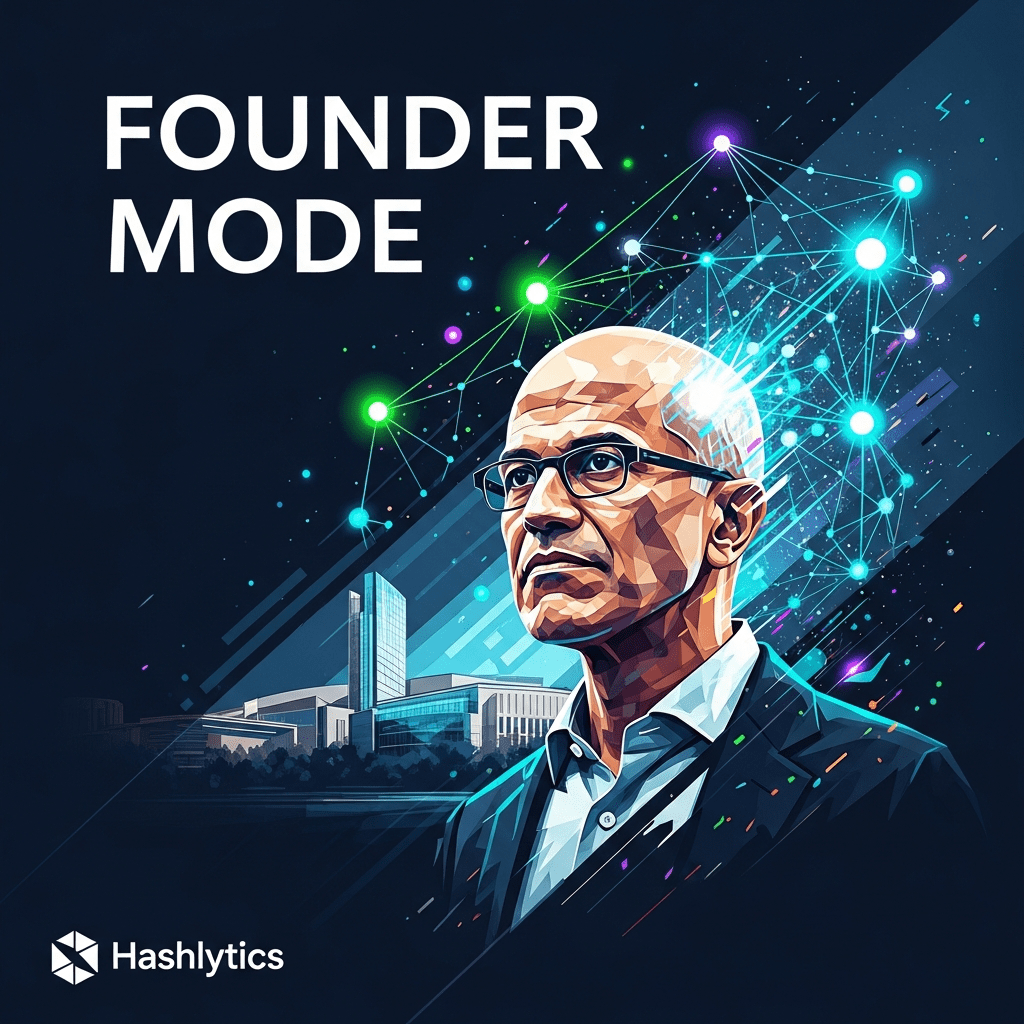
Microsoft CEO Satya Nadella has reportedly adopted a founder mode
leadership style to accelerate the company’s internal artificial intelligence (AI) development, according to Meta technology chief Jay Parikh. This strategic shift, reported in late , aims to enhance Microsoft’s competitiveness against rivals such as Amazon, Google, and Anthropic in the rapidly evolving AI landscape. The move includes granting independent budgets and salary structures to AI development teams, a decision that has reportedly generated internal friction but is deemed necessary to attract and retain top AI talent.
Microsoft CEO Satya Nadella has reportedly taken a hands-on approach to the company’s in-house AI development, a style described as founder mode
by Meta technology chief Jay Parikh. This leadership adjustment, which began in late , involves a significant reorganization to streamline decision-making and foster faster innovation within Microsoft’s AI initiatives. As part of this strategy, new executives, including former Meta engineering boss Jay Parikh (now leading Microsoft’s CoreAI unit) and Google DeepMind co-founder Mustafa Suleyman (spearheading consumer AI), have been brought in and granted independent budgets and salary structures to attract and retain specialized AI talent.
Microsoft’s proactive measures come amidst an intensely competitive AI market. While the company maintains a strong position, particularly with its Azure cloud AI services, it faces challenges from other tech giants. Microsoft’s Copilot AI assistant, integrated into Microsoft 365, currently serves approximately 150 million monthly users. This user base, however, trails Google’s Gemini, which has around 650 million users, and OpenAI’s ChatGPT, reporting approximately 800 million users.
Furthermore, Microsoft’s partnership with OpenAI has undergone significant changes. While an agreement announced on , cemented a cloud computing contract until at least , Microsoft will reportedly lose exclusive rights to OpenAI’s research and models by the early . This new arrangement also means OpenAI is no longer exclusively required to utilize Microsoft’s data centers, although OpenAI has committed to purchasing $250 billion worth of computing power from Microsoft’s Azure cloud unit. Dee Templeton, Microsoft’s deputy chief technology officer, noted that Satya is in ‘founder mode’
to demonstrate urgency and improve internal collaboration.
The reported shift to founder mode
by CEO Satya Nadella is attributed to the escalating competition within the AI sector and the critical need to retain top AI talent. As Microsoft’s exclusive access to OpenAI’s advanced research and models diminishes, the company aims to strengthen its in-house AI capabilities and reduce dependency on external partnerships. The intense global AI talent war sees tech giants offering substantial compensation packages, including reported $100 million bonuses from Meta to poach OpenAI researchers. Soma Somasegar, a venture capitalist at Madrona, commented that Nadella’s leadership changes are intended to reduce red tape
and accelerate Microsoft’s proprietary AI development.
Specific details regarding the new independent budget allocations and the precise structure of the differentiated salary packages for AI teams have not been publicly disclosed. The full extent of the internal friction reported within Microsoft resulting from these organizational changes remains unclear. The exact timeline for the complete transition away from exclusive OpenAI research access beyond is also not fully defined in public statements.
This strategic pivot is expected to lead to a more centralized and rapid development cycle for Microsoft’s proprietary AI solutions. Users of Microsoft’s products, particularly those integrated with Copilot, may see faster innovation and more tailored AI features as the company intensifies its internal efforts. The heightened competition for AI talent is likely to continue, potentially driving up compensation and fostering a dynamic environment for engineers and researchers in the field. Industry observers will monitor how this internal restructuring impacts Microsoft’s market share in AI services and its ability to innovate independently.
Follow us on Bluesky , LinkedIn , and X to Get Instant Updates