-0.64%
-0.30%
+5.27%
-0.08%
-8.21%
+1.60%
Why Housing Trumped Crypto
Sources familiar with Senate scheduling indicate the administration made a direct request to front-load domestic economic priorities—particularly housing affordability and mortgage reform—in the legislative calendar. With battleground state voters citing housing costs as a top concern, the White House considers the political calculus straightforward: comprehensive crypto regulation can wait; housing policy cannot.
The decision leaves digital asset firms operating under what industry lawyers describe as “regulation by enforcement” — a patchwork of existing securities laws applied inconsistently across state and federal jurisdictions.
Market Impact
Major exchanges responded to the delay with measured disappointment. Coinbase, which has publicly backed the CLARITY Act, saw its stock dip 3.2% on the news before recovering. The company declined to comment beyond stating it remains “engaged with lawmakers.”
Bitcoin and Ethereum prices showed minimal reaction, suggesting markets had already priced in legislative gridlock. However, several firms reportedly planning U.S. listings have quietly extended their international operations instead, according to three digital asset attorneys who spoke on condition of anonymity.
“The delay doesn’t just postpone clarity — it accelerates capital flight,” said Michael Torres, managing partner at Blockchain Legal Group. “Every quarter without a framework is another quarter where serious projects consider Singapore, Switzerland, or the UAE instead of New York.”
Regulatory Activity Continues Elsewhere
While Congress stalls, other federal bodies are advancing crypto oversight independently. The U.S. Department of the Treasury released updated guidance for decentralized finance protocols in January, clarifying compliance expectations for DeFi developers. Separately, the Federal Reserve continues researching a potential digital dollar, though a public rollout remains years away.
The SEC and CFTC, meanwhile, continue enforcement actions using existing securities laws—an approach the CLARITY Act was designed to replace with comprehensive market structure rules. Recent high-profile cases suggest neither agency plans to pause enforcement while waiting for Congress.
The Cost of Delay
Dr. Eleanor Vance, senior researcher at the Center for Financial Innovation, warns that repeated postponements create more than just uncertainty: “When agencies operate without clear legislative authority, enforcement becomes unpredictable. Firms can’t determine compliance obligations in advance — they learn them through enforcement actions after the fact. That’s the worst possible environment for fostering innovation.”
The phenomenon disproportionately affects smaller firms lacking the legal resources to navigate ambiguous regulations. Several crypto startups have relocated to jurisdictions with clearer rules, including countries like Nigeria that recently implemented comprehensive digital asset tax frameworks.
What Remains Unclear
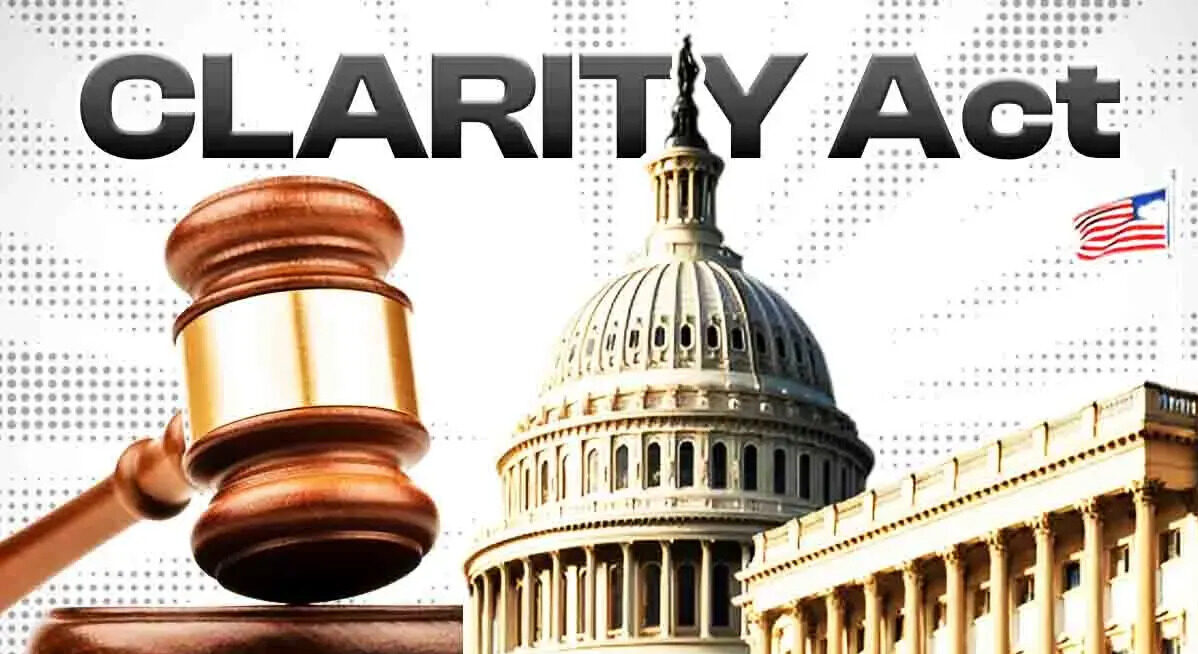
The Senate has not announced a specific date for the rescheduled CLARITY Act review beyond “late February or March 2026.” Details of the housing legislation that took priority also remain undisclosed, making it difficult to assess whether that timeline is realistic or represents another placeholder subject to change.
Industry observers note this marks the second significant delay for the bill, raising questions about whether crypto regulation has sufficient political constituency to advance in an election year dominated by inflation, immigration, and housing concerns.
What This Means for Crypto Businesses
In the near term, digital asset firms face three concrete challenges:
Continued compliance uncertainty: Operating under existing securities laws without clear guidance on which activities require registration, creating legal risk for novel business models.
Competitive disadvantage: International competitors in jurisdictions with clear crypto frameworks can move faster on product development and customer acquisition without fear of retroactive enforcement.
Capital allocation questions: Firms must decide whether to invest in U.S. expansion or hedge by building international infrastructure, duplicating costs and diluting focus.
The delay also affects institutional adoption. Several banks and asset managers have cited regulatory clarity as a prerequisite for expanding crypto services, meaning postponed legislation translates directly to deferred institutional capital.
The Path Forward
If the CLARITY Act review proceeds in late February as currently scheduled, it would still face months of committee work, floor debate, and potential amendments before reaching a final vote. Even optimistic timelines place comprehensive crypto regulation in mid-to-late 2026—assuming no further delays.
That timeline creates a paradox: by the time clear rules arrive, the industry may have already adapted to operating without them, either through offshore expansion or by conforming to the most restrictive interpretations of existing law to avoid enforcement risk.
For an industry built on the promise of moving fast and breaking things, the U.S. regulatory environment increasingly demands the opposite: move cautiously and assume everything is prohibited until explicitly permitted. Whether that approach fosters innovation or simply exports it remains the central question the delayed CLARITY Act was meant to answer.
Follow us on Bluesky, LinkedIn, and X to Get Instant Updates