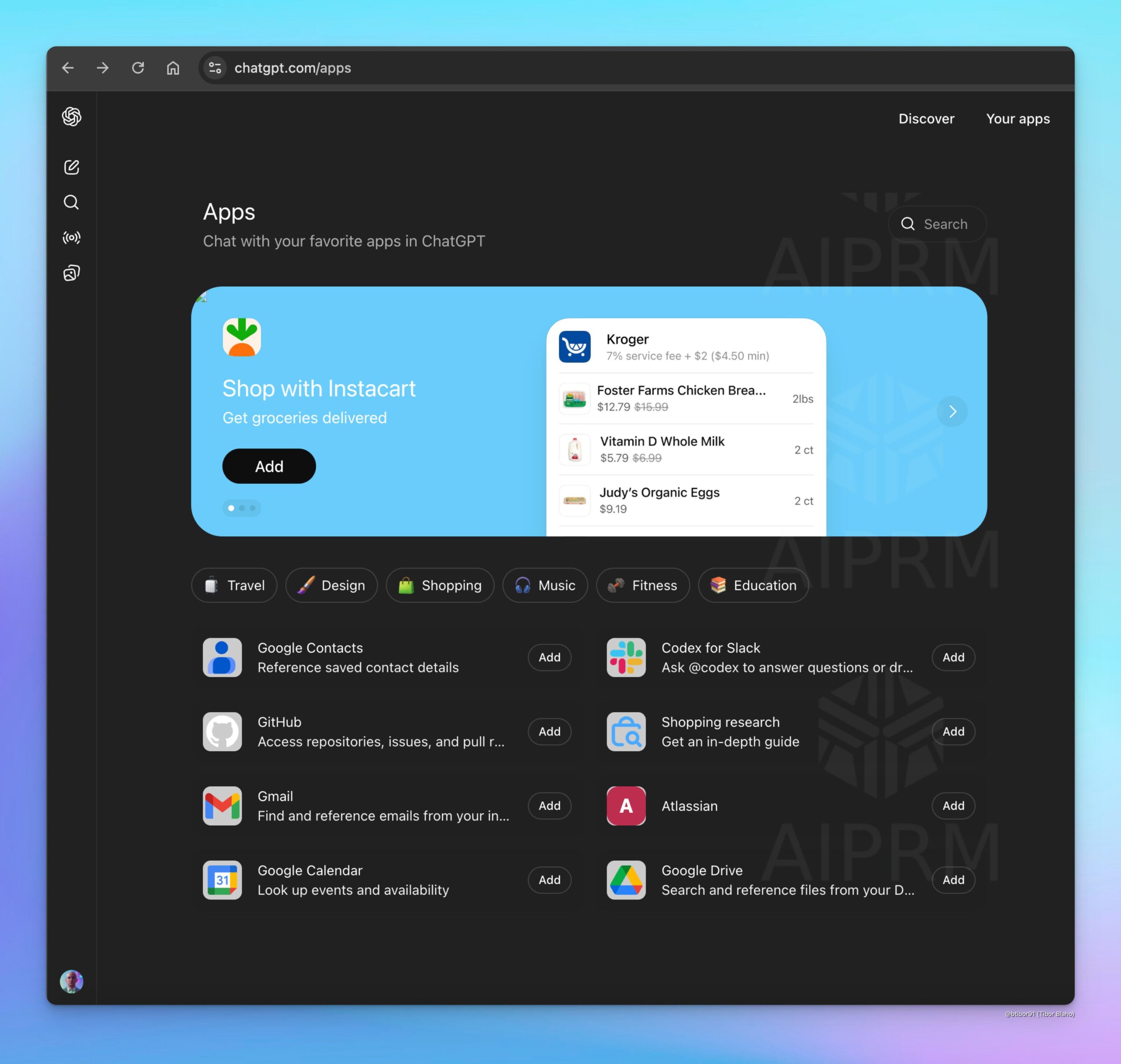
OpenAI is preparing to enable developers to publish their Apps and Workflows on ChatGPT via the OpenAI Platform. A new Apps directory, essentially GPT Store v2, will be added to ChatGPT as well.
According to DevDay 2025 announcements, “Later this year, OpenAI will begin accepting app submissions for review and publication, launch a dedicated directory where users can browse and search for apps.”
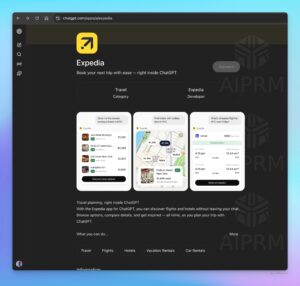
The screenshot shows Expedia’s integration as an early example, users can book flights, find hotels with rooftop bars, and compare prices without leaving ChatGPT.
What’s Actually New
According to TechCrunch’s coverage, this is OpenAI’s latest attempt to build an ecosystem around ChatGPT—and unlike the GPT Store, this time apps live inside conversations.
| Feature | GPT Store (2023) | Apps Directory (2025) |
|---|---|---|
| Interface | Separate marketplace | Embedded in chat |
| Interaction | Text-only chatbots | Interactive UI (maps, videos, forms) |
| Discovery | Browse/search store | ChatGPT suggests contextually |
| Monetization | None (mostly internal) | Coming “later this year” |
| Developer Tools | Custom GPT builder | Apps SDK + Agent Builder |
The Additions Everyone’s Talking About
1. Workflow Publishing
A new feature (referenced in leaks but not officially detailed yet) will let builders publish and share workflows on ChatGPT. As HowToUseLinux notes, this could finally make the platform “actually useful for creators beyond just templates.”
One commenter captured the sentiment: “The workflow publishing feature is huge. This could finally make the GPT Store actually useful for creators beyond just templates.”
2. Apps Dashboard for Creation
A new Apps dashboard for App creation will be added to the platform, making it easier for developers to build, test, and publish directly from one interface.
3. Image Generation in Agent Builder
An image generation tool will be added to Agent Builder, allowing developers to create visual assets directly within their agent workflows.
The Apps SDK: Built on MCP
According to AllAboutAI, the Apps SDK builds on the Model Context Protocol (MCP)—an open standard that lets ChatGPT connect securely to external tools and data.
Key capabilities:
- Custom UI: Developers define both logic and interface
- Context awareness: Apps can access conversation memory
- Backend integration: Connect existing login/premium features
- Open source: Apps work anywhere that adopts MCP standard
Early Partner Apps
Axios reports that launch partners include:
| App | Category | What It Does |
|---|---|---|
| Spotify | Music | Create playlists, search songs |
| Zillow | Real Estate | Interactive property maps |
| Expedia | Travel | Book flights, hotels, rentals |
| Canva | Design | Transform outlines to slide decks |
| Coursera | Education | Personalized learning paths |
| Figma | Design | Direct design task execution |
More apps (DoorDash, Instacart, Uber, AllTrails) are coming soon.
The Scale Context
OpenAI shared staggering metrics at DevDay:
- 800 million weekly active ChatGPT users (up from 100M in late 2023)
- 4 million developers building with OpenAI tools (doubled)
- 6 billion tokens per minute through the API (30x increase)
As VentureBeat notes, this creates “an immense, ready-made audience for developers”—if they can actually monetize.
The Skepticism: Will It Die Like GPT Store v1?
One user captured the community sentiment perfectly: “I hope they don’t let it die like the first GPT Store…”
What went wrong with GPT Store 1.0? According to PromptHub’s analysis:
“An initial wave of interest faded as the store became a tool for companies to build internal apps, with no clear way for developers to make money.”
Why This Time Could Be Different
- Contextual discovery: ChatGPT suggests apps when relevant, not just in a separate store
- Interactive UI: Maps, videos, forms—not just text chatbots
- Monetization coming: OpenAI promises payment details “later this year”
- Agentic Commerce Protocol: Co-developed with Stripe for in-chat transactions
- Production-grade tools: AgentKit for building real agents, not just demos
The Platform Play
As Sam Altman stated at DevDay: “We never meant to build a chatbot. When we set out to make ChatGPT, we meant to build a super assistant.”
CometAPI’s developer guide frames this as OpenAI’s move “from model-provider to platform-operator”—turning ChatGPT into an operating system where apps, agents, and APIs converge.
The App Store Comparison
If ChatGPT replaces Google search, is the Apps directory just a Chrome extension store? Or is it the next iOS App Store?
The answer depends on three things:
- Monetization clarity: How do developers actually make money?
- Discovery quality: Does contextual suggestion work better than browsing?
- Developer success: Do apps stay useful, or become spam?
What Happens Next
Within the next few months, OpenAI must deliver:
- App submission process and approval guidelines
- Public Apps directory launch
- Monetization details (revenue share, subscription models)
- Workflow publishing tools
- Expansion to EU markets (currently excluded)
As one commenter wisely noted: “The workflow publishing feature is huge. This could finally make the GPT Store actually useful for creators beyond just templates.”
But skepticism remains justified. The GPT Store launched with similar fanfare in 2023 and faded into obscurity. Whether Apps in ChatGPT becomes a thriving marketplace or another forgotten experiment depends on execution—something OpenAI has struggled with on the distribution side, even as their models dominate technically.
The Bottom Line
GPT Store 2.0 (the Apps directory) represents a genuine evolution: contextual, interactive, and potentially monetizable. But OpenAI needs to prove it can sustain developer interest this time.
The infrastructure is impressive. The developer tools are real. The user base is massive. Now the question is whether OpenAI can build a sustainable economy—or if this becomes another graveyard of abandoned integrations.
As HowToUseLinux concludes: “ChatGPT isn’t just a chatbot anymore—it’s becoming an AI-powered workspace that connects your favorite tools in one place.”
The next few months will determine if that vision actually ships.