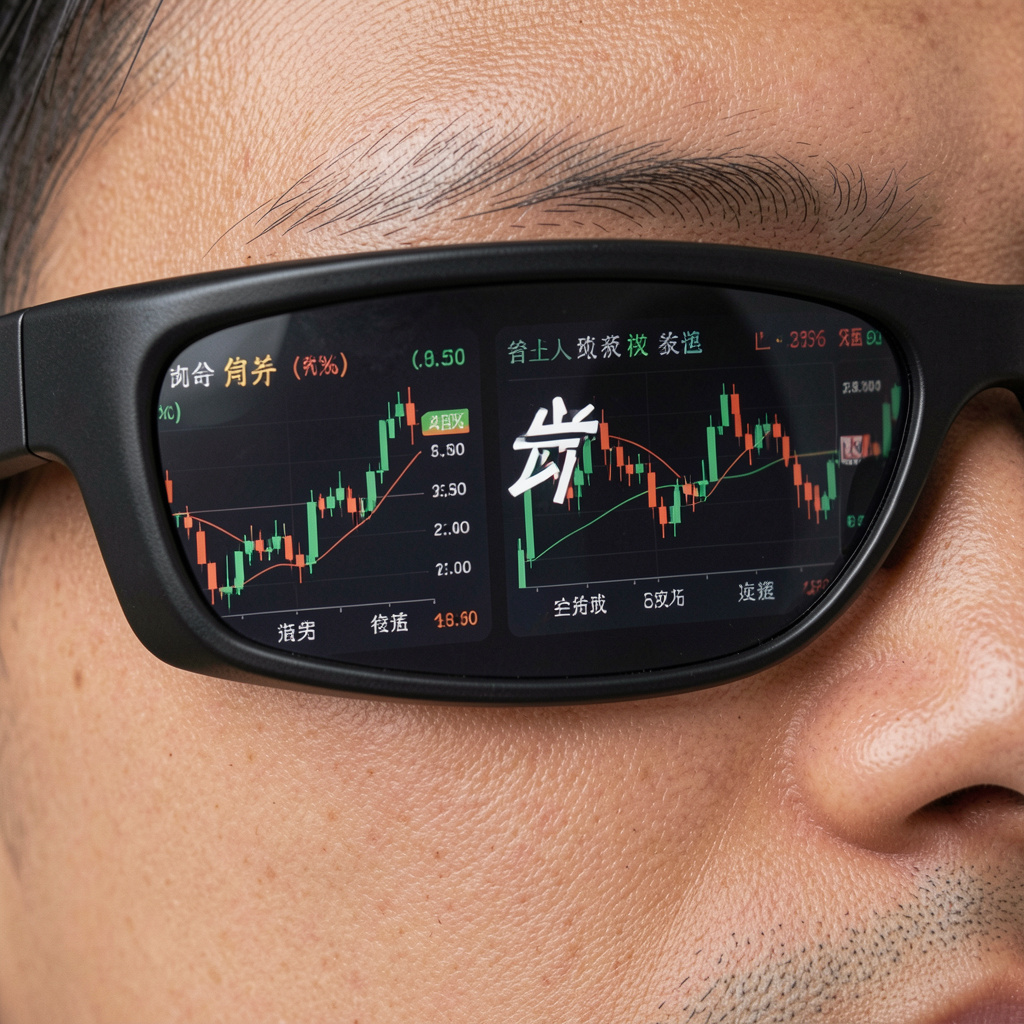
China’s artificial intelligence glasses market is rapidly transitioning from niche technology enthusiast territory to mainstream consumer adoption, with Olympic champion Xu Mengtao, maintenance workers, and international travelers now using the devices for practical applications.
International Data Corporation forecasts that Chinese manufacturers will capture 45 percent of the global AI glasses market in 2026, with shipments reaching 22.67 million units worldwide — a 56.3 percent increase year on year. Government subsidies offering 15 percent discounts, capped at 500 yuan ($72.60 USD), introduced in January, have accelerated market growth alongside competition from tech giants including Alibaba, Huawei, and Xiaomi.
Major Chinese technology companies have entered the AI glasses market simultaneously. Alibaba launched its first AI glasses powered by its Qwen large language model earlier this month, while state-owned China Unicom unveiled new AI eyewear. Social media posts documented crowds at Huawei and Xiaomi retail locations testing their latest models. JD.com, an e-commerce platform, reported that the AI eyewear market has maintained double-digit growth since 2025, with accelerated month-on-month increases following the government subsidy announcement.
Sales in Shenzhen’s Huaqiangbei electronics market—known as China’s hardware Silicon Valley
—surged 80 percent over two months, while foreign buyer numbers doubled during the same period, according to Zeng Jinze, a senior official with Guangdong’s industry and information technology department. Guangdong Province manufacturers achieve rapid production cycles: design in the morning, sampling by afternoon, mass production the next day, and export within a week. China’s core AI industry exceeded 1.2 trillion yuan in scale in 2025, featuring more than 6,200 enterprises.
Ye Qingqing, an analyst at IDC China, identified supply chain constraints as the primary bottleneck, particularly in ramping production capacity for advanced chips, display screens, and batteries. Current AI glasses functions — photography, translation, and navigation — replicate smartphone capabilities, offering limited incentive for sustained consumer adoption beyond initial curiosity. Privacy concerns also pose obstacles; Peng Jing, a lawyer from Chongqing, warned that video and audio recording capabilities challenge existing consent frameworks under China’s personal information protection law.
Xu Chi, founder and CEO of XREAL, compared the current industry state to the smartphone market in 2005-2006, before the iPhone launch, describing the ecosystem as extremely fragmented.
Li Hongwei, founder of RayNeo, projected that 2025 was not the breakout year, suggesting 2026 as a potential beginning with 2027-2028 representing the iPhone moment
for AI glasses. Industry observers believe unique features — first-person interaction, real-time sensing, and proactive services — will determine whether AI glasses transition from novelty to daily-use devices.
China’s Minister of Industry and Information Technology Li Lecheng identified AI as a powerful incremental driver
of economic development, signaling continued government support. Market expansion depends on technological breakthroughs resolving component supply constraints and developers creating applications that leverage AI glasses’ unique capabilities rather than duplicating smartphone functions.
Follow Hashlytics on Bluesky, LinkedIn , Telegram and X to Get Instant Updates