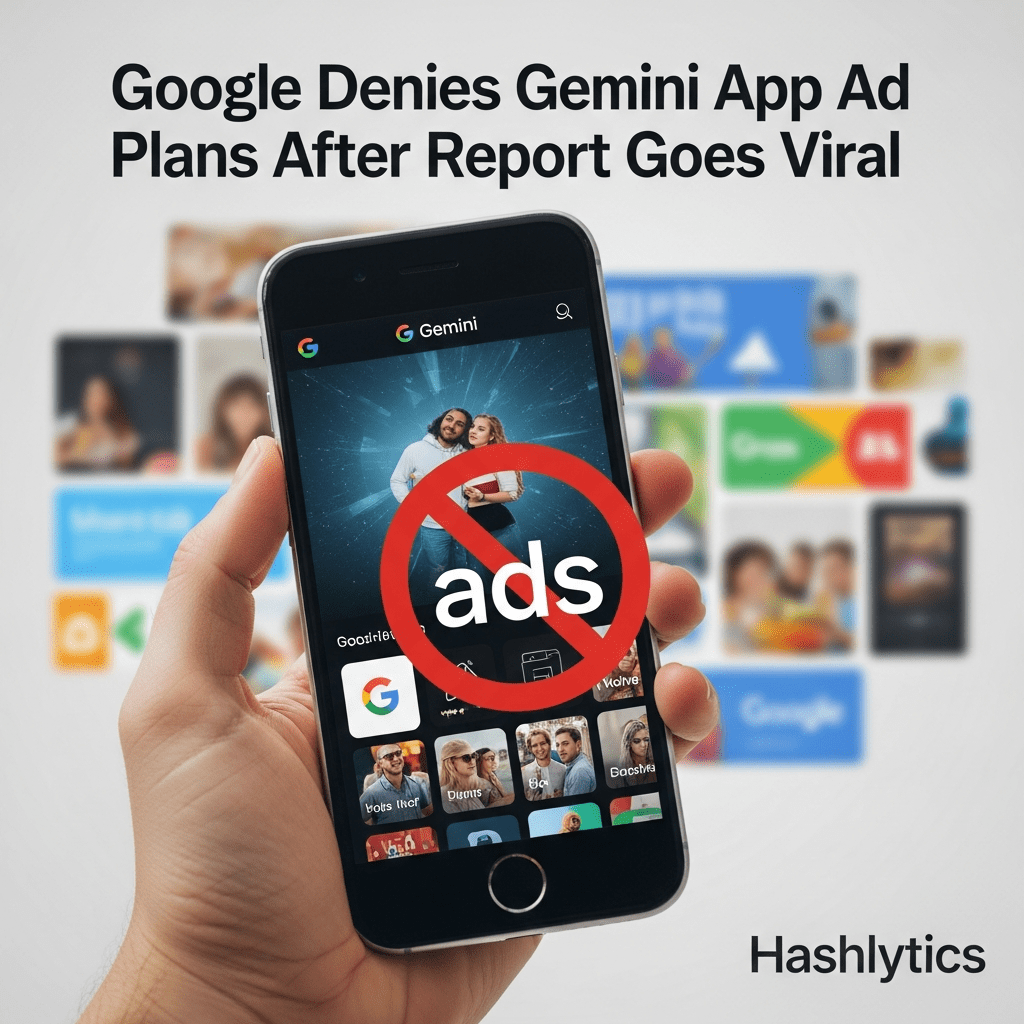
based on uninformed, anonymous sources making inaccurate claims,adding:
There are no ads in the Gemini app and there are no current plans to change that.
What Actually Happened
The initial report cited anonymous advertising buyers who participated in recent Google calls. According to these sources, Google representatives indicated ad placements in Gemini were targeted for 2026 rollout, though details on formats, pricing, and testing remained unclear. The buyers emphasized this was “separate from advertisements in AI Mode”, Google’s AI-powered search experience launched in March that already displays ads.
Timeline of Events
- December 8, 2025 (morning): Got the info to publish exclusive citing advertiser conversations
- Same day (hours later): Story spreads across tech media, financial outlets, and social platforms
- Same day (afternoon): Dan Taylor posts denial on X
- Within minutes: Google’s official account amplifies Taylor’s statement
The Semantic Distinction That Matters
Taylor’s denial specifically references “the Gemini app” — not all Google AI products. This precision is deliberate, as AI Mode already monetizes through clearly labeled sponsored results.
| Product | Ad Status | Official Confirmation |
|---|---|---|
| Gemini App (gemini.google.com) | No ads, no current plans | Confirmed by Dan Taylor, Dec 8, 2025 |
| AI Mode (Google Search) | Active monetization | Announced November 2024 |
| “Other Google AI experiences” | Testing in progress | Mentioned in Nov 2024, details unspecified |
The Unanswered Question
When pressed by marketing strategist Matt Schlicht about which “Google AI experiences” beyond AI Mode are testing ads, Taylor did not respond. This silence is conspicuous—Google confirmed AI Mode ads last month but won’t clarify what else falls under experimentation.
Why Anonymous Sources Got It Wrong
Three scenarios explain the disconnect between advertiser accounts and Google’s denial:
Scenario 1: Miscommunication
- Google reps discussed AI Mode expansion (confirmed product)
- Advertisers interpreted this as Gemini app ads (separate product)
- Confusion between “Gemini-powered AI Mode” and “standalone Gemini app”
Scenario 2: Exploratory Conversations Mischaracterized
- Google explored hypothetical monetization scenarios
- Advertisers heard this as committed roadmap
- Classic tech sales ambiguity: “We’re thinking about…” becomes “They’re launching…”
Scenario 3: Plans Changed Post-Leak
- Internal discussions were happening about 2026 Gemini ads
- Public exposure triggered leadership reversal
- Google pivoted after gauging negative sentiment (see: Perplexity’s ad pause)
The Economic Pressure Hasn’t Changed
Whether or not Gemini ads arrive in 2026, the financial fundamentals driving monetization speculation remain intact:
AI Inference Costs Are Unsustainable
| Metric | Traditional Search | AI Chatbot Query |
|---|---|---|
| Cost per query | ~$0.0001 | ~$0.01-0.10 (10-100x higher) |
| Compute requirement | Keyword matching, ranking | Large model inference, multimodal processing |
| Revenue per query | Ad-supported (proven model) | Subscription-dependent (3-5% conversion rates) |
| User expectations | Ads accepted as norm | Ad-free purity demanded |
Alphabet reported $75 billion in 2026 projected capital expenditures — mostly AI infrastructure. Revenue growth slowed to its lowest rate since 2023 in Q4 2024, intensifying pressure to monetize AI investments.
Google’s denial comes amid industrywide AI monetization scrutiny: