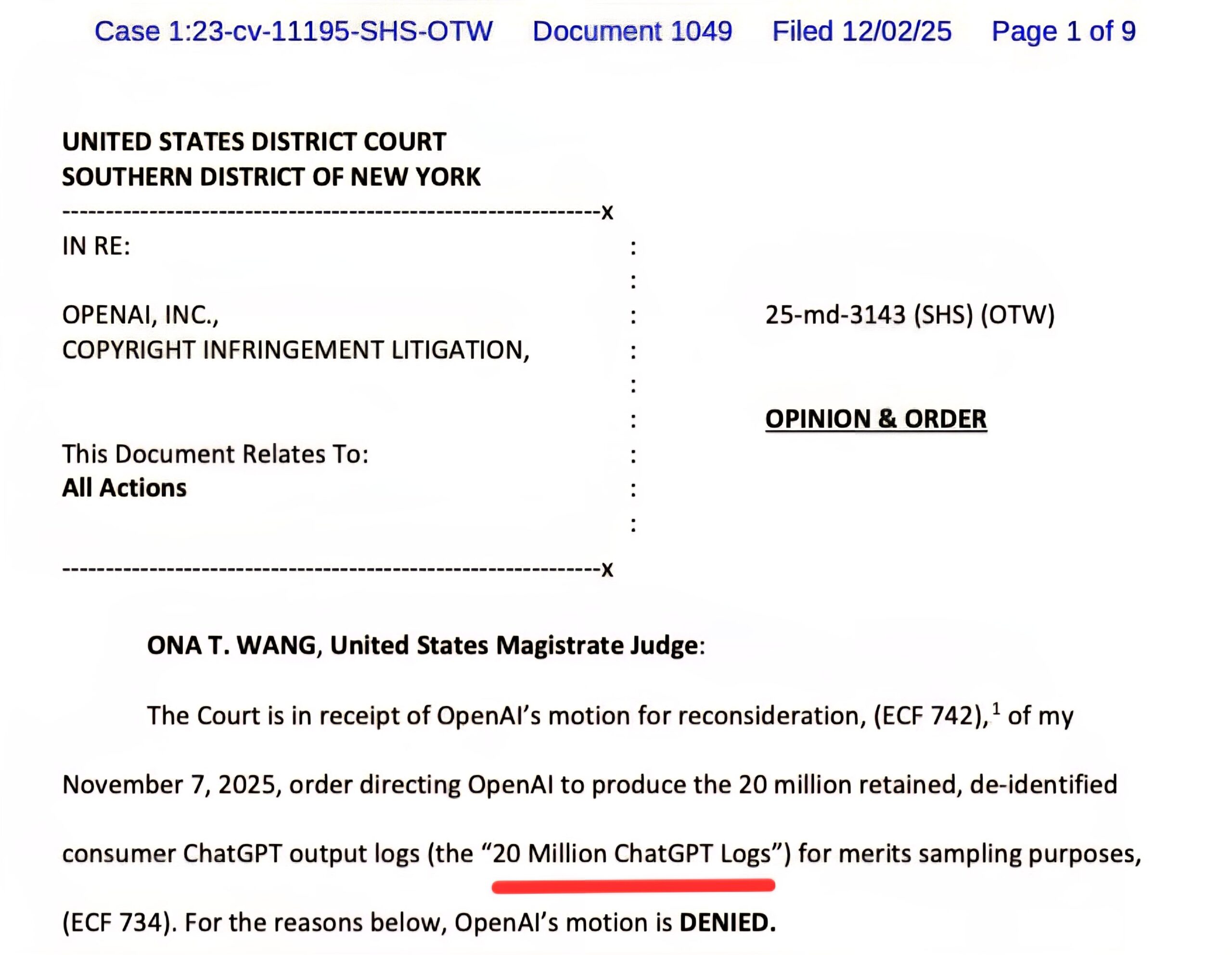
Manhattan Magistrate Judge Ona Wang denied OpenAI’s reconsideration request, ordering the company to hand over 20 million anonymized ChatGPT conversations to NY Times, Chicago Tribune, and other news outlets within 7 days of completing de-identification.
The 9-page order is definitive: considerations of burden cannot predominate where there is clear relevance and minimal burden.
Mic drop.
Why This Matters
News outlets allege ChatGPT reproduces copyrighted articles without permission. The 20M logs will prove whether ChatGPT regurgitates paywalled journalism, potentially revealing thousands of infringement instances.
Judge Wang found OpenAI‘s “exhaustive de-identification” plus “multiple layers of protection” adequately safeguard privacy. But she also questioned whether OpenAI’s delay tactics served “an improper purpose”, neither explanation “bode well for OpenAI.”
OpenAI’s Defense
OpenAI argued “99.99%” of transcripts have nothing to do with copyright claims: “Anyone who has used ChatGPT in the past three years must now face the possibility that their personal conversations will be handed over to The Times to sift through at will in a speculative fishing expedition.”
Judge Wang rejected this, the logs are “clearly relevant” to both plaintiffs’ claims and OpenAI’s defense that news outlets “hacked” responses to manufacture evidence.
The “Run AI Locally” Argument
One X commenter nailed the takeaway: “If anything ever screamed ‘Buy a GPU, run your AI locally, protect your damn data’, it’s this right here.”
The reality: 20M chats are “a fraction of the billions” OpenAI retains. What you tell ChatGPT can become evidence, anonymized, yes, but scrutinized by lawyers and experts analyzing whether your conversation reproduced New York Times articles.
Local AI Alternatives
- Llama 3.3 70B: Runs on consumer GPUs (RTX 4090)
- Mistral 7B: Laptop-ready, open weights
- GPT4All: Privacy-first desktop app
These don’t match ChatGPT quality, but your conversations never leave your machine.
What Happens Next
OpenAI appealed to District Judge Sidney Stein, who previously denied a similar request. The company has 7 days post-anonymization to comply or face sanctions.
The case is In Re: OpenAI Inc. Copyright Infringement Litigation, 1:25-md-03143 (S.D.N.Y.). The precedent: your AI conversations aren’t as private as you think.
Follow us on Bluesky , LinkedIn , and X to Get Instant Updates