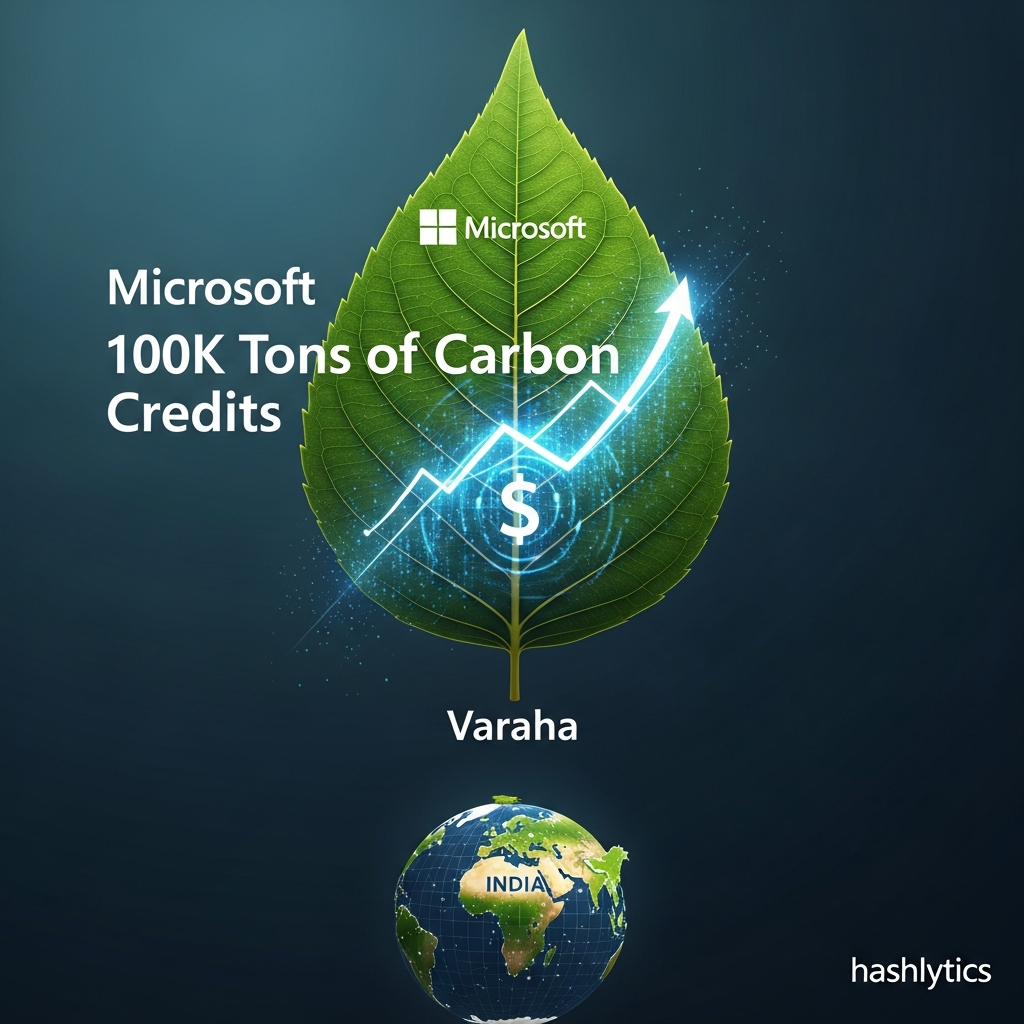
- Carbon Credits Purchased: Over of carbon dioxide removal credits from Varaha, to be delivered over the next three years, through .
- Microsoft’s Emission Increase: Microsoft’s overall greenhouse gas emissions increased in fiscal year compared to its baseline. Microsoft’s aggregated Scope 1-3 emissions rose from its baseline in FY23, driven primarily by Scope 3 emissions from datacenter construction.
- Varaha’s Project Scope: Initially focuses on Maharashtra, India, involving smallholder farmers, and plans to scale to reactors across India’s cotton-growing belt.
- Varaha’s 2025 Biochar Production: Processed approximately of biomass, producing roughly of biochar and generating around .
- Varaha’s Total Projects: projects across India, Nepal, and Bangladesh, with in advanced stages and in early stages, working with around farmers. These projects have the potential to sequester about of carbon dioxide over .
This deal underscores Microsoft’s escalating commitment to carbon removal, a necessity given the significant increase in its greenhouse gas emissions — particularly Scope 3 — tied to the rapid expansion of its AI and cloud infrastructure. By partnering with Varaha, Microsoft is not just acquiring credits; it’s investing in a scalable biochar solution that offers multiple co-benefits. The process of converting cotton crop waste into biochar not only sequesters carbon for centuries but also addresses local environmental issues like air pollution from open-field burning and improves soil health for smallholder farmers. This aligns with Microsoft’s stated goal of becoming carbon negative by and neutralising all historical emissions by . Phil Goodman, Microsoft’s CDR program director, notes that this “broadens the diversity of Microsoft’s carbon removal portfolio with Varaha’s biochar project design that is both scalable and durable”
.
While the Varaha deal is a positive step, it’s crucial to contextualize its scale against Microsoft’s overall carbon footprint. The of removal credits, though substantial for a single project, represent a small fraction of the company’s total emissions, which reached of CO₂ equivalent in . Microsoft has made other large carbon removal purchases, such as 7 million credits with Chestnut Carbon and 2.85 million credits from Indigo Ag, demonstrating a broad strategy. However, the persistent challenge lies in addressing the rapid growth of Scope 3 emissions, which largely offset reductions in Scope 1 and 2. Scaling biochar projects, while promising, also involves logistical complexities in biomass collection, processing, and distribution across potentially tens of thousands of farmers.
I’ll be closely monitoring Varaha’s scaling efforts, particularly their aim to double throughput in to around of biomass and sequester of carbon. The success of their planned reactors will be a key indicator of the scalability of biochar in diverse agricultural settings. Furthermore, observe how Microsoft integrates these biochar credits into its broader carbon removal strategy and whether these nature-based solutions can meaningfully dent the growth of its Scope 3 emissions. The efficacy of payments to farmers for crop residue management and biochar application as an economic incentive for sustainable practices will also be critical to watch for long-term project viability.
Follow us on Bluesky , LinkedIn , and X to Get Instant Updates