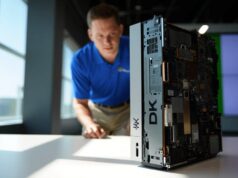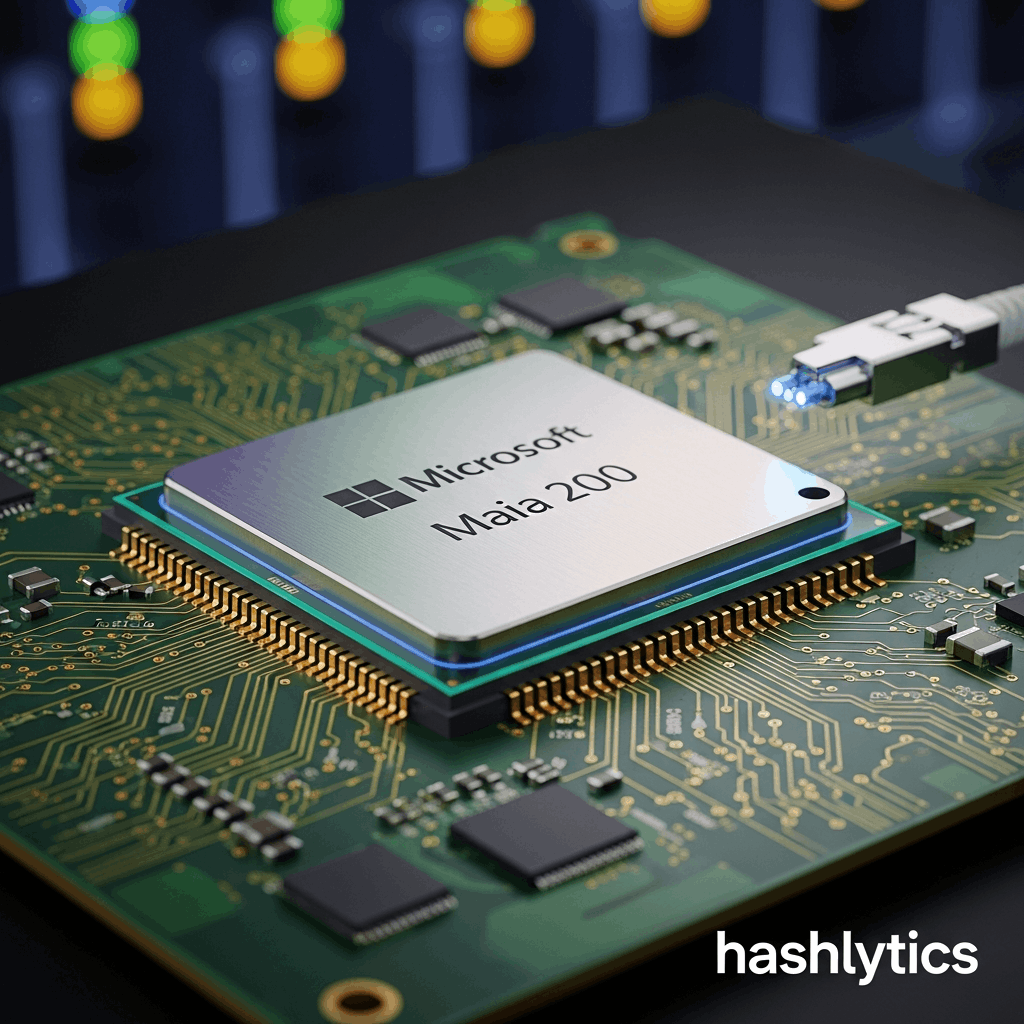
- Chip Generation: Maia 200, the second-generation in-house AI accelerator from Microsoft.
- Stated Purpose: Primarily for AI inference tasks, powering services like Microsoft’s Copilot assistant and Azure-hosted OpenAI models.
- Deployment Status: Actively being rolled out in Microsoft data centers, starting in Iowa, according to the company.
- Efficiency Claim: Described by Microsoft’s cloud chief Scott Guthrie as
the most efficient inference system Microsoft has ever deployed
, with a focus on power consumption.
The deployment of Maia 200 signals that hyperscalers now view control over their hardware stack as a competitive necessity, not a luxury. As AI workloads become central to their cloud offerings, the cost and availability of GPUs from third parties like Nvidia have become significant business risks. By designing its own silicon, Microsoft gains more control over its supply chain, can optimize hardware for its specific software stack (like Copilot), and can better manage the enormous power consumption of its AI data centers. This follows a well-established trend, with Google’s Tensor Processing Units (TPUs) and Amazon’s Trainium and Inferentia chips already serving as core components of their respective AI infrastructure. The move underscores a market realization: at massive scale, off-the-shelf hardware is no longer economically or logistically optimal.
While a significant strategic step, Maia 200 is not an “Nvidia killer.” Microsoft has been clear that high-performance GPUs will remain essential, particularly for the most demanding large-scale model training. Maia represents a diversification, not a replacement. It’s a hedge against supply constraints and a tool to manage costs for high-volume, lower-complexity inference tasks. Furthermore, Microsoft is a relative latecomer to custom silicon compared to Google and Amazon, who have spent years refining their designs and software integration. There’s a significant execution risk in developing a competitive, multi-generational chip roadmap, and it will take time to see if Maia can deliver performance and cost savings at a scale that meaningfully impacts the company’s financials or its reliance on external suppliers.
The key metric to watch will be when, or if, Microsoft offers direct access to Maia-powered instances for Azure customers, which would signal confidence in its performance and reliability. Any third-party benchmarks comparing Maia 200 to Nvidia’s inference chips (like the H100 or L40S) or offerings from AWS and Google will be critical. Internally, the project’s success will be measured by its impact on the operating costs for services like Copilot. Finally, the development of the next-generation Maia 300, which Microsoft has confirmed is underway, will indicate the long-term commitment and pace of innovation for this strategic initiative. The exploding market for AI chips means the stakes for these in-house projects are incredibly high.
- Microsoft’s Maia 200 is primarily a strategic play to control AI operational costs and supply chain risk.
- The chip is focused on inference, aiming for power efficiency to run services like Copilot at scale.
- This is part of a broader industry trend where hyperscalers are developing custom silicon to optimize for their specific workloads.
- Maia 200 complements, rather than replaces, Microsoft’s use of Nvidia GPUs, creating a hybrid hardware strategy.
- The success of this multi-generational investment depends on future performance, cost savings, and potential customer adoption on Azure.
Follow us on Bluesky , LinkedIn , and X to Get Instant Updates