Anthropic and OpenAI dropped competing flagship models on February 5, 2026, Claude Opus 4.6 and GPT-5.3 Codex, triggering a $285 billion software stock rout as investors realized AI agents now threaten established enterprise businesses. Both models target the same users (developers and knowledge workers), promise similar capabilities (autonomous multi-step tasks, production-ready outputs), and cost nearly identical amounts ($5-$10 per million tokens).
The critical differences lie in context windows, agent coordination, and IDE availability, details that determine which platform suits specific workflows.
What’s New: 1M Tokens vs 25% Faster Execution
Opus 4.6 debuts Anthropic’s first 1 million token context window — enough to process 300+ page documents, entire codebases, or months of conversation history in a single session. This 2.5x expansion over its predecessor enables financial analysts to cross-reference regulatory filings, market reports, and internal data simultaneously. The model also introduces “agent teams” in Claude Code, where multiple AI instances divide projects across frontend, backend, and migration tasks while coordinating autonomously. Early benchmarks show Opus 4.6 planning 44% better than Opus 4.5 and sustaining longer autonomous workflows with fewer failures.
GPT-5.3 Codex prioritizes speed over breadth, delivering 25% faster inference than GPT-5.2 while merging frontier coding capabilities with GPT-5.2’s reasoning abilities into one model. OpenAI emphasizes this model “helped build itself” — the Codex team used early versions to debug training, manage deployment, and diagnose test results. On SWE-Bench Pro (a contamination-resistant software engineering benchmark spanning four languages), GPT-5.3 Codex achieves state-of-the-art performance while consuming fewer tokens than any prior model. The efficiency gains mean developers execute more iterations within the same budget.
Both models output dramatically longer responses: Opus 4.6 supports 128,000 output tokens compared to GPT-5.3 Codex’s capabilities, enabling generation of complete technical documentation, full application codebases, or comprehensive financial models in single responses. This matters when building complex systems requiring coordination across dozens of files — traditional models truncate outputs mid-function, forcing manual stitching.
Pricing: Nearly Identical, Context Makes the Difference
Opus 4.6 maintains $5 per million input tokens and $25 per million output tokens unchanged from Opus 4.5, with premium pricing of $10/$37.50 for prompts exceeding 200,000 tokens using the 1M context window. Anthropic acknowledges Opus 4.6 “overthinks” simpler tasks — a trait that adds cost and latency — recommending users adjust the effort parameter from high to medium for straightforward work.
GPT-5.3 Codex pricing remains unannounced at publication, but GPT-5.2 Codex (released January 14) costs $1.75 per million input tokens and $14.00 per million output tokens — roughly one-third Opus 4.6’s pricing for comparable work. However, this calculates input/output separately; Opus 4.6’s context caching and prompt optimization often reduce effective costs below list prices for repetitive workflows. For API-driven applications processing millions of tokens monthly, the 3x price differential compounds significantly — $5,000 versus $15,000 for 1 billion input tokens.
Consumer access differs sharply. Opus 4.6 is available immediately on claude.ai, the Claude API, and all major cloud platforms (Google Vertex AI, AWS Bedrock, Azure) for individual and enterprise users. GPT-5.3 Codex ships bundled with ChatGPT Plus ($20/month), Pro ($200/month), Team, Enterprise, and Edu subscriptions — OpenAI doesn’t offer standalone API access yet. For developers wanting quick integration without subscription overhead, Anthropic offers lower friction despite higher token costs.
IDE Integration: GitHub Copilot vs Claude Code
Opus 4.6 rolled out in GitHub Copilot on February 5 for Copilot Pro, Pro+, Business, and Enterprise users, making it accessible within Visual Studio Code (all modes: chat, ask, edit, agent), Visual Studio, github.com, GitHub Mobile iOS/Android, and GitHub CLI. Enterprise administrators must explicitly enable the Claude Opus 4.6 policy in Copilot settings—it doesn’t activate by default. This positions Opus 4.6 as a selectable option within GitHub’s existing workflows rather than requiring separate tools.
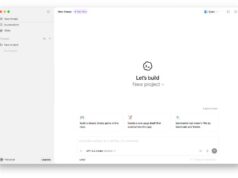
GPT-5.3 Codex operates exclusively through OpenAI’s Codex desktop app (macOS, Windows in development), a standalone “command center” for orchestrating AI agents. The app supports multi-threading (run multiple agents in parallel threads), Git worktrees (agents work in isolated codebase copies preventing conflicts), and configurable sandboxing (agents restricted to specific directories without user permission for network access). This architectural approach treats coding as orchestrating agent teams rather than enhancing individual developer productivity through inline suggestions.
Claude Code — Anthropic’s standalone coding agent released February 2025 — now features agent teams in research preview, enabling functionality similar to OpenAI’s multi-threading but integrated with Claude’s ecosystem. The distinction: Copilot integration brings Opus 4.6 into Microsoft’s developer toolchain, while Codex app represents OpenAI’s bet on dedicated AI-first interfaces replacing traditional IDEs.
PowerPoint vs Game Development: Specialized Strengths
Opus 4.6 integrates directly into Microsoft PowerPoint as a research preview (available to Max, Team, and Enterprise customers), reading existing slide layouts, fonts, and templates to generate or edit presentations preserving design elements. This targets knowledge workers outside software development — financial analysts building investor decks, consultants drafting client presentations, product managers creating roadmaps. Anthropic also upgraded Claude in Excel for financial modeling across regulatory filings, market data, and internal metrics.
GPT-5.3 Codex demonstrates capabilities through autonomous game development. OpenAI published two games — a racing game with eight maps, multiple racers, and power-up items, plus a diving game managing oxygen, pressure, and hazards — built entirely by GPT-5.3 Codex using generic prompts like “fix the bug” or “improve the game” over millions of tokens. The games showcase long-horizon agentic work iterating autonomously without constant human guidance, positioning Codex for creative applications beyond enterprise CRUD apps.
The divergence reflects strategic positioning: Anthropic targets enterprise workflows (finance, legal, consulting) where polish and domain accuracy justify premium pricing. OpenAI emphasizes developer creativity and autonomous execution where speed and token efficiency enable rapid prototyping at scale.
Benchmarks: Finance Agents vs Terminal Skills
Opus 4.6 tops the Finance Agent benchmark evaluating core financial analyst tasks — synthesizing regulatory filings, market reports, and internal data into production-ready analyses. The model handles complex multi-tool workflows, recovering from errors mid-task without human intervention. For cybersecurity and code review, Opus 4.6 demonstrates improved debugging catching its own mistakes before execution.
GPT-5.3 Codex sets new industry highs on SWE-Bench Pro and Terminal-Bench 2.0, measuring software engineering across Python, JavaScript, Java, and Go plus terminal skills coding agents need. The model also excels on OSWorld and GDPval (benchmarks for real-world agentic capabilities), with particular strength in Windows environments where prior models struggled. OpenAI reports superior vision performance interpreting screenshots, technical diagrams, and UI surfaces—enabling designers to share mockups that GPT-5.3 converts to functional prototypes.
Neither company disclosed head-to-head performance on identical benchmarks, making direct comparison difficult. Anthropic’s enterprise focus emphasizes reliability and polish; OpenAI’s developer orientation prioritizes speed and versatility. Users report Opus 4.6 delivers more conservative, thoroughly-planned approaches while GPT-5.3 Codex executes faster with occasional over-confidence requiring human verification.
The Market Reality: 40% Enterprise Adoption vs 77% Dominance
Andreessen Horowitz’s January 2026 enterprise AI survey reveals OpenAI maintains 77% production usage among surveyed companies, but Anthropic surged from near-zero in March 2024 to 40% by January 2026. Critically, 75% of Anthropic’s enterprise customers use Claude in production compared to 46% for OpenAI—suggesting higher deployment intent once companies adopt. The 89% testing-or-production rate for Anthropic exceeds OpenAI’s 73%, indicating Claude converts trials to production deployments more reliably.
The competitive intensity drove software stocks down $285 billion as investors realized AI agents threaten established enterprise software businesses. Opus 4.6 generating production-ready spreadsheets, presentations, and financial models competes directly with Microsoft Office, Salesforce dashboards, and specialized vertical SaaS — markets worth hundreds of billions annually. GPT-5.3 Codex building complete applications from scratch challenges low-code platforms, custom development shops, and offshore engineering.
Both companies acknowledge dual-use risks. GPT-5.2 Codex (5.3’s predecessor) demonstrated strong cybersecurity capabilities — a researcher found and disclosed a React vulnerability using the model — prompting OpenAI to design deployment with future capability growth in mind. While neither model reaches OpenAI’s “High” cyber capability threshold under their Preparedness Framework, the trajectory suggests upcoming versions will, requiring careful access controls for defensive security professionals versus general availability.
Which to Choose: Context vs Speed
Pick Opus 4.6 if you need extreme context (entire codebases, comprehensive document sets, long conversation histories), work primarily in GitHub/Microsoft ecosystems, require agent teams coordinating complex projects, or prioritize production polish in finance, legal, or consulting workflows. The 1M token window enables use cases impossible with GPT-5.3’s 400K limit, particularly for knowledge work synthesizing disparate sources.
Choose GPT-5.3 Codex if you optimize for speed (25% faster inference), need token efficiency (fewer tokens per task), work in standalone development environments outside GitHub, want autonomous multi-agent orchestration through Codex app, or build creative applications like games requiring long-horizon iteration. The Windows environment improvements matter for enterprises standardized on Microsoft infrastructure beyond GitHub.
The “vibe working” era — Anthropic’s term for AI handling significant work autonomously — has arrived from both companies simultaneously. The question isn’t which model is objectively superior but which workflow integration, pricing structure, and capability emphasis matches your specific use case. As competition intensifies, expect rapid iteration from both companies making today’s differentiators tomorrow’s table stakes.
Follow us on Bluesky, LinkedIn, and X to Get Instant Updates