+0.56%
+1.25%
-2.26%
+0.89%
+0.00%
-2.13%
New Ownership Model Changes Stripe’s Control
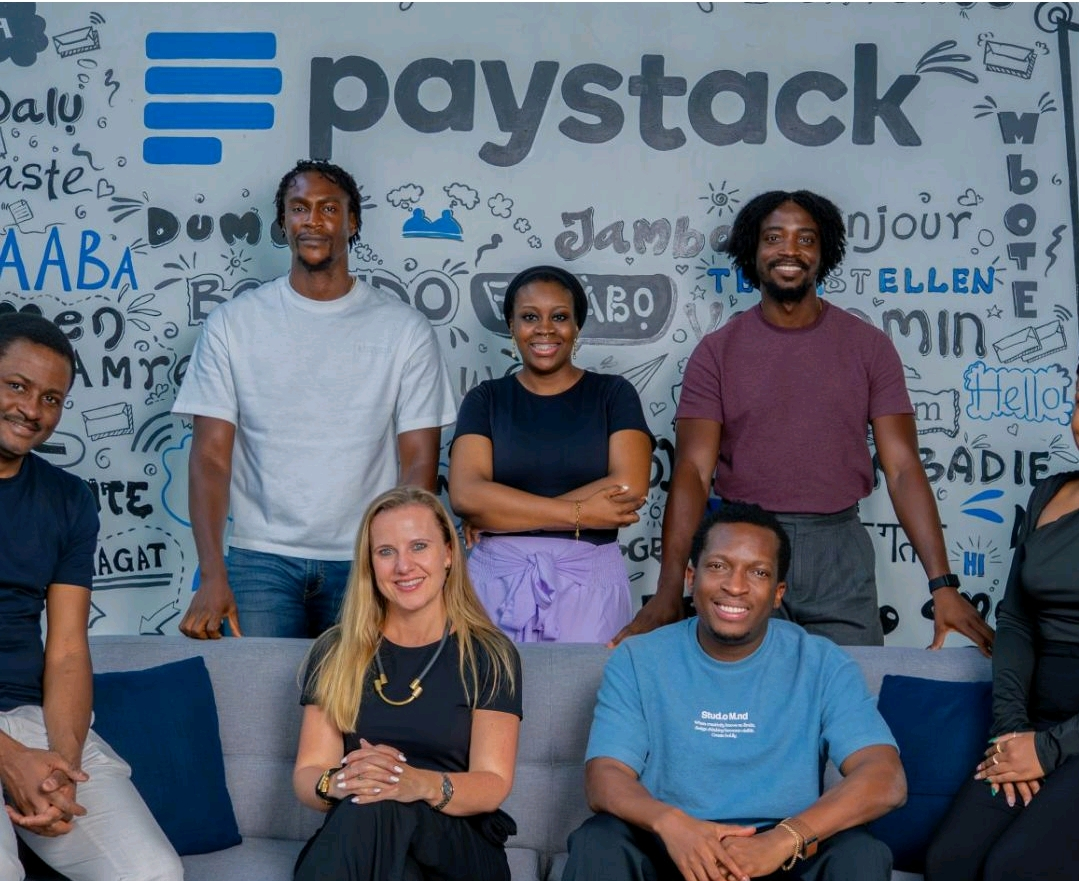
While Stripe’s 2020 acquisition made Paystack a wholly owned subsidiary, TSG introduces a different ownership structure. The holding company is jointly owned by Paystack CEO Shola Akinlade, Stripe, and existing Paystack employees known as Stacks. TSG COO Amandine Lobelle declined to share the cap table breakdown but emphasized that this model “rewards the people who are building the company, while also maintaining the global backing of one of the leading payments companies through this foundational partnership with Stripe.”
The restructuring formalizes an expansion that’s been underway for the past year. With the launch of Zap and Paystack’s acquisition of a microfinance banking license, the decade-old company has moved beyond processing payments for businesses into consumer payments and deposit-taking banking, pursuing greater control over funds it processes and new revenue streams.
The Holding Company Structure
TSG separates Paystack’s merchant payment business from new verticals, allowing each to compete in Nigeria’s tightly contested financial services market without diluting focus from Paystack’s core payments franchise, which remains the group’s primary revenue engine. Paystack can remain a pure merchant payments player while Zap and Paystack MFB pursue their own roadmaps without confusing merchants, regulators, and partners.
The holding structure also simplifies regulatory oversight. Payments, banking, and consumer financial products carry different risk profiles and regulatory expectations. Housing them under a holdco allows licenses, compliance, and risk to be separated by business line and geography. If Zap’s ₦250 million ($190,000) regulatory fine had happened after TSG formation, the impact on TSG’s other businesses would be nonexistent.
TSG Labs: Beyond Fintech
TSG Labs represents the group’s venture studio focused on building new products using emerging technologies, both within and beyond fintech. “We’re not moving away from financial technology,” said Lobelle. “We’re expanding our scope. Emerging technologies could include AI or stablecoins. The mandate is to solve both fintech and non-fintech problems that are critical to Africa’s digital future and development.”
For now, the holding company will not impose leadership structures on individual businesses. Instead, each subsidiary will develop its own leadership based on its stage of maturity and operational needs. “The Stack Group is designed to let each business operate with the level of autonomy and leadership it needs to succeed, while benefiting from shared governance,” Lobelle explained.
Financial Performance Enables Experimentation
A decade after launching, Paystack’s profitability has given it balance sheet strength to experiment beyond its core business without affecting unit economics. The company now operates in seven African countries and offers a broad suite of payment products processing trillions of naira monthly. Since Stripe’s acquisition, payment volumes have grown more than 12x—a remarkable acceleration from the company that processed just $3 million in monthly payments back in 2017.
“TSG signals a larger scope of ambition for us and sets the tone for the next decade of our company,” said Akinlade in the announcement. The restructuring reflects how Paystack has evolved from a single-product company to a multi-brand technology group.
Competitive Landscape
Paystack joins Nigerian tech companies like Moniepoint and Interswitch that have created holdco structures to reflect multi-business ecosystems. These companies have grown exponentially after becoming holdcos, as the structure makes it easier to acquire or build new companies and shut down experiments without damage to flagship businesses.
Despite entering consumer payments and banking markets crowded with well-funded incumbents like Moniepoint, OPay, PalmPay, and Kuda — all of which combine payments, deposits, and lending at scale — Paystack says it is unfazed by competition. Lobelle told TechCabal the company operates with an “infinite game” mindset: “You can think of competition as a finite game, us versus another player, or as an infinite game, where it’s us versus our ambition. We operate with the mindset of an infinite game.”
| TSG Entity | Focus Area | Status |
|---|---|---|
| Paystack | Merchant payments infrastructure | Profitable, 7 countries |
| Zap | Consumer payments app | Launched 2024 |
| Paystack MFB | Banking, lending, deposits | Acquired Jan 2026 |
| TSG Labs | Venture studio (AI, stablecoins) | Newly announced |
Strategic Implications
The restructuring positions Paystack differently than digital-first banks like Kuda, which started with deposits and consumer banking before layering in credit. Paystack is approaching banking from the infrastructure layer up rather than from retail banking down, leveraging its decade of payment processing expertise and merchant relationships.
While Paystack’s payment arm currently relies on partnerships with commercial banks like Titan Trust to help receive payments online, Paystack MFB will not affect those partnerships, according to Lobelle. The microfinance bank will compete directly with traditional MFBs like LAPO, Accion, and Baobab; digital-first lenders like Carbon and Fairmoney; and embedded-finance players already operating at scale.
The Stack Group represents Paystack’s answer to the question of how to expand beyond a successful core business without diluting it. By creating separate entities under a unified holding structure, Paystack can pursue new opportunities in consumer finance, banking, and emerging technologies while maintaining the merchant payment focus that made it one of Nigeria’s most successful tech exits. Whether this structure proves as successful as Moniepoint’s and Interswitch’s holdco models will become clear as TSG’s new ventures scale in 2026 and beyond.
Follow us on Bluesky, LinkedIn, and X to Get Instant Updates