
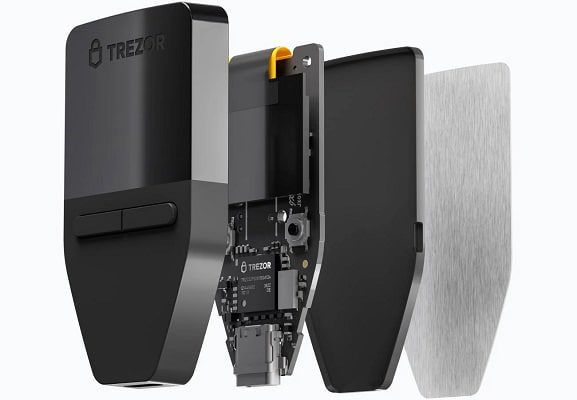
The Transparency Revolution
Trezor, the pioneering open-source hardware wallet manufacturer, has launched the Safe 7, introducing what the company claims is the world’s first transparent and auditable secure element. This represents a significant departure from the industry standard of proprietary, closed security chips that users must trust blindly.
The Trezor Safe 7 features the TROPIC01 secure element, designed with full transparency. The community can now examine, verify, and validate its design—addressing long-standing concerns about closed hardware security implementations in crypto wallets.
Why Transparency Matters
True security emerges from transparency rather than obscurity. When security architecture remains hidden, users must place blind trust in manufacturers. The TROPIC01’s auditable design allows:
- Expert Scrutiny: Security researchers can identify potential vulnerabilities
- Community Validation: Independent verification of security claims
- Continuous Improvement: Open feedback loops for security enhancements
- Trust Through Verification: Users can confirm security rather than assume it
For context on secure element technology and its importance in hardware security, Gemalto provides technical background.
Quantum-Ready Architecture
Beyond transparency, the Safe 7 addresses a looming threat that keeps cryptographers awake at night: quantum computing.
Post-Quantum Cryptography Preparation
The Trezor Safe 7 features quantum-ready architecture and bootloader, ensuring the device can receive post-quantum cryptographic updates as blockchain networks evolve their security protocols.
This future-proofing matters because:
- Timeline Uncertainty: Quantum threat timeline remains unclear but advancing
- Migration Complexity: Blockchain networks will transition to post-quantum algorithms gradually
- Hardware Lifespan: Wallet hardware should outlast current cryptographic standards
- Protocol Evolution: Major networks like Bitcoin and Ethereum are exploring quantum-resistant signatures
The quantum-ready bootloader means Safe 7 owners won’t need hardware replacement when networks implement post-quantum security—firmware updates will suffice. This represents long-term value protection for users who view hardware wallets as multi-year investments.
Premium Design and User Experience
Security hardware has traditionally sacrificed aesthetics and convenience. The Safe 7 challenges this compromise.
Hardware Specifications
- Construction: Anodised aluminium unibody
- Screen Protection: Gorilla Glass
- Display: 2.5-inch colour touchscreen
- Connectivity: Bluetooth Low Energy support
- Power: Qi2 wireless charging
- Protocol: Open-source Trezor Host Protocol integration
Design Philosophy
The premium materials and thoughtful design prove that security doesn’t require sacrificing user experience. The aluminium unibody provides durability while Gorilla Glass protects the touchscreen from scratches. Wireless charging eliminates cable dependency, and Bluetooth Low Energy enables convenient smartphone connectivity without compromising security through air-gapped transaction signing.
Open Source Commitment
Trezor’s dedication to open-source principles extends beyond the TROPIC01 secure element to the entire Safe 7 ecosystem.
Why Open Source Matters for Hardware Wallets
- Verifiable Security: Code can be audited by anyone with technical expertise
- Community Contributions: Developers worldwide can identify issues and propose improvements
- Trustless Verification: Users don’t need to trust the manufacturer’s security claims
- Longevity: Open-source projects outlive companies through community maintenance
The open-source Trezor Host Protocol ensures that Safe 7 integration with wallets, exchanges, and applications remains transparent and verifiable. This contrasts sharply with proprietary wallet protocols where users must trust vendor implementations without independent verification.
Challenging Custodial Models
Trezor explicitly positions the Safe 7 as an alternative to convenient but risky custodial solutions where exchanges and platforms hold user funds.
Custody Trade-offs
Custodial Solutions (Exchanges):
- Convenient access
- Users don’t control private keys
- Exchange hacks result in user fund loss
- Regulatory seizure risk
- Counterparty trust required
Self-Custody (Hardware Wallets):
- Full user control of private keys
- No counterparty risk
- Immune to exchange hacks
- Requires user responsibility
- Transaction signing friction
The Safe 7 aims to minimize self-custody friction through premium UX while maintaining complete user control. Trezor is betting that sufficiently good hardware wallet experiences can compete with custodial convenience without sacrificing security.
Market Context
The Safe 7 launches into a competitive hardware wallet market where several established players compete:
Competitive Landscape
- Ledger: Market leader with proprietary secure element
- Trezor (previous models): Open-source pioneer without secure element
- Coldcard: Bitcoin-focused with security emphasis
- Keystone: Air-gapped QR code communication
The Safe 7’s transparent secure element represents Trezor’s answer to criticism that pure general-purpose chips (used in previous Trezor models) lack the physical attack resistance of secure elements, while addressing concerns about Ledger’s closed, proprietary secure element implementation.
Strategic Implications
The Safe 7 launch signals several strategic priorities for Trezor:
Setting New Industry Standards
By introducing the first auditable secure element, Trezor is attempting to shift industry norms. If TROPIC01 proves successful and gains community trust, it could pressure competitors to increase transparency or face questions about what they’re hiding in proprietary implementations.
Future-Proofing Hardware Investment
The quantum-ready architecture acknowledges that hardware wallets represent multi-year investments. Users purchasing Safe 7 today can reasonably expect the device to remain secure through the transition to post-quantum cryptography, protecting the hardware investment value.
Premium Positioning
The aluminium unibody, Gorilla Glass, and wireless charging signal premium market positioning. Trezor is betting that serious crypto holders will pay more for superior security combined with quality materials and user experience.
Potential Concerns
Despite the compelling feature set, prospective buyers should consider:
TROPIC01 Maturity
As the first transparent secure element, TROPIC01 lacks the battle-testing of established proprietary chips. Early adoption comes with inherent risks, though transparency enables faster issue identification.
Bluetooth Connectivity
While Bluetooth Low Energy enables convenience, some security purists prefer fully air-gapped solutions. Trezor will need to clearly communicate how Bluetooth implementation maintains security guarantees.
Premium Pricing
Quality materials and innovative security come at a cost. The Safe 7 likely commands premium pricing compared to budget hardware wallets, potentially limiting adoption among price-sensitive users.