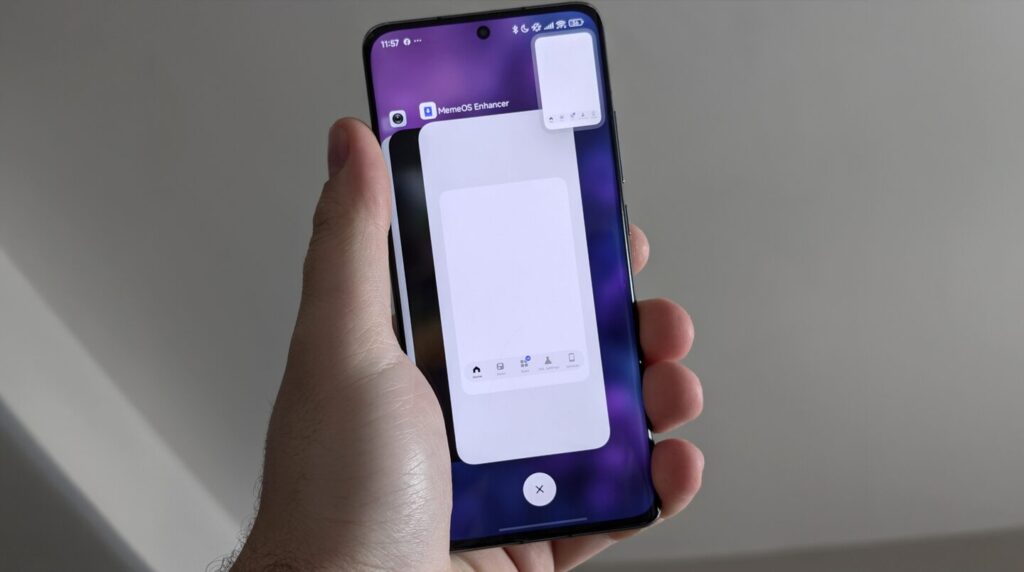
Xiaomi has garnered attention from enthusiasts with the recent introduction of an iOS-style recent apps interface within its HyperOS, which, despite being released approximately , is being highlighted as a significant development for . This new interface, which presents applications as stacked cards, has quickly become a favored feature among users. Concurrently, a HyperIsland
feature, akin to Apple’s Dynamic Island, has been identified within the latest HyperOS Launcher APK, further enhancing the user experience.
The iOS-style recent apps interface in HyperOS replaces the traditional app switcher with vertically stacked cards that incorporate blur and fade effects as users navigate through them. This feature, which Xiaomi had reportedly been testing internally since , is expected to be part of HyperOS 3.1 or a subsequent feature build following HyperOS 3. Separately, the HyperIsland
feature, designed to provide smart, pill-shaped notifications and live updates, has been found in the latest HyperOS Launcher APK. For users to access certain updates and hidden features, applications like MemeOS Enhancer are recommended for download from the Play Store.
The HyperIsland
feature functions as an integrated interaction layer, surfacing real-time information and shortcuts without interrupting current tasks. It displays live alerts for activities such as charging status, music playback, and calls, enabling users to manage tasks without switching applications. According to Li Nan, General Manager of Xiaomi’s Software Product Department, HyperIsland
now supports over 60 applications in China and adapts to 75 real-world use case scenarios. This system aims to boost productivity, improve battery efficiency, and reduce system overhead. Additionally, the HyperOS Downloader application is available to check device eligibility for the HyperOS 3.0 update.
Xiaomi has been preparing iOS-style features for some time, with the recent apps menu being a highly anticipated addition. The company conducted a community survey in to gauge user interest in an iOS layout for recent apps, indicating a direct response to user demand. This initiative aligns with Xiaomi’s broader objective of creating a unified and efficient ecosystem that offers a seamless cross-platform experience across its smart devices.

While the iOS-style recent apps interface has been noted as released, specific details regarding its global rollout schedule for all eligible devices, beyond initial availability through APKs, remain to be formally detailed by Xiaomi. Exact benchmarks for performance improvements from these specific UI changes are also not publicly available in the provided information.
The HyperOS 3.0 stable update rollout is anticipated to begin for approximately 25 different handsets between and , with flagship devices typically receiving updates first. Users can expect improved multitasking, smoother animations, and better utilization of screen real estate with these updates. The underlying Android version for HyperOS 3.0 may vary by device, with newer models expected to run on Android 16, while some legacy and mid-range devices might receive HyperOS 3.0 built on Android 15.
Follow us on Bluesky , LinkedIn , and X to Get Instant Updates