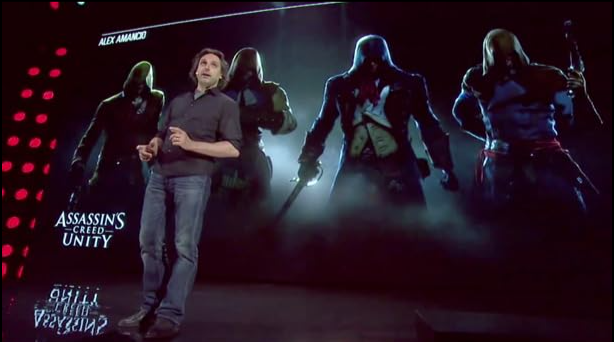
In an interview with GamesIndustry.biz, Amancio, who previously served as creative director for Assassin’s Creed: Revelations and Assassin’s Creed: Unity, articulated his belief that the gaming industry needs to learn from other creative sectors, specifically film. He argues that once a development team surpasses roughly a hundred people, the dynamic changes drastically, leading to an explosion in management-heavy structures and a decrease in efficiency. “Something that a lot of AAA studios mistakenly do, or certainly did in the past, is think that you can solve a problem by throwing people at it,” Amancio stated. “But adding people to a problem stagnates the people that were already being efficient on it. It just creates a lot of variable noise. So I think the future lies in smaller teams.”
Amancio, currently the Senior Vice President of World-Building and IP Strategy at FunPlus, suggests that the industry should adopt a model where core teams are complemented by outsourcing or co-development for specific needs, allowing for a more agile and project-focused approach. He highlighted that while films have a solid script before production, games evolve, making a rigid, massive team less effective. This vision aims to combat the “studio bloat” and “risk-averse thinking” he believes have plagued Western AAA development for years, leading to creative stagnation and mass layoffs.
Amancio’s insights resonate deeply within a gaming community increasingly aware of the challenges facing large studios, from frequent layoffs to concerns about crunch culture and creative stagnation. Developers and players alike have voiced frustrations over the seemingly endless cycle of larger, more expensive games, often questioning the sustainability of current AAA practices. His comments could fuel further debate on industry restructuring and the potential for a more focused, efficient, and ultimately more creative approach to game development. Many gamers yearn for innovative experiences, and Amancio’s perspective offers a potential pathway for studios to deliver those without the overhead of massive, unwieldy teams.
For gamers, Amancio’s vision suggests a future where titles might be developed with greater focus and potentially fewer compromises driven by sheer scale. It’s a call to action for the industry to prioritize craft over pipelines and originality over metrics. While the shift from colossal AAA teams to smaller, more agile units won’t happen overnight, Amancio’s frank assessment serves as a critical discussion point for anyone invested in the future of how our favorite games are brought to life.
Follow us on Bluesky , LinkedIn , and X to Get Instant Updates