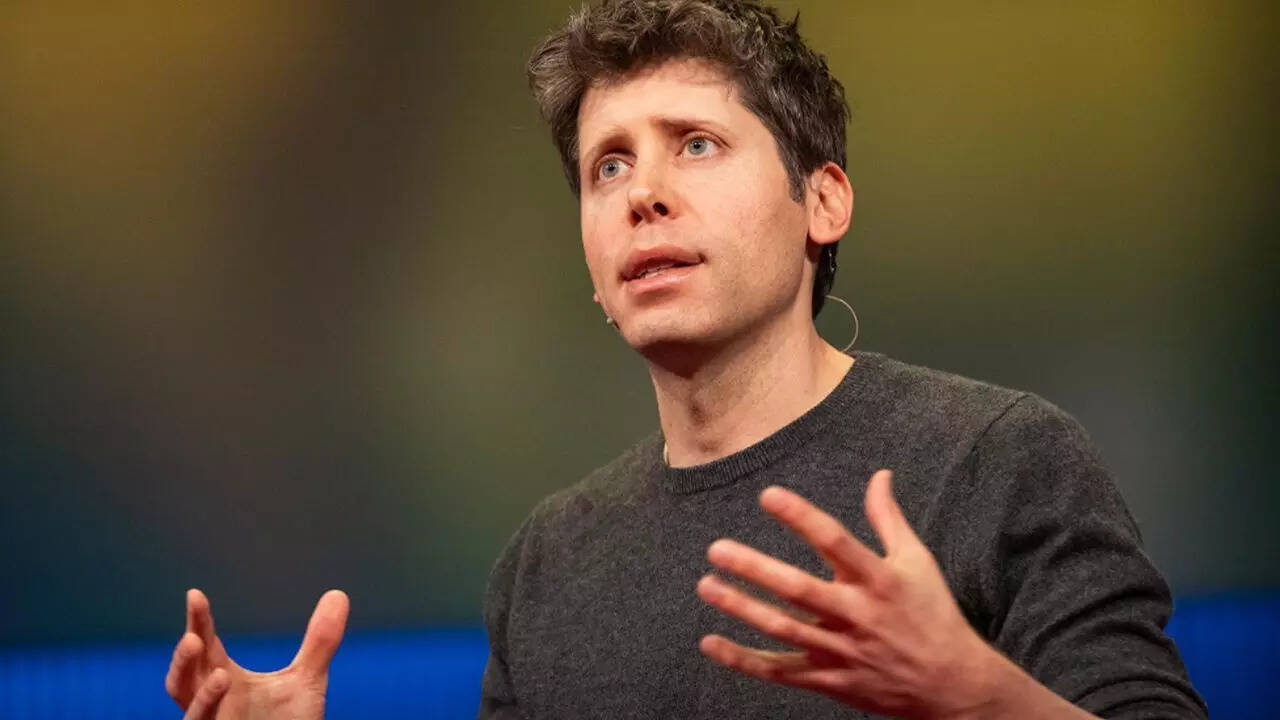
The AI arena is becoming increasingly competitive, and even OpenAI CEO Sam Altman has acknowledged that Google‘s recent advancements could “create some temporary economic headwinds” for OpenAI, the company behind ChatGPT. Despite this, Altman has assured his team that OpenAI is “catching up fast” and remains committed to leading the development of superintelligence.
Altman‘s internal memo, which came to light as Google integrates its Gemini AI chatbot into its search app, productivity tools, and other services, portrays a company that is both confident and acutely aware of the competitive landscape. The stakes are high, the players are powerful, and the future of AI leadership remains uncertain.
Google’s Gemini Threat
Google’s Gemini 3, which is being promoted as its most capable model to date, has reportedly impressed software developers with its capacity to automate website and product design, and even write code. This directly challenges OpenAI’s domain, especially considering that coding is a significant revenue stream for OpenAI and its competitors, such as Anthropic, whose Claude model also generates code from conversational prompts.
Google’s economic advantage is also a factor. While OpenAI is valued at around $500 billion and projects $13 billion in revenue, it is also estimated to be burning through $100 billion in its pursuit of superintelligence. Google, with a market value of approximately $3.5 trillion and over $70 billion in free cash flow in the past four quarters, possesses significant financial resources and even provides cloud services to OpenAI and Anthropic.
OpenAI’s Strategic Response
Altman is encouraging his employees to maintain their focus on the broader objective: achieving superintelligence. He recognized that competitors like Google and Anthropic are closing the gap. In his internal memo, Altman wrote: We have built enough strength as a company to weather great models shipping elsewhere competition… (so), having most of our research team focused on really getting to superintelligence is critically important.
Infrastructure and Manufacturing Expansion
To strengthen its infrastructure and manufacturing capabilities, OpenAI recently partnered with Apple supplier Foxconn to design and build AI data-center components in the US. According to the report, OpenAI will help develop future server systems and may purchase Foxconn-produced hardware.
“This partnership is a step toward ensuring the core technologies of the AI era are built here [US],” Altman said, adding that AI infrastructure production presents a “generational opportunity to reindustrialise America.”
Maintaining Confidence
Despite the pressures, Altman remains optimistic. He concluded his memo with a defiant statement: “It sks that we have to do so many hard things at the same time — the best research lab, the best AI infrastructure company, and the best AI platform/product company — but such is our lot in life. And I wouldn’t trade positions with any other company.”
The AI landscape is rapidly evolving, with major players like OpenAI, Google, and Anthropic competing for dominance. While Google’s recent successes may sting, OpenAI is reinforcing its commitment to a superintelligent future, betting that long-term ambition and strategic partnerships will ultimately secure its leadership position. The coming months will reveal whether Altman’s confidence is justified, or if the temporary economic headwinds will become a more persistent challenge.
Follow us on Bluesky , LinkedIn , and X to Get Instant Updates