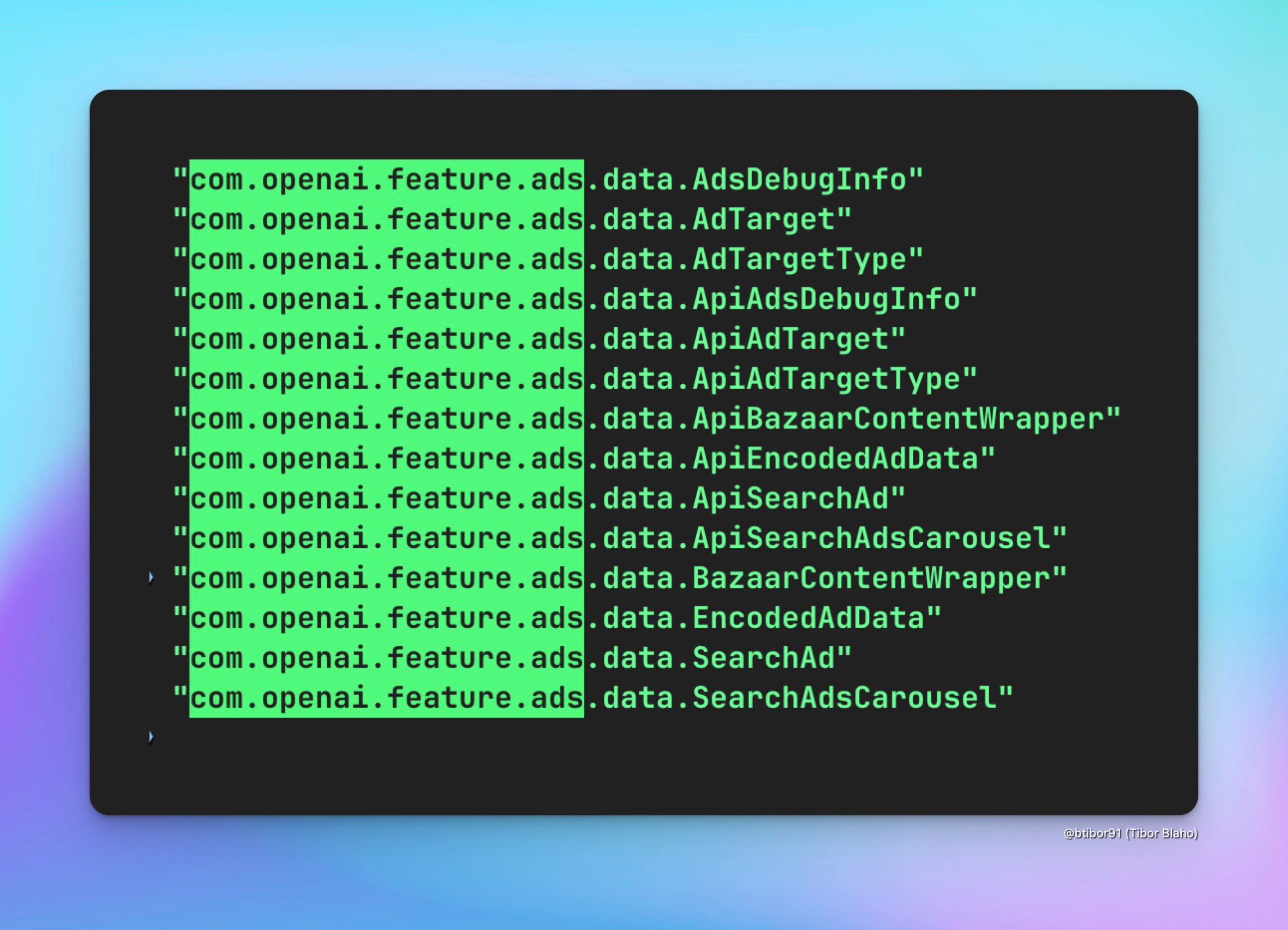
ChatGPT Android app version 1.2025.329 beta includes new references to an “ads feature” with “bazaar content,” “search ad,” and “search ads carousel,” according to engineer Tibor Blaho.
The leak confirms what many suspected: OpenAI is preparing to turn ChatGPT into an advertising platform, with code showing “sponsored product cards” and scrolling lists integrated into AI-backed search answers.
How to Find App Code (Community Question Answered)
One commenter asked: “How did you find this though? Is there a way to see the code of an app you install on your mobile?”
Answer: Yes. Use Android Studio’s APK Analyzer. This tool lets developers decompile Android apps to inspect code, resources, and string references—exactly how Tibor discovered the ads features.
The Meta Takeover: 630 Former Facebook Employees
OpenAI has imported approximately 630 former Meta employees representing about 20% of its roughly 3,000 staff, according to LinkedIn data analyzed by The Information.
OpenAI’s Slack even has a dedicated channel just for former Meta employees, according to a current employee. Many hold major leadership roles, including:
| Name | Role at OpenAI | Former Meta Position |
|---|---|---|
| Fidji Simo | CEO of Applications | VP & Head of Facebook App |
| Vijaye Raji | CTO of Applications | Meta Engineering Leader |
| Kate Rouch | Head of Marketing | Meta Marketing Executive |
| Joaquin Quiñonero Candela | Head of Recruiting | Meta ML Recruiting Lead |
According to WebProNews, the culture shift was significant enough that an internal task force surveyed staff to ask if OpenAI was becoming “too much like Meta”—and later, “too much big tech.”
Sam Altman’s 180: From “Dystopian” to “Not a Nonstarter”
Sam Altman has shifted his stance dramatically from calling ads a “last resort” and “uniquely unsettling” as recently as last May to saying he “finds ads somewhat distasteful but not a nonstarter” in a podcast this month.
The Timeline
| Date | Altman’s Position |
|---|---|
| May 2025 | “Ads are a last resort” and “uniquely unsettling” |
| July 2025 | “I’m not totally against ads” on The OpenAI Podcast |
| August 2025 | Nick Turley (ChatGPT product lead) says “ads possible if done right” |
| September 2025 | Job listing for ads platform engineer ($160k-$385k) |
| November 2025 | Altman says ads are “not a nonstarter” |
This shift tracks directly with OpenAI’s financial reality: the company expects to lose $44 billion on its path to profitability in 2029 and is burning through $2.5 billion in costs annually.
The Memory-Based Targeting: “Uniquely Unsettling” Realized
The company is considering whether ChatGPT could show ads based on its memory or the information it remembers about users, according to a current employee.
Focus groups revealed that some users already think ChatGPT has ads, and some OpenAI staff are using that finding to argue for adding advertising.
Why This Is Different (and Concerning)
Potential advertising in ChatGPT can be highly personalized. The AI knows many details about the user, their career, relationships, financial concerns, health questions, details that go far beyond Meta’s interest-based targeting.
“This could help OpenAI build an advertising system that feels less disruptive and more relevant, especially in searches that turn toward product choices. But the ability to target at a user level raises valid concerns around privacy and reliability, especially if users are not fully aware of how recommendations or sponsored cards are selected.”
User Reactions: Fear, Anger, and Resignation
“Would the first feature that android users get ahead of ios”
Android users are frustrated. As one commenter noted: “Being an android and Windows user has really been turning me off to OpenAI.”
The Android-first rollout isn’t accidental, ChatGPT has roughly 800 million weekly users, with India having the highest number of active users—a predominantly Android market where search-focused ads may scale quickly.
“I’m a paid user and fervently hope I’ll never see an ad”
This captures the central anxiety: Will Pro/Plus users be spared, or will everyone see ads?
OpenAI hasn’t clarified, but there is a believe that only about 4% of ChatGPT’s 500 million weekly users pay. That means 96% represent untapped ad revenue, the exact demographic Meta monetized.
Japanese Market Concerns: Cultural Resistance
One insightful commenter noted: “From a Japanese market perspective, this could face significant resistance. When Yahoo Japan (now LY Corporation) tried integrating ads into their search-based AI features, user retention dropped 23% within the first quarter. The key cultural factor: Japanese users view search as a utility, not content discovery.”
“They collect your information and sell it to advertisers”
One commenter raised the worst-case scenario: “I think it’s worse than that. They collect your information, chat conversations, etc. and sell it to advertisers. They’ll reach out from other means, such as emails, mails, websites, etc.”
Another responded: “Yes. We’ve gotten used to being the product instead of the client. Given the way people use AI, maybe some enterprising company will recognize that delivering a product we value enough to pay for, with privacy and respect, will win market share.”
What the Code Reveals
According to Gizmochina’s analysis, the Android beta markers describe:
- Sponsored product cards: Shop-style ads embedded in search results
- Search ad carousels: Scrolling lists of promoted items
- “Bazaar content”: Marketplace-style sponsored recommendations
- Search-layer focus: Ads appear when ChatGPT fetches web information, not in the main chat (for now)
The presence of these markers in a beta build indicates testing and system preparation, not a full rollout. OpenAI has not released a public announcement yet, and no timelines have been shared.
The Fidji Simo Factor
At the center of this shift is Fidji Simo, OpenAI’s CEO of Applications and a former Facebook executive with more than a decade at the social media giant.
According to Fortune, Simo led major push to expand Instacart’s advertising revenue and was critical in rolling out autoplay videos, improving the Facebook feed, and monetizing mobile and gaming at Meta.
CEO of applications Fidji Simo said in a companywide meeting in recent weeks that OpenAI was looking at advertising and how it could benefit users, according to two current employees.
As WebProNews notes: “She might be one of the most qualified individuals alive to turn high-intent internet properties into ad products, and now she’s at the fastest-growing internet property of the last decade that is unmonetized.”
- When? Code in beta suggests imminent testing, possibly Q1 2026
- Where? Initially in search results, but likely expanding to main chat
- Who pays? Unclear if Pro/Plus users will be spared
- How invasive? Memory-based targeting could be “uniquely unsettling”—Altman’s own words
As one commenter wisely concluded: “Maybe some enterprising company will recognize that delivering a product we value enough to pay for, with privacy and respect, will win market share.”
But with 630 Meta veterans now running OpenAI’s applications business, the path forward looks less like “AGI for humanity” and more like “Facebook 2.0: Now With AI.”
The irony? Sam Altman once called memory-based advertising “uniquely unsettling.” Now, he’s building it.