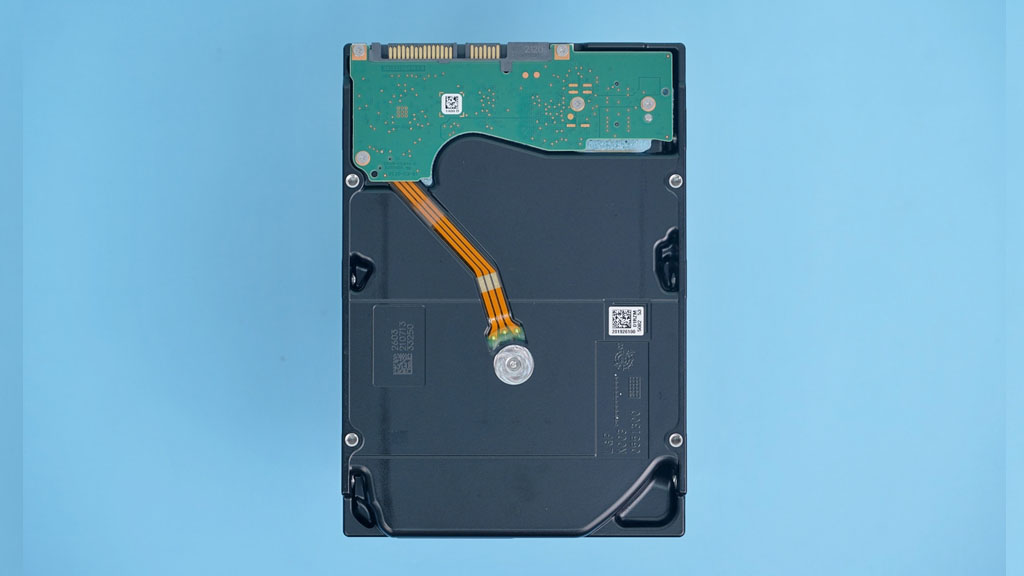
China’s relentless pursuit of technological self-sufficiency has hit a snag, and it’s spinning platters. While the nation has made strides in semiconductors, artificial intelligence, and telecommunications, one surprisingly old-school component remains a stubborn bottleneck: the hard disk drive (HDD). Overcoming this hurdle is now a national priority, with domestic innovation seen as the key to unlocking future storage capabilities and reducing reliance on foreign technology.
The dependence on foreign HDD technology represents a vulnerability that China aims to eliminate. As one industry insider noted, the HDD is “the only core component” holding them back, underscoring the strategic importance of achieving independence in this area. This push comes at a critical time when data storage demands are exploding, fueled by the proliferation of AI, the growth of cloud computing infrastructure, the expansion of 5G networks, and the ever-increasing volume of digital information generated by both individuals and enterprises. The sheer scale of data being produced and consumed necessitates robust and reliable storage solutions.
The strategic implications of controlling HDD technology extend beyond purely economic considerations. Data sovereignty is a growing concern globally, and the ability to manufacture and control storage devices domestically allows China to better manage and secure its own data assets. This is particularly important for sensitive government, military, and commercial data. Reliance on foreign-made HDDs could potentially expose China to security risks, including backdoors or vulnerabilities that could be exploited by other nations.
HDDs, despite being a relatively mature technology first developed in the 1950s, require incredibly precise engineering and manufacturing. The areal density of data packed onto spinning platters, the read/write heads that hover nanometers above the surface, and the sophisticated control systems that manage the movement of the heads and platters all demand advanced materials science and manufacturing techniques. Achieving the necessary precision and reliability requires significant investment in research and development, as well as the establishment of robust manufacturing capabilities.
The challenges in HDD manufacturing are multifaceted. The platters themselves must be perfectly smooth and coated with a magnetic material capable of storing data at extremely high densities. The read/write heads, which are responsible for writing data to and reading data from the platters, must be manufactured with nanometer-scale precision. The spindle motor, which spins the platters at thousands of revolutions per minute, must be incredibly reliable and vibration-free. Furthermore, the control electronics that manage the entire system must be highly sophisticated to ensure accurate data storage and retrieval.
These are areas where China is actively investing, but catching up with established global players like Western Digital, Seagate, and Toshiba takes time, substantial financial resources, and the cultivation of specialized expertise. These companies have decades of experience in HDD technology, and they hold numerous patents covering key aspects of HDD design and manufacturing.
The challenge isn’t just about replicating existing HDD technology; it’s about innovating and pushing the boundaries of what’s possible. This includes exploring new materials for platters and read/write heads, developing advanced recording techniques like Heat-Assisted Magnetic Recording (HAMR) and Microwave-Assisted Magnetic Recording (MAMR), and designing more efficient architectures that can increase storage density and reduce power consumption. HAMR, for instance, uses a laser to heat the magnetic material on the platter, allowing data to be written at higher densities. MAMR uses microwaves to achieve a similar effect.
As Emiko Matsui points out, cost-effectiveness and higher storage capabilities are paramount. To compete effectively in the global market, Chinese HDD manufacturers must be able to offer products that are both affordable and capable of storing vast amounts of data. This requires continuous innovation in materials science, manufacturing processes, and data storage techniques. Overcoming the challenges associated with HAMR and MAMR will be critical for achieving these goals.
While advancements in solid-state drives (SSDs) are rapidly changing the storage landscape, HDDs still offer a compelling combination of cost and capacity, making them essential for many applications, particularly in data centers and for archival storage. SSDs offer faster access times and greater durability, but they are generally more expensive per terabyte than HDDs. In scenarios where cost is a primary consideration and speed is not critical, HDDs remain the preferred choice. For example, large cloud providers often use HDDs for storing less frequently accessed data, while using SSDs for applications that require high performance.
China’s determination to master HDD technology underscores its commitment to securing its position as a global technology leader, no matter the technical hurdle. The pursuit of self-sufficiency in HDD technology is a strategic imperative, reflecting China’s broader ambition to become a dominant player in the global technology landscape. This effort is likely to involve a combination of government support, investment in research and development, and strategic partnerships with domestic and foreign companies.