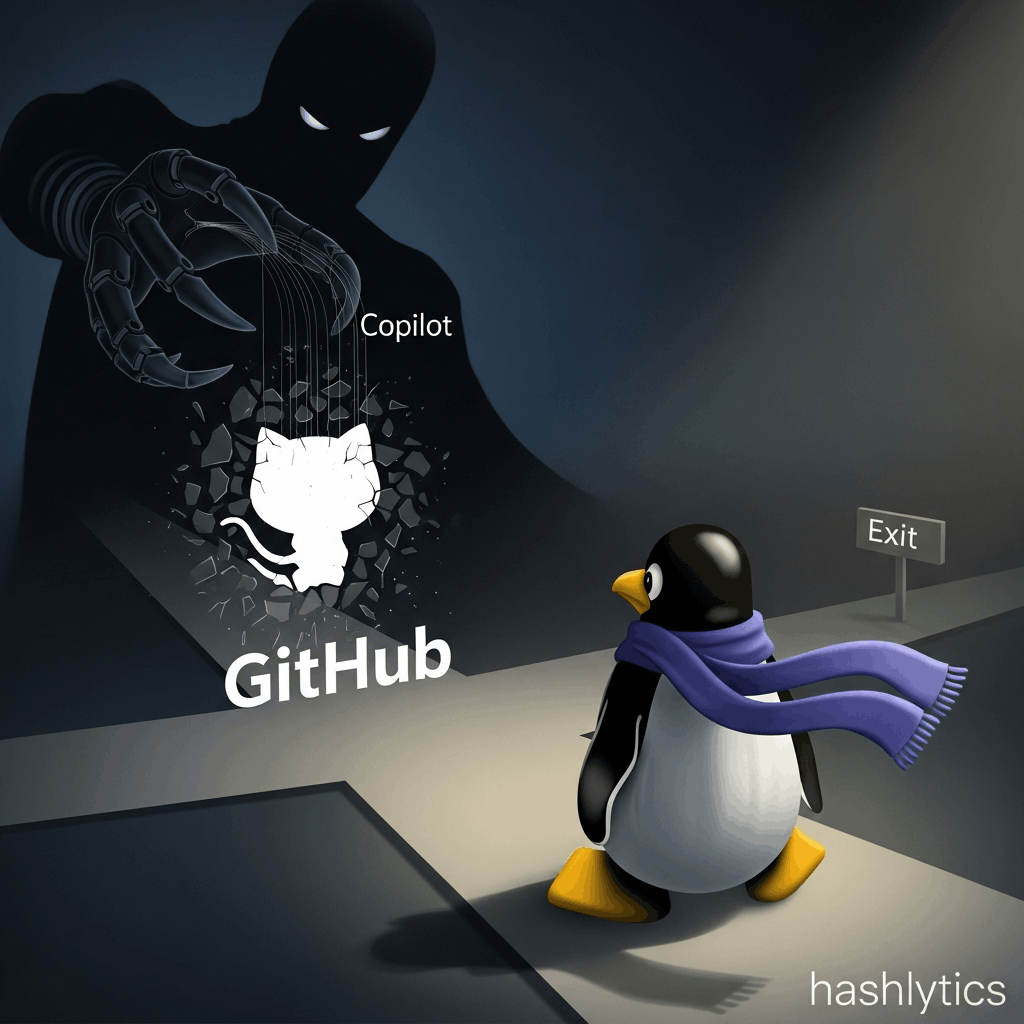
continuous attempts to force Copilot usagefor its repositories. This strategic shift was outlined in the project’s retrospective, published this week, with a planned migration towards Codeberg, a non-profit, community-driven platform.
In its project retrospective, Gentoo Linux formally announced its consideration and planning for a migration from GitHub. The retrospective states, Mostly because of the continuous attempts to force Copilot usage for our repositories, Gentoo currently considers and plans the migration of our repository mirrors and pull request contributions to Codeberg.
Codeberg is described as a site based on Forgejo, maintained by a non-profit organization, and situated in Berlin, Germany. While the project currently hosts its primary Git infrastructure and bug tracking systems independently, the retrospective indicates a move for its mirrored repositories and contribution workflows.
The proposed migration reflects a broader sentiment within the open-source community regarding the use of publicly available code by AI tools. GitHub Copilot, an AI-powered code completion tool developed by GitHub and OpenAI, has generated controversy due to its training on vast datasets of public code, including open-source projects. Critics argue that this practice raises questions about licensing compliance, attribution, and the creation of derivative works. An academic paper from suggested that approximately 40% of Copilot‘s outputs contained vulnerabilities or open-source licensing issues.
Codeberg, established in and launched in , offers itself as a community-owned, non-commercial alternative. The platform, which has over 1100 members, emphasizes independence and reliability by avoiding dependencies on commercial or proprietary services. The Software Freedom Conservancy has previously initiated a “Give Up GitHub” campaign, listing Codeberg as a recommended alternative for open-source projects.
The primary driver for Gentoo‘s planned migration is the alleged continuous attempts to force Copilot usage
on its repositories. This concern aligns with the broader debate in the open-source community about whether AI models trained on open-source code should adhere to the original licenses. For many open-source projects, the use of their code in proprietary AI tools without clear consent or reciprocal licensing is seen as undermining the foundational principles of free and open-source software.
Financially, Gentoo reported a total income of $12,066 for its fiscal year, with over 80% of this income derived from individual community donations. This modest budget underscores the project’s reliance on community contributions and its commitment to principles that may lead it to eschew commercial platforms like GitHub in favor of non-profit alternatives.
The exact timeline for the full migration of all Gentoo repository mirrors and pull request contributions to Codeberg has not been specified in the publicly available information. Further details regarding the precise nature of the “continuous attempts to force Copilot usage” on Gentoo‘s repositories were not elaborated upon in the provided source material.
Should Gentoo Linux complete its migration, it would mark a significant move by a major Linux distribution away from GitHub, potentially influencing other open-source projects to re-evaluate their hosting platforms. This decision could further bolster the visibility and adoption of non-profit, community-driven alternatives like Codeberg, reinforcing principles of software freedom and data sovereignty. The broader market for AI coding tools is projected to reach approximately $12.6 billion by , indicating continued growth and potential for further discussions around open-source licensing.
- Monitor official Gentoo Linux announcements for updates regarding their migration progress and platform changes.
- Review the terms of service and data usage policies of any code hosting platforms or AI code generation tools they utilize.
- Familiarize themselves with the ongoing discussions and legal developments concerning AI’s use of open-source code and its implications for licensing.
- Consider supporting non-profit, community-driven code hosting alternatives that align with open-source principles.
Follow us on Bluesky , LinkedIn , and X to Get Instant Updates