+0.56%
+1.25%
+0.32%
-11.95%
-0.64%
+1.14%
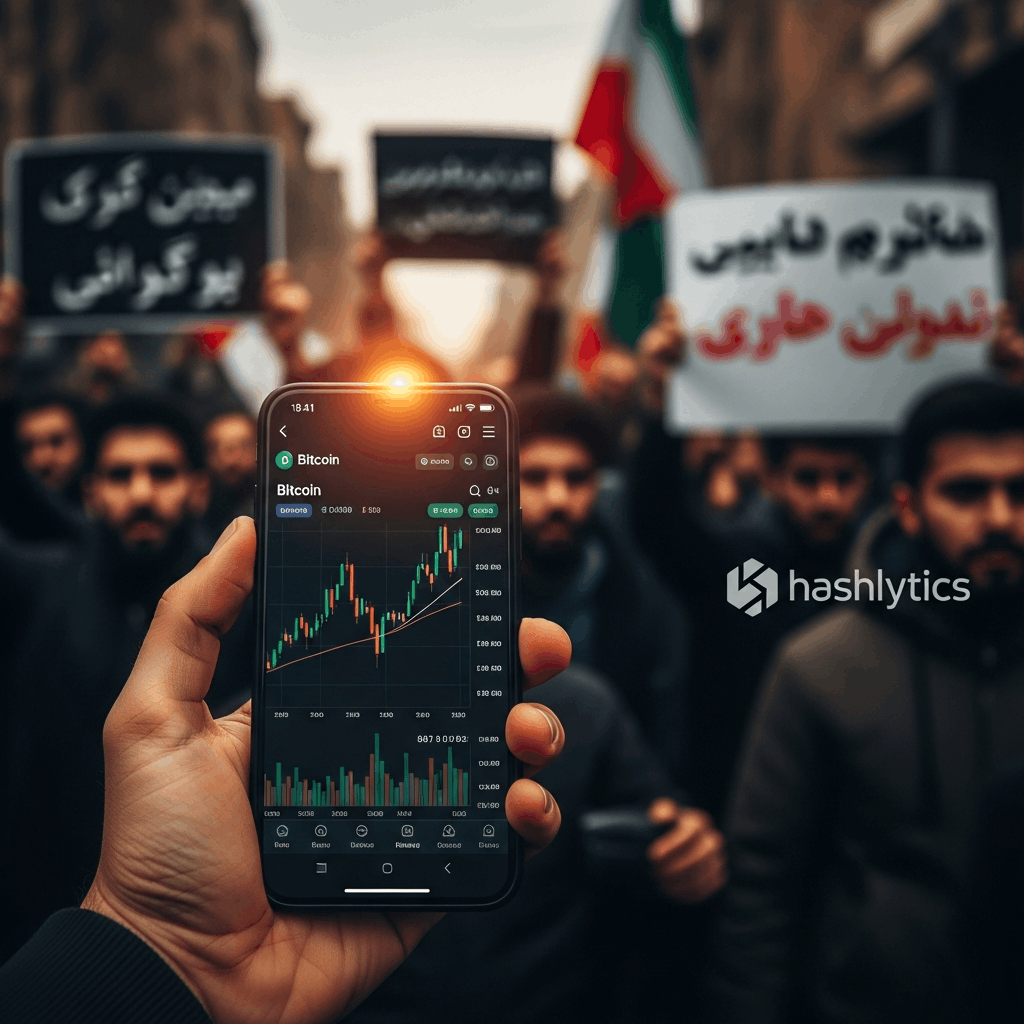
Bitcoin adoption has surged in Iran since late amid nationwide unrest, with blockchain analytics firm Chainalysis reporting over $7.78 billion in crypto activity for . This increase coincides with the devaluation of the Iranian rial and broader economic hardships, while the Iranian regime, particularly the Islamic Revolutionary Guard Corps (IRGC), has also utilized digital assets to circumvent international sanctions and launder funds.
Iranian citizens have increasingly turned to cryptocurrencies, specifically Bitcoin, for wealth preservation and as a means of protest against the traditional financial system, according to a recent report by Chainalysis released around . During protests that began on , there was a notable surge in Bitcoin withdrawals from Iranian exchanges to personal wallets, particularly preceding a nationwide internet blackout.The economic crisis in Iran, characterized by the rial losing approximately 90% of its value since and inflation reaching 42.2% in , has driven citizens to seek alternative financial instruments. Ohris M. Greyoon, a Blockchain & Crypto Expert at Intellectia.AI, stated that Historically, currency crises have often led to increased demand for alternative assets, and analysts suggest that if economic conditions worsen, Iran may see a sustained trend in cryptocurrency usage.
Simultaneously, the Iranian regime has engaged in crypto activities for illicit financing. Chainalysis found that addresses linked to the IRGC accounted for over 50% of the total value received in Iran’s on-chain economy during Q4 , with these addresses receiving over $3 billion in . A previous Elliptic report from estimated that approximately 4.5% of global Bitcoin mining took place in Iran, generating up to $1 billion in annual revenue at its peak, which was used to bypass sanctions. Furthermore, on , the U.S. Department of the Treasury’s Office of Foreign Assets Control (OFAC) sanctioned individuals for facilitating Iranian oil smuggling using cryptocurrencies, including over $100 million in crypto purchases from oil sales.
Amid government-imposed internet blackouts, Iranians have turned to mesh-networking based applications like Bitchat and a forked version called Noghteha to maintain communication. However, Noghteha has faced controversy due to its closed-source nature and requests for donations. Bitcoin Magazine reported that Ziya Sadr, a Bitcoin researcher, warned about the regime’s tactics: The regime sets up phishing attacks, creates fake download links, and uses influencers on social media to misguide people into installing malicious versions of the same app.
The primary drivers for increased Bitcoin adoption among Iranian citizens are the severe economic downturn, the collapse of the Iranian rial, and high inflation rates, compelling them to seek stable alternatives for wealth preservation. For the Iranian regime, the use of cryptocurrencies, particularly by entities like the IRGC, is a method to circumvent international sanctions and facilitate illicit financial operations, as detailed by both Chainalysis and Elliptic reports.
Specific details regarding potential user refunds or compensation for any losses incurred through crypto-related activities in Iran are not publicly available. The exact number of users of the Noghteha application also remains unconfirmed. The long-term efficacy of the Iranian government’s crackdowns on cryptocurrency use and mesh networks is yet to be determined.
Analysts anticipate that Iranian citizens will likely continue to rely on cryptocurrencies as a financial alternative if the country’s economic and political instability persists. The Iranian regime is expected to continue leveraging digital assets for sanctions evasion, prompting ongoing monitoring by international bodies. The debate surrounding the security and trustworthiness of closed-source communication applications like Noghteha in adversarial environments will likely continue.
Readers in regions facing similar economic or political instability should exercise extreme caution when utilizing closed-source applications, especially those that request donations, and verify their security from independent sources. It is crucial to stay informed about current economic and political developments that could impact local financial systems. Understanding the inherent risks and regulatory landscapes associated with cryptocurrency in volatile regions is also advisable.
Follow us on Bluesky , LinkedIn , and X to Get Instant Updates