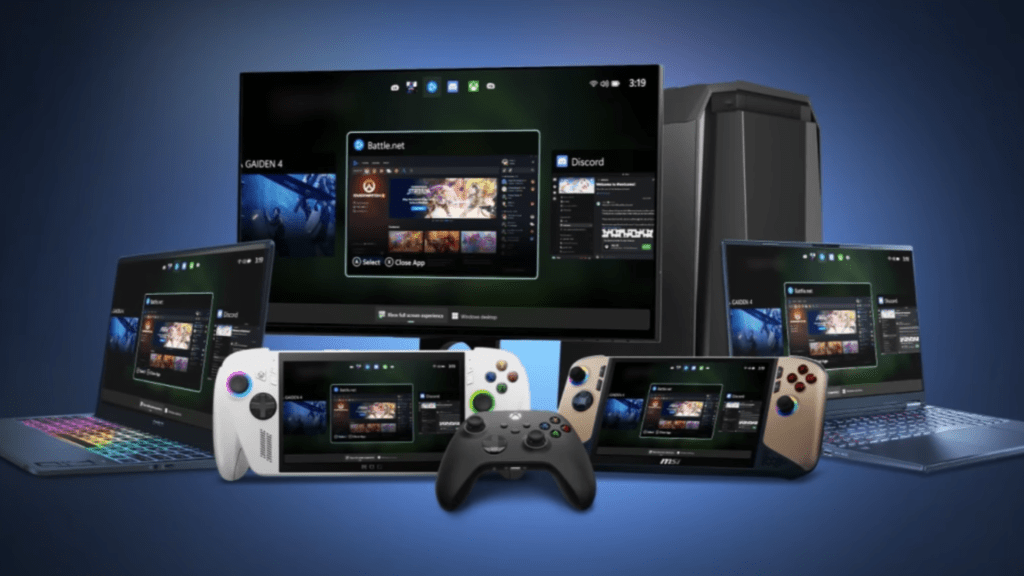
Microsoft is repositioning its Copilot+ PC brand to target gamers as SteamOS gains market share in the handheld gaming segment. According to documents obtained by Windows Latest and analysis from PCWorld, the company plans to shift its 2026 messaging from AI productivity features to gaming performance, leveraging Neural Processing Units (NPUs) for system-level optimizations that could challenge Valve’s Linux-based platform.
Microsoft executives told media outlets the company will downplay Copilot AI
in favor of tangible performance improvements for specific user cohorts, with gamers identified as a primary target. A November 2025 document titled “How to optimize your gaming PC setup” describes Copilot+ PCs as the evolution of PC gaming, stating that a great gaming experience is built piece by piece—powerful core hardware, optimized software, accessories that give you an edge, and connectivity that keeps you in the action.
The strategy represents a significant pivot from the brand’s June 2024 launch, which emphasized AI-powered productivity features like Recall, Live Captions with translation, and Studio Effects for video calls. Initial Copilot+ devices based on Qualcomm’s Snapdragon X Elite processors prioritized battery life and lightweight workloads over gaming performance, creating a positioning misalignment that Microsoft now aims to correct.
Microsoft projects Copilot+ PCs will constitute approximately 50% of all new PC sales within twelve months, at which point the company indicated the branding may relax
as NPUs become standard components. This timeline suggests Microsoft views the gaming pivot as a bridge strategy while NPU integration becomes ubiquitous across the PC market.
Technical Implementation
The gaming optimization approach relies on upcoming hardware, particularly Intel’s Panther Lake Core Ultra 300-series processors scheduled for 2026. The G-series variants target handheld gaming devices with improved integrated graphics performance. Microsoft’s strategy centers on using NPUs to enable automatic “Game Mode” activation that allocates system resources for fullscreen gaming experiences without background interference.
The company plans to emphasize existing DirectX features including DirectStorage for reduced load times through GPU-based decompression and AutoHDR for enhanced visual fidelity on compatible displays. Microsoft introduced a “Full Screen Experience” mode in late 2025 that mirrors Xbox’s interface design, initially limited to ASUS ROG Ally devices but expanding to broader Windows 11 deployments through the KB5074109 update in January 2026.
However, real-world gaming performance data for Copilot+ PCs remains limited. Microsoft’s marketing materials recommend 16GB RAM for standard gaming and 32GB for “serious gamers,” alongside entry-level GPU specifications like NVIDIA GTX 1660 Super or AMD Radeon RX 6600. These recommendations align with mid-range gaming systems rather than demonstrating Copilot+ hardware advantages.
Market Context
The strategy responds to SteamOS’s growing adoption, which reached 3.58% of Steam users in December 2025 according to Valve’s Hardware Survey, up 0.38% from November while Windows usage declined 0.56% to 94.23%. The Steam Deck’s success since its 2021 announcement and the upcoming Steam Machine launch in early 2026 have established SteamOS as a viable gaming platform alternative.
SteamOS offers a console-like experience optimized specifically for gaming, eliminating Windows’ background processes, telemetry, and update interruptions that frustrate gamers. Valve’s Proton compatibility layer enables most Windows games to run on Linux without native ports, though kernel-level anti-cheat systems in titles like Battlefield and Call of Duty remain incompatible.
Microsoft’s positioning of Copilot+ PCs as gaming-optimized systems also competes with custom-built gaming rigs, which the company characterizes as a “part-matching headache” that pre-configured Copilot+ systems eliminate. This messaging targets less technical users but risks alienating enthusiast builders who view hardware selection and assembly as integral to PC gaming culture.
Implementation Challenges
The gaming pivot faces execution challenges. Gaming Copilot, Microsoft’s AI assistant for in-game help launched in beta during 2025, encountered criticism for minor frame rate impacts and unclear value proposition. TechRadar testing found the feature provided generic advice that experienced gamers considered unnecessary while adding system overhead.
Microsoft’s claim that Copilot+ PCs offer thermal designs tuned for gaming
lacks substantiation through independent benchmarks comparing pre-configured systems against custom builds at equivalent price points. The company’s marketing emphasizes AI integration and NPU capabilities without demonstrating how these components translate to measurable gaming performance advantages over traditional CPU/GPU configurations.
The hardware requirement for meaningful differentiation also creates timing risk. Current Copilot+ devices using Snapdragon X Elite or AMD Ryzen AI processors offer limited gaming capability compared to discrete GPU systems. The strategy’s success depends on 2026 hardware from Intel and AMD delivering promised integrated graphics improvements alongside NPU-enabled optimizations that have yet to be demonstrated publicly.
Strategic Implications
Microsoft’s gaming focus for Copilot+ PCs reflects broader concerns about Windows’ position in the evolving PC market. The company’s late 2025 blog post detailing gaming improvements and the 2026 roadmap signals recognition that platform advantages matter more than AI features for retaining gaming audiences.
The approach creates a two-tier Windows experience where Copilot+-validated devices receive gaming optimizations unavailable on standard PCs. This hardware gating complicates enterprise lifecycle management and consumer expectations for feature parity across Windows installations.
For the handheld gaming market specifically, Microsoft must convince users that Windows’ flexibility and game library access outweigh SteamOS’s streamlined gaming experience and lower price points. Valve’s upcoming official desktop SteamOS release could further pressure Microsoft by offering a free, gaming-optimized alternative for both portable and traditional PC form factors.
Success requires Microsoft to deliver on promised performance optimizations with 2026 hardware while convincing gamers that NPU-enabled features provide tangible benefits beyond marketing claims. The company’s history of ambitious gaming initiatives that failed to gain traction—including Games for Windows Live and the original Windows 8 gaming features—suggests execution challenges ahead.
Follow us on Bluesky , LinkedIn , and X to Get Instant Updates