- Fundraising Target: Between $45 billion and $50 billion in gross proceeds during the , according to company disclosures.
- Stated Purpose: To fund data center expansion and meet “contracted demand” from major AI players.
- Key Cloud Customers: Nvidia, Meta, OpenAI, AMD, TikTok, and xAI are cited as driving this demand.
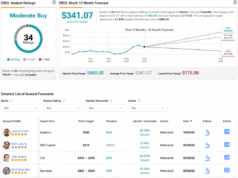
- Market Reaction: Oracle shares (ORCL) jumped 5% in premarket trading on the news but remain down approximately 50% from their September peak.
- Market Context: The move follows a record year for data center investment, with data center deals reaching a reported $61 billion in 2025.
- Precedent: In September, Oracle raised $18 billion via a bond sale shortly after announcing a landmark cloud computing agreement with OpenAI.
Oracle’s plan to raise a staggering $50 billion is a clear signal that the AI arms race has moved decisively into the physical realm of infrastructure. The competitive bottleneck is no longer just about securing GPUs; it’s about securing the power, land, and capital to build and operate the massive data centers those chips require. By framing this expansion as a response to “contracted demand,” Oracle is arguing that this isn’t speculative building. Instead, it’s a calculated move to lock in the world’s largest AI companies as long-term customers, effectively making Oracle’s balance sheet a critical component of their scaling roadmaps.
This represents a fundamental acceleration of Oracle’s pivot from a legacy enterprise software company to a hyperscale cloud provider. The company is leveraging its deep experience in enterprise workloads to pitch its Oracle Cloud Infrastructure (OCI) as a robust and cost-effective alternative to rivals like Amazon Web Services and Google Cloud, particularly for the predictable, high-performance computing needs of AI model training.
Despite the bullish long-term narrative, the market’s immediate reaction is fraught with concern, as evidenced by the stock’s 50% decline from its recent peak. Investors are clearly weighing the enormous execution risk and balance sheet strain against the potential payoff. Raising up to $50 billion through a mix of debt and equity could lead to shareholder dilution and significantly higher interest expenses, pressuring margins before the new data centers are fully operational and generating revenue. The 11% stock drop in December after a slight revenue miss highlights this sensitivity.
This investor unease is not unique to Oracle. Microsoft’s shares also saw a 10% dip after its Azure growth came in just shy of expectations, demonstrating that even for the most dominant players, the market tolerance for any perceived slowdown in AI monetization is low. The core risk for Oracle is that if AI demand softens, or if its key customers diversify their infrastructure partners to mitigate single-vendor risk, the company could be left holding immensely expensive, underutilized assets financed with significant leverage.
The key forward-looking indicator will be Oracle’s ability to demonstrate tangible revenue growth from its cloud infrastructure segment in upcoming quarterly reports. Analysts and investors will be scrutinizing OCI’s growth rate and, more importantly, its profit margins to see if the capital-intensive strategy is translating into financial performance. Further announcements of large, multi-year contracts beyond the initial OpenAI deal would help validate the “contracted demand” thesis. Finally, the specific mix of debt versus equity Oracle uses for its fundraising will be critical; a heavier reliance on debt could attract scrutiny from credit rating agencies and amplify financial risk.
- Oracle is undertaking one of the most aggressive capital expenditure plans in its history to become a foundational infrastructure layer for the AI economy.
- The strategy is based on securing long-term, high-volume contracts from major AI developers before building capacity, theoretically de-risking the investment.
- Investors remain divided, rewarding the long-term vision with initial stock pops but punishing the company for any signs of near-term weakness or balance sheet stress.
- The AI infrastructure battle is now a capital-intensive war of attrition, requiring tens of billions in upfront investment for power, real estate, and hardware.
- Oracle’s success hinges on its ability to convert this massive buildout into profitable revenue streams quickly enough to satisfy a skeptical market.
Follow us on Bluesky , LinkedIn , and X to Get Instant Updates