The Earnings That Moved Markets
| Company / Asset | What Happened | Market Reaction |
|---|---|---|
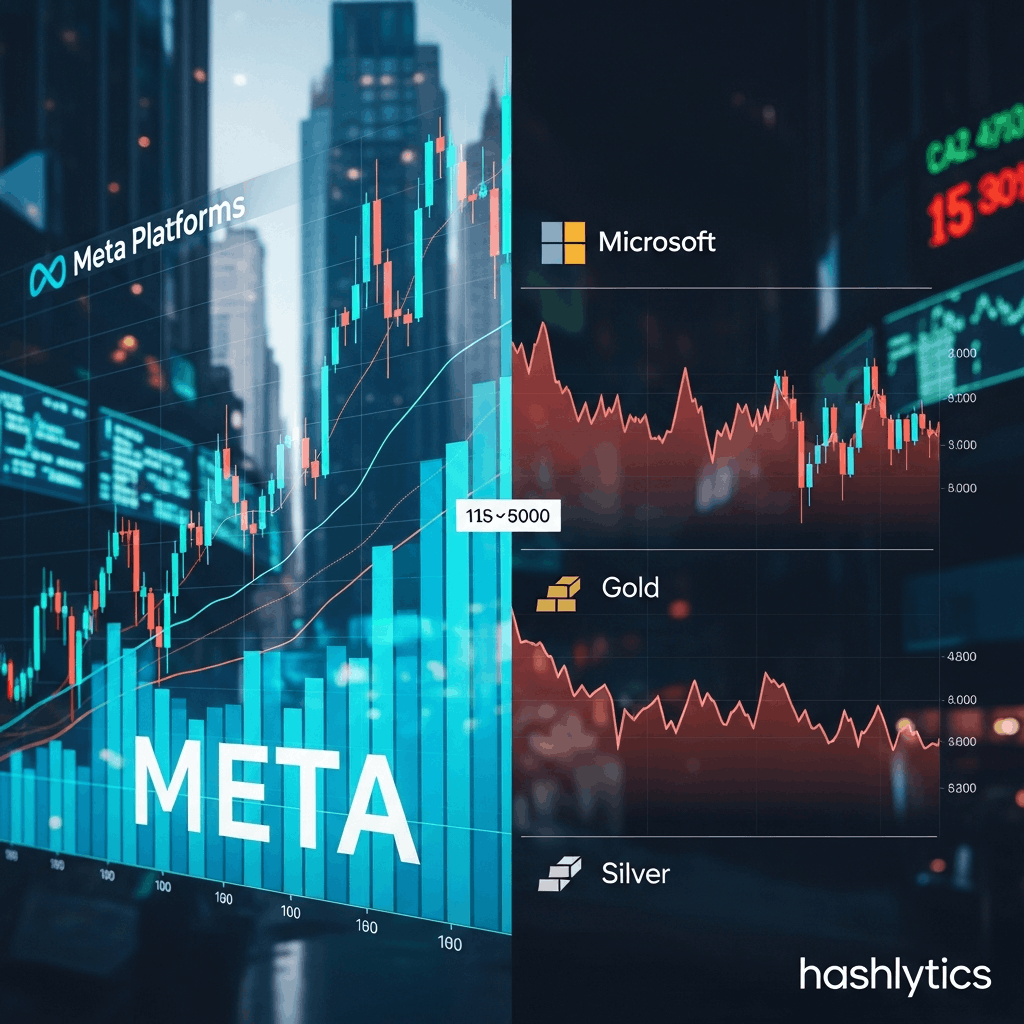
| Meta (META) | AI-driven ad improvements delivered measurable revenue gains | Stock rose on strong earnings |
| Microsoft (MSFT) | Azure growth at 39%, below consensus; CapEx surged 66% for AI infrastructure | Stock fell on missed cloud estimates |
| ServiceNow | Opacity on AI monetization timeline | Fell 11.6% |
| Gold | Forced selling from hedge funds covering tech losses | 10% correction from recent high |
| Silver | Same selling pressure, amplified by lower liquidity | 29% correction |
Meta’s Playbook: AI That Pays Now
Meta’s earnings call was defined by specificity. AI model improvements drove a 3.5% lift in ad clicks on Facebook and a 24% increase in incremental conversions from its AI business assistant. CFO Susan Li pointed to a new AI product that reached a multi-billion dollar annual run rate just seven months after launch.
This is the model investors wanted to see: AI deployed directly into core, revenue-generating products with immediate, quantifiable returns. Meta didn’t ask investors to trust a long-term vision. It showed the numbers.
Microsoft’s Problem: Spending Without a Clear Payoff
Microsoft‘s narrative landed differently. CapEx for AI infrastructure surged 66%, a massive bet on future demand. But Azure growth came in at 39%, below what the market expected. CFO Amy Hood acknowledged that Azure’s growth could have been higher had the company not prioritized GPUs for internal projects like Copilot over immediate customer allocation.
That explanation, however reasonable from an engineering perspective, read as a red flag to investors. Heavy infrastructure spending without a clear, near-term revenue link is exactly the kind of narrative that has fallen out of favor. ServiceNow’s 11.6% drop signaled deep investor skepticism toward AI promises not backed by immediate financial results.
The Meta vs. Microsoft Divergence
The contrast between these two earnings calls reveals a fundamental shift in how the market is pricing AI investments. Meta’s strategy integrates AI into products that already generate revenue, creating a direct feedback loop between model improvement and bottom-line performance. Microsoft’s approach builds foundational infrastructure first, betting that demand will follow.
Both strategies have merit. But in late January 2026, the market made its preference clear: Meta’s demonstrated results carried more weight than Microsoft’s presumptive spending. The question for Microsoft is whether patient capital will return once Copilot and other internal projects begin generating revenue at scale.
Why Gold and Silver Fell Simultaneously
The precious metals correction wasn’t isolated. It was directly connected to the tech sell-off through two distinct mechanisms.
Forced selling: Hedge funds holding winning positions in gold and silver were reportedly forced to liquidate to cover margin calls triggered by losses in tech stocks. This created immediate downward pressure regardless of gold and silver’s underlying fundamentals.
The Fed nomination shift: Donald Trump‘s nomination of Kevin Warsh as a potential Federal Reserve Chair disrupted the metals rally at its root. Warsh is known for his hawkish stance on inflation, which directly challenged the dollar debasement
narrative that had fueled gold’s climb to recent highs. If the Fed tightens rather than loosens, the case for holding gold as an inflation hedge weakens.
Gold pulled back 10% from its recent high. Silver, with lower liquidity and higher volatility, corrected 29%. The scale of silver’s decline relative to gold underscores how leveraged speculative positions had become in the metals market.
The Broader Takeaway
Late January marked a clear inflection point. The market has moved from rewarding AI potential to demanding AI proof. Companies that can demonstrate a direct link between AI investment and revenue will attract capital. Those that can’t will face continued pressure, regardless of how strategically sound their long-term plans may be.
The precious metals correction reinforces the same underlying principle: speculative narratives, whether around AI infrastructure or dollar debasement, are increasingly vulnerable to policy shifts and forced liquidation. Fundamentals still matter, but in January 2026, proof mattered more.
Follow us on Bluesky , LinkedIn , and X to Get Instant Updates