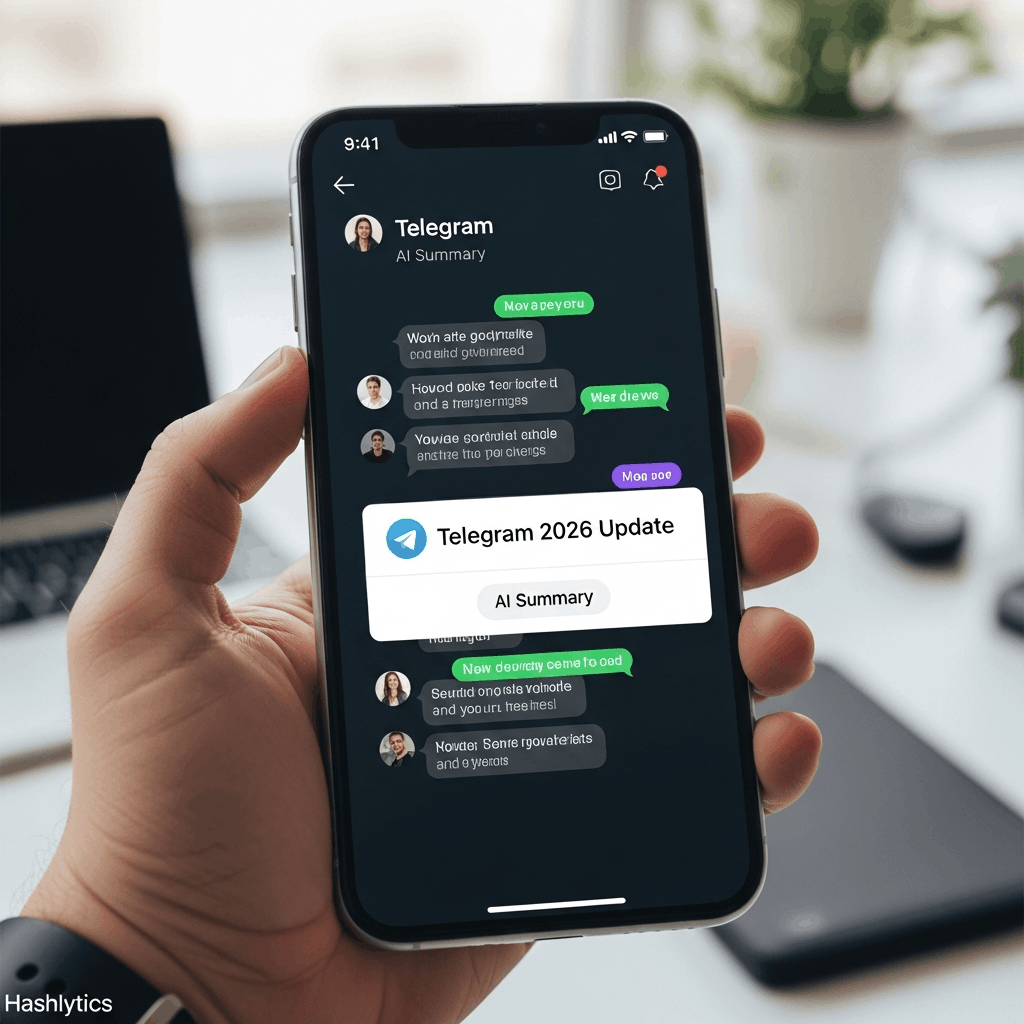
Telegram has rolled out its first major update of , introducing AI-powered summaries for channels and Instant View pages alongside a comprehensive visual redesign for iOS. The update signals Telegram’s intent to deepen productivity features while reinforcing its long-standing emphasis on privacy and rapid iteration.
The most notable addition is built-in AI summaries, designed to condense long channel posts and Instant View articles into short, readable overviews. According to Telegram, the feature relies on open-source AI models and routes requests through its decentralized Cocoon network, aligning with the company’s privacy-centric approach to decentralized AI processing.
Alongside the AI features, Telegram introduced a full “liquid glass” interface redesign for iOS and iPadOS 26. The updated design emphasizes transparency, refraction effects, and motion, bringing Telegram’s visual language closer to Apple’s latest system aesthetics. Users can also reduce or disable visual effects to limit battery and performance impact.
Key highlights:
- AI-powered summaries for long channel posts and Instant View pages
- Decentralized Cocoon network for privacy-focused AI processing
- Full “liquid glass” interface redesign for iOS/iPadOS 26
- Adjustable visual effects for power efficiency
From a platform perspective, the update reflects Telegram’s continued pace of development. The company reports over 800 million monthly active users globally and shipped more than 75 new features across 13 updates in , underscoring an aggressive release cadence uncommon among large messaging platforms.
Telegram’s move places it more directly in competition with platforms such as WhatsApp, which introduced its own AI-powered message summaries in using a “Private Processing” model built around cloud-based Trusted Execution Environments (TEEs). While both approaches emphasize privacy, Telegram’s decentralized Cocoon network, built on the TON blockchain, represents a structurally different method of offloading AI computation without relying on centralized cloud infrastructure.
At the same time, the update highlights a divergence across messaging platforms. Signal, despite its reputation for strong encryption, continues to avoid native AI summary features, prioritizing minimalism and core secure communication. Telegram and WhatsApp, by contrast, are positioning AI as a built-in productivity layer rather than an optional add-on.
The iOS-only nature of the visual redesign may generate mixed reactions, particularly among Android users who receive the functional AI updates without the aesthetic refresh. Performance implications on older iOS devices also remain an open question, especially as Telegram leans further into animation-heavy design.
Overall, Telegram’s 2026 update reflects a broader industry shift toward embedded AI tools that reduce information overload while attempting to preserve user trust around privacy. Whether decentralized AI processing becomes a meaningful competitive advantage will depend on real-world summary quality, performance, and user adoption over the coming months.
The update also reinforces Telegram’s positioning as a feature-dense messaging platform aimed at power users, content consumers, and privacy-conscious audiences seeking alternatives to more centralized ecosystems, particularly those drawn to a modern, OS-aligned interface on iOS.
Follow us on Bluesky , LinkedIn , and X to Get Instant Updates