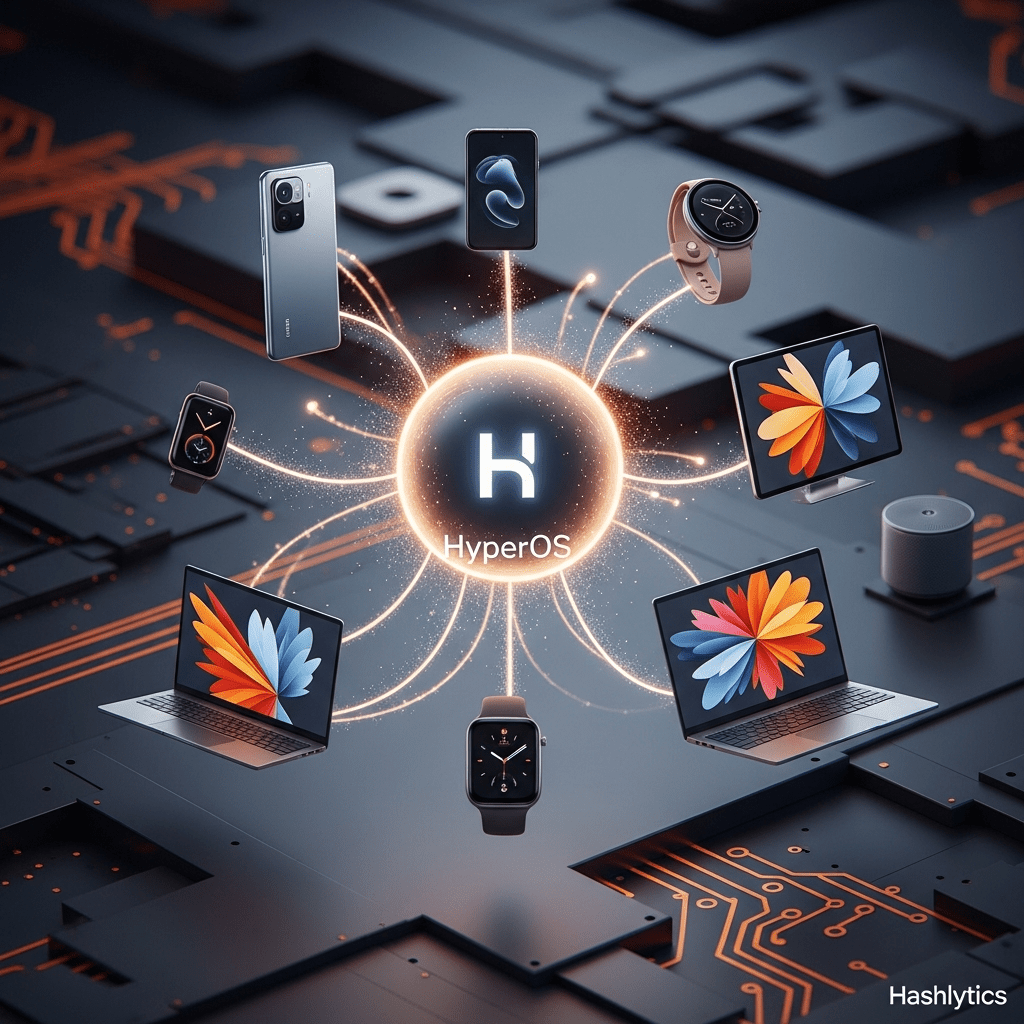
This isn’t just an Android skin refresh; it’s Xiaomi building its own walled garden, but one constructed for millions of devices across wildly disparate product categories, including future electric vehicles. The mandate is clear: challenge Apple’s seamless interoperability, but do it at a scale only Xiaomi can manage.
The first thing users notice about HyperOS is its profound lightness. MIUI, in its later iterations, felt bloated, often struggling to maintain speed and battery efficiency, especially on mid-range hardware. HyperOS strips back that complexity, delivering an interface where animations are reportedly seamless and transitions feel instantaneous.
The design palette itself is contemporary, drawing on the clean, lucid aesthetic popularized by Google’s Pixel UI, while retaining a distinct Xiaomi character. This newfound fluidity is critical, serving as the foundation for the OS’s broader ambitions.
Performance optimization is aggressive. HyperOS is highly proactive in managing background processes, which is translating directly into superior battery life across the device spectrum. For those looking for the definitive feature list, Xiaomi’s HyperOS documentation outlines a platform built from the ground up for low-latency communication.
While slick design is appreciated, the real story of HyperOS is its relentless focus on cross-device collaboration. Xiaomi is taking the concept of an integrated digital lifestyle seriously, aiming to make device switching feel like moving between windows on a single computer.
The cross-device capabilities are genuinely superb and represent the most credible threat to the ecosystem dominance long held by Cupertino.
Seamless Collaboration Features
- Universal Clipboard: Clipboard sharing works instantly, behaving as if the tablet and phone were the same device.
- Drag-and-Drop: Users can effortlessly drag files and images between monitors, phones, and tablets.
- Auto-Connect: Tablets and wearables automatically connect and sync contextually without manual pairing prompts.
- Real-Time Device Control: A unified control center allows granular management of all connected smart home appliances and IoT devices.
This push for internal optimization comes at a time of fierce competition in the underlying silicon, echoing the broader battle seen in the laptop space.