
It will also be the first time the ministry handles classified information in cloud environments, which means new security standards have to be built alongside the guidelines. The Vision feeds directly into the coming revision of Japan’s three national security documents, and it arrives while markets are weighing a smaller defense budget.
Unmanned Systems, Command and Control, and the Classified Cloud
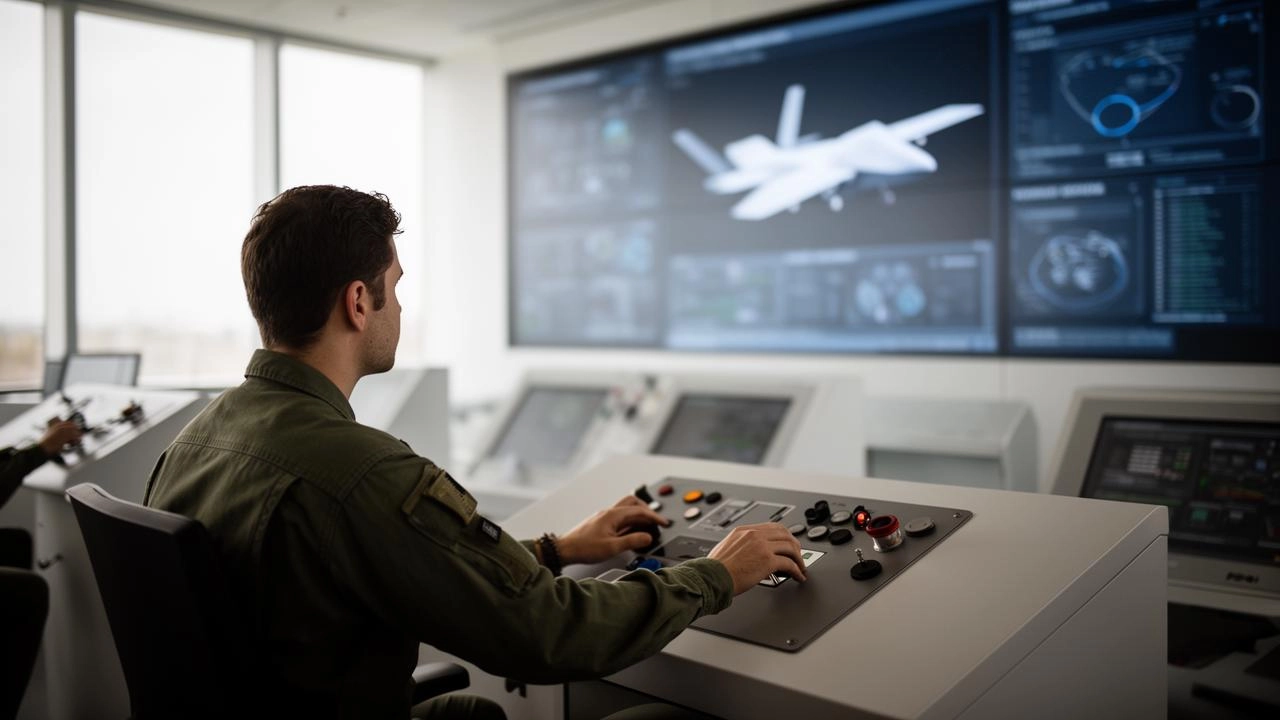
The guidelines are aimed at getting technology and data into forces that can actually use them. The ministry is focusing on AI for unmanned assets and for command and control systems, and wants it working in field operations and administrative tasks rather than staying in research. The tension it has to manage is speed against safety, and the ministry describes both as core principles.
Some of that work is already underway. In February 2026 the ministry trial-introduced a generative AI system in select departments to draft materials for parliamentary responses, drawing on a confidential database of past documents to cut staff workload. Separately, Ground Self-Defense Force bases are testing remote security systems from private companies that combine cameras, autonomous vehicles, and drones to detect suspicious individuals automatically and streamline patrols.
Why Investors Are Looking Past the Traditional Contractors
Reports say defense spending for the five years from fiscal 2027 is being adjusted to a range of ¥50 trillion to ¥60 trillion, down from early estimates of ¥70 trillion to ¥80 trillion. Major contractors such as Mitsubishi Heavy Industries (7011.T) have fallen on the speculation, while buying interest has moved toward AI-focused companies. The ones named in the reporting:
- NEC (6701.T): signed a strategic partnership with Mitsubishi Heavy Industries in September covering data and AI sovereignty, command and control, and unmanned assets.
- Fujitsu (6702.T): plans co-creation support services linking the ministry with startups from March 2027.
- Soliton Systems (3040.T): set up its Cyber Defense Research Institute in March 2024 to study active cyber defense.
- Sakura Internet (3778.T): won a ¥750 million service contract with the ATLA in 2024 and was selected for the Digital Agency’s Government Cloud as its first Japanese-made provider.
- FFRI Security (3692.T): sells cybersecurity services to government agencies, with the Ministry of Defense among its customers.
- ABEJA (5574.T): holds an ATLA contract on autonomous driving for unmanned ground vehicles and does verification support work commissioned by Mitsubishi Heavy Industries.
Ukraine and a Shrinking Recruitment Pool
Two pressures sit behind the push. The war in Ukraine has shown what AI-equipped autonomous attack systems can do, and has sped up situational judgment and decision-making. The United States is building around all-domain command and control, and China is pursuing what it calls military intelligentization, both of which depend on data integration and faster operational tempo.
At home, falling birthrates and an aging population are shrinking the pool of people eligible to serve in the Self-Defense Forces, so operations built around personnel are becoming harder to sustain. New technology for labor-saving and unmanned operations is therefore treated as a security necessity. ATLA published guidelines for responsible AI use in equipment research and development in June 2025, and continued work on Japanese-made cloud infrastructure for classified information will decide how far the private sector can take part.
How much the guidelines change procurement will only be clear once the defense budget is finalized after the year-end revision of the three security documents.
Hashlytics Take
The share price moves are running ahead of the paperwork. The Vision is unpublished, the budget range is still reported rather than confirmed, and three principles this broad could fit almost any spending outcome. The harder signal is the classified cloud requirement. Once the ministry starts holding classified material in the cloud, the standards it sets and the Japanese-made providers that can meet them will decide who gets paid, which is why Sakura Internet’s Government Cloud selection may matter more than the louder AI names. Investors moving from Mitsubishi Heavy Industries toward NEC and Fujitsu are betting on software over hardware before the budget has said so.
Follow Hashlytics on Bluesky, Facebook, LinkedIn , Telegram and X to Get Instant Updates