
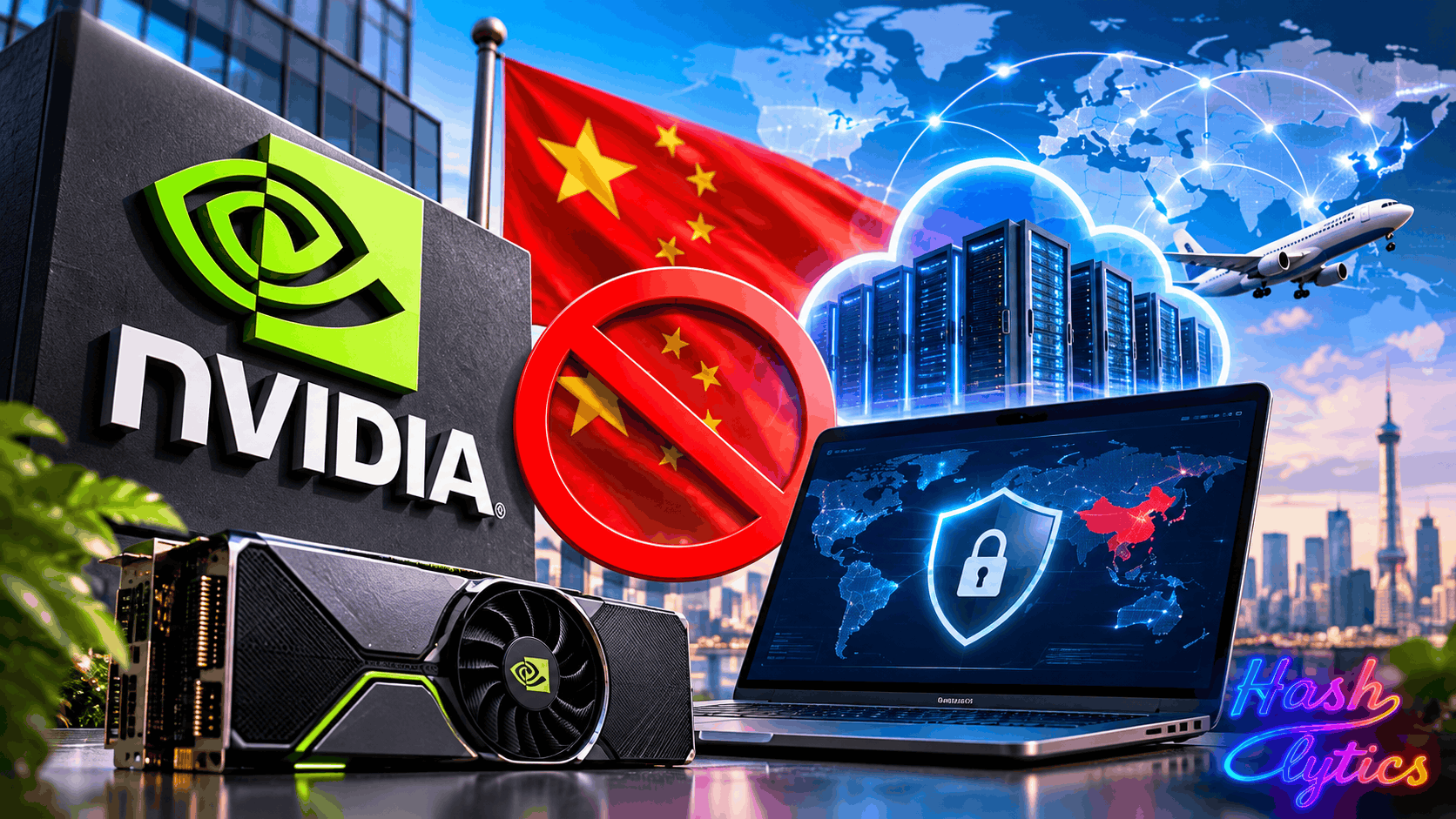
Under the new requirement, Nvidia’s cloud computing partners must earn at least 51% of their service sales from non-Chinese companies. Sales representatives reportedly passed the instruction along verbally. Until now, Nvidia had placed no geographic conditions on its cloud partners.
The Workaround Nvidia Is Now Closing
Many Chinese AI firms rely on overseas cloud services to train large models. Renting computing resources outside China let them reach advanced chips without buying restricted hardware directly, which kept their developers working despite Washington’s export controls on high-performance chips, in place since 2022. US officials had grown uneasy about that loophole, and Nvidia’s policy now adds a commercial layer on top of the existing rules.
The effects would fall unevenly:
- Cloud providers with large Chinese customer bases may have to rebalance their client mix to stay under the 51% line
- Chinese AI developers could find advanced infrastructure harder to rent, and more expensive when they can
- Investors will be watching for formal confirmation and details on how the rule is enforced
Smuggling Cases Keep Piling Up
Enforcement remains a problem. US authorities are investigating attempts to get around the export controls, and reports of Nvidia chips being smuggled into China have surfaced. Earlier this year, employees of server maker Super Micro were charged over the alleged smuggling of Nvidia AI servers worth $2.5 billion, a case that shows how hard supply chains are to police.
Hashlytics Take
A verbal instruction is a telling way to introduce a rule like this. It leaves no paper trail, gives Nvidia room to deny or soften it, and puts the burden of interpretation on partners who now have to guess how the 51% line gets measured. It also shifts enforcement from governments to a private company’s sales team, which is a very different kind of regulator. Washington’s controls targeted chips, and rental was the gap. If this report holds up, Nvidia is the one plugging that gap, and it is doing so on its own terms, without a public rule anyone can challenge.
Follow Hashlytics on Bluesky, Facebook, LinkedIn , Telegram and X to Get Instant Updates