
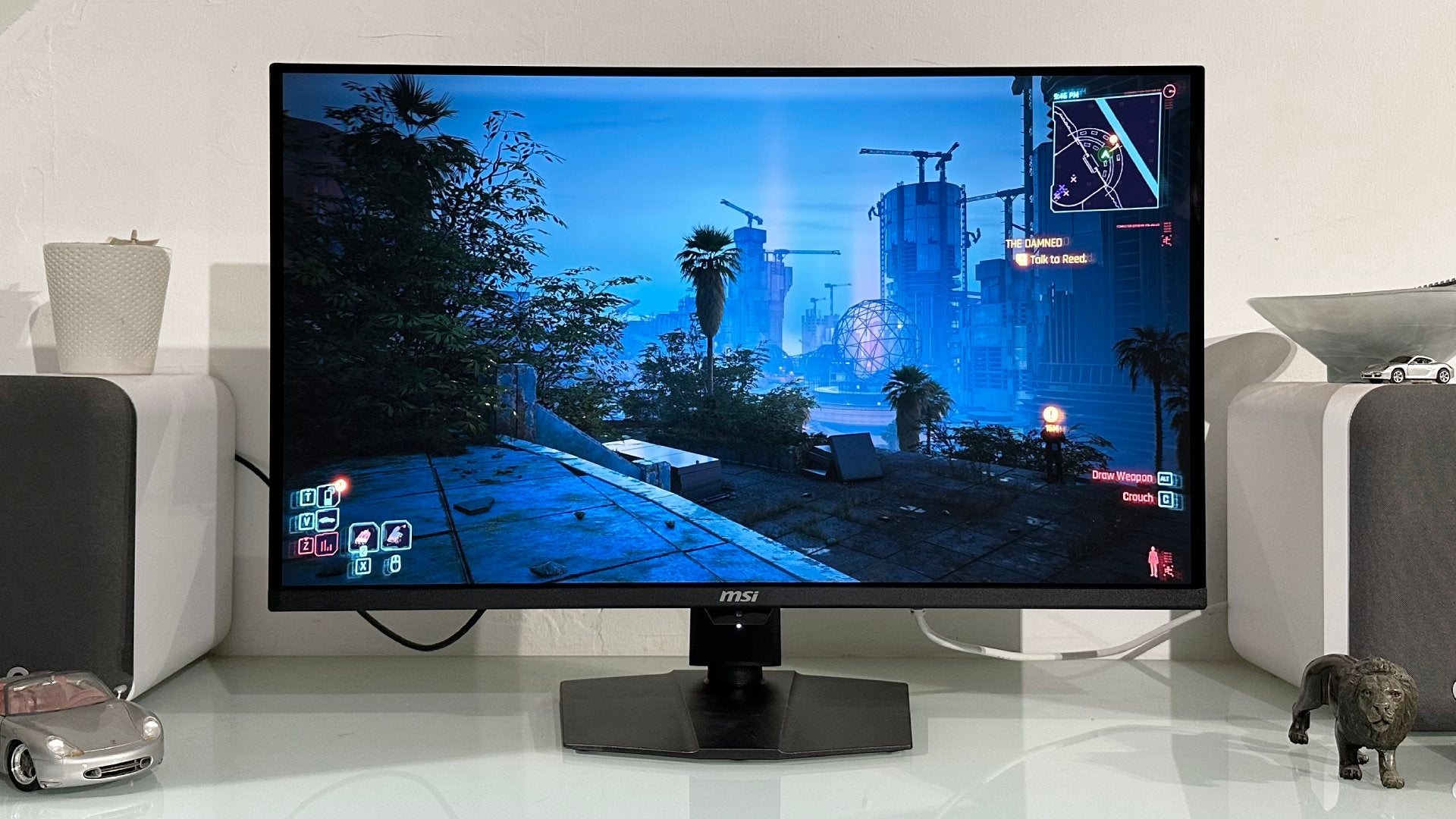
The core difference is how each panel makes light. Every subpixel in an OLED monitor is its own individually controlled light source, so the screen gets perfect contrast without leaning on local dimming zones. LCD panels are transmissive kludges
by comparison, forcing light through a bulky backlight and producing visible blooming and uneven brightness gradients. Liquid crystals also have to physically rotate to update the image, which leaves them much slower than the near-instant reaction of organic light-emitting diodes.
Two Suppliers, Two Different Bets
Every modern gaming OLED monitor comes out of one of two production lines, LG or Samsung. LG uses WOLED panels with an extra white subpixel to lift peak brightness. Samsung uses QD-OLED, which relies on quantum dots to push color volume and vibrancy.
Early generations of each carried clear trade-offs. Samsung models showed a purple tint under bright ambient light, while LG panels could look washed out because of the white subpixel. Sharpness favored LG at first, since its RGWB layout sat closer to the vertical RGB stripe that operating systems like Windows expect.
| Feature | LG WOLED | Samsung QD-OLED |
|---|---|---|
| Subpixel Structure | RGWB / RGB-Stripe | Triangular / RGB-Stripe |
| Brightness Strategy | White Subpixel / Layers | Quantum Dot Conversion |
| Ambient Light Behavior | Neutral Contrast | Purple Tinting Risk |
| Response Time | 0.03ms | 0.03ms |
| Panel Source | LG Display | Samsung Display |
Tandem Stacks and RGB Stripes Target the Old Weak Spots
The newest generation adds tandem OLED, which stacks multiple emissive layers to improve durability and raise full-screen brightness. LG offers Tandem WOLED with four layers, and Samsung answers with Penta Tandem QD-OLED, which has five. Full-screen white brightness moves toward 300 and 335 nits respectively, closing in on the targets these displays have been chasing.
Both companies now also make pure RGB-stripe variants in their latest lineups, aimed at sharper text and fewer of the fringing artifacts that plagued earlier panels. Buyers choosing today face six distinct 32-inch 4K panel types. They range from the Asus ROG Swift PG32UCDP, which uses LG hardware, to the MSI MAG 321UP, which runs early Samsung QD-OLED tech.
Burn-in is still a real concern. Independent testing helps, though: the Monitors Unboxed 30-month assessment of the MSI MPG 321URX found that modern mitigation features prevent catastrophic failure under normal use.
Hashlytics Take
The old OLED buying decision was a trade between LG’s cleaner text and Samsung’s richer color. Tandem stacks and RGB-stripe layouts are the industry’s attempt to end that trade, and with both suppliers now shipping them, the choice shrinks to matching a panel to your room’s lighting and your tolerance for risk. On that second point, a single 30-month test on one monitor is reassuring, not a guarantee. Treat burn-in mitigation as proven for normal use and still unproven for anyone running static desktop content all day.
Follow Hashlytics on Bluesky, Facebook, LinkedIn , Telegram and X to Get Instant Updates