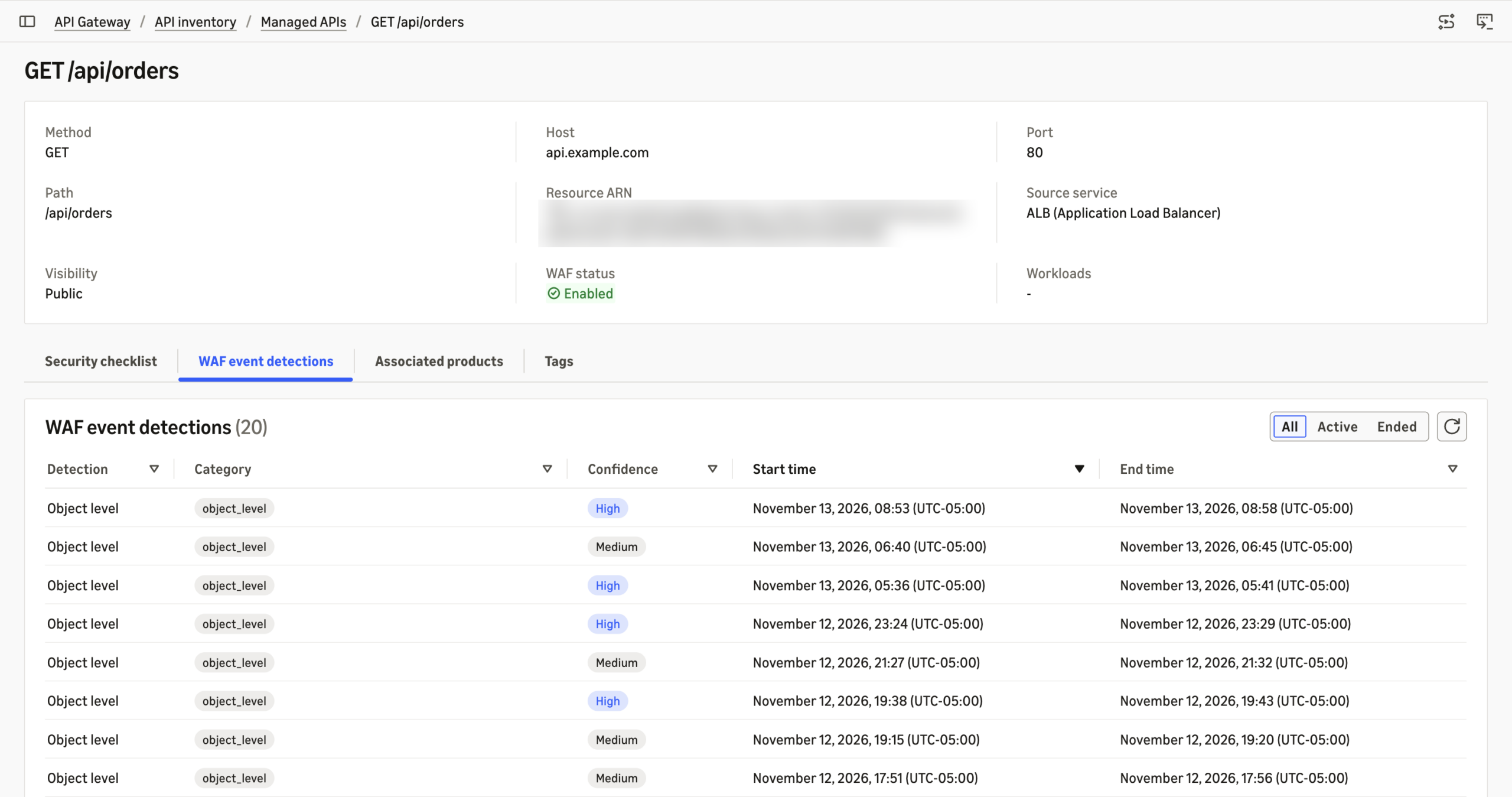
The release has three working parts. API Portal builds a single inventory of APIs from live traffic and configuration logs across AWS Organizations. Inside AWS WAF, new managed rule groups inspect individual requests for structural problems and watch traffic over time for behavioral anomalies. A third set of checks targets the AI endpoints directly.
A Third Kind of Caller Breaks the Old Assumptions
APIs used to serve two audiences: backend services and people using an app. AI agents are a third, and they behave like neither. They call endpoints directly at machine speed, but they act on open-ended human intent, so there is no browser session to inspect and no fixed call pattern to learn. Controls built for the first two audiences do not transfer cleanly.
| Caller | What normal looks like | What abuse looks like | What it means for protection |
|---|---|---|---|
| Service to service | Predictable, authenticated calls that repeat the same pattern | A stolen API key, or a partner that scrapes beyond its contract | Track rate and behavior for each API key and endpoint |
| Person to service, through an app | Sessions and UI-driven calls at a human pace | Account takeover and scripted checkouts | Browser-based signals, such as CAPTCHA and browser fingerprints, apply here |
| AI agent to service, for a person | Human intent with machine behavior, from an HTTP client or an automated browser | An agent with stolen credentials, or a bot that poses as an agent | Browser signals only go so far, so you need visibility into the API itself |
That visibility starts with knowing what exists. API Portal flags shadow APIs that bypass internal registries and zombie endpoints that still sit there with no traffic changes, and administrators can review both in one dashboard before switching on protection packs.
One Bad Request Versus a Bad Pattern
The WAF rules work in two layers because some attacks are visible in a single request and others are not. Single-request rules catch malformed or forged structures. A common example is a JSON Web Token that declares alg: none, which tells the server to skip signature verification. The token below decodes to a header of {"alg":"none","typ":"JWT"} and a payload claiming an admin role. According to the documentation for the API Security managed rule group, violations like this are blocked before the payload reaches the origin server.
GET /v1/orders/48213 HTTP/1.1
Host: orders.example.com
Authorization: Bearer eyJhbGciOiJub25lIiwidHlwIjoiSldUIn0.eyJzdWIiOiJhZG1pbiIsInJvbGUiOiJhZG1pbiJ9.
Behavioral detection handles what a single request cannot. Broken object level authorization is the clearest case: an attacker with a valid login requests accounts that belong to someone else, and every individual call looks legitimate.
GET /accounts/1337 HTTP/1.1Nothing in that request is wrong on its own, so the engine builds a baseline from normal traffic and looks for deviations. High confidence blocks fire only when a client’s behavior departs from that baseline in ways such as non-standard query sequences or persistent access denials.
AI endpoints get the same treatment. An MCP request that asks a tool server to read a sensitive system file is the kind of call these protections are meant to see.
POST /mcp HTTP/1.1
Host: tools.example.com
Content-Type: application/json
MCP-Protocol-Version: 2026-07-28
Mcp-Method: tools/list
Mcp-Name: read_file

{
  "jsonrpc": "2.0",
  "id": 1,
  "method": "tools/call",
  "params": {
    "name": "read_file",
    "arguments": { "path": "/etc/passwd" }
  }
}
Detections also leave labels on traffic, which lets teams stack their own rules on top. The example rule below blocks any IP that trips the API security reconnaissance label more than 50 times in five minutes.
{
  "Name": "RateLimitAPISecurityRecon",
  "Priority": 40,
  "Statement": {
    "RateBasedStatement": {
      "Limit": 50,
      "EvaluationWindowSec": 300,
      "AggregateKeyType": "IP",
      "ScopeDownStatement": {
        "LabelMatchStatement": {
          "Scope": "NAMESPACE",
          "Key": "awswaf:managed:aws:api-security:recon:"
        }
      }
    }
  },
  "Action": { "Block": {} },
  "VisibilityConfig": {
    "SampledRequestsEnabled": true,
    "CloudWatchMetricsEnabled": true,
    "MetricName": "RateLimitAPISecurityRecon"
  }
}
What Guardrails Check, and in Which Direction
For the AI endpoints themselves, checks differ by protocol and by direction. Prompt attacks are screened on requests, but on responses only for MCP and A2A. Content filtering applies on requests for LLM and A2A traffic and not on responses. Sensitive information is the reverse: it is checked on responses only. Teams should confirm the supported versions in the AWS WAF AI Security rule group documentation before turning anything on.
| Bedrock Guardrails check | What it looks for | On requests | On responses |
|---|---|---|---|
| Prompt attack | Jailbreaks, prompt injection, and attempts to extract the system prompt | Yes | MCP and A2A only |
| Content filter | Hate, insults, sexual content, violence, and misconduct | LLM and A2A only | No |
| Sensitive information | Personal data such as card numbers, US Social Security numbers, email addresses, and bank account numbers, plus credentials such as passwords and AWS access keys | No | Yes |
Mike Hasani, Senior Software Engineer at Principal Financial Group, said the tooling gives enterprise-wide visibility without forcing teams to change their deployment workflows.
Hashlytics Take
The detail that matters most is the gap in the caller table: browser signals stop working once an agent is the one calling. Anything that relied on CAPTCHA or fingerprinting to separate people from scripts now needs a second line of defense at the API layer, and the behavioral baselines are where that second line lives. The coverage matrix is the part to read closely. Sensitive data is checked only on the way out and content filtering only on the way in, so a team that assumes Guardrails screen everything in both directions will leave gaps. The inventory step is the quiet win, because you cannot baseline an endpoint you do not know exists.
Follow Hashlytics on Bluesky, Facebook, LinkedIn , Telegram and X to Get Instant Updates