+0.56%
+1.25%
-1.82%
-0.28%
-0.08%
+0.34%
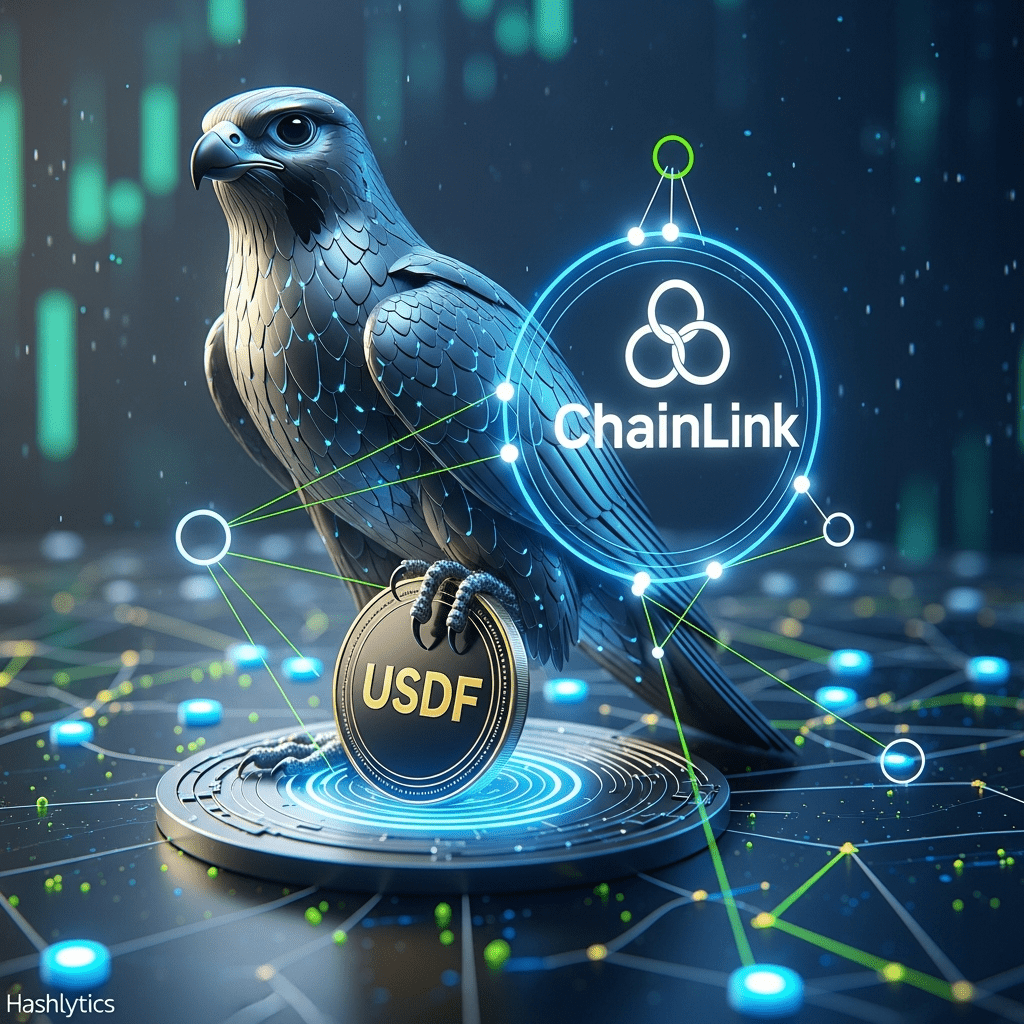
- Core Integration: The protocol is utilizing Chainlink Price Feeds for on-chain valuation of collateral assets and the Cross-Chain Interoperability Protocol (CCIP) to facilitate multi-chain deployment of USDF.
- Collateral Framework: Falcon’s model supports both crypto-native assets like BTC and ETH alongside tokenized real-world assets (RWAs), including U.S. Treasury bills, equities, and gold, according to company statements.
- Stated Ambition: The project has publicly claimed an intent for over “$2B+ USDf” to become cross-chain, a figure suggesting significant target scale, though specifics on timing and asset sources are not yet detailed.
The partnership is designed to systematically de-risk DeFi for institutional participants. By using Chainlink’s oracle network, Falcon Finance can provide immutable, real-time proof that its USDF stablecoin remains overcollateralized, a critical requirement for regulated entities. This addresses counterparty risk and enhances protocol transparency. The adoption of CCIP directly targets the issue of fragmented liquidity across blockchain ecosystems. It allows institutions to mint USDF against their assets on one chain and deploy that liquidity across various decentralized applications on others, maximizing capital efficiency without being confined to a single network.
The success of this model is heavily contingent on securing genuine institutional adoption, which faces significant regulatory headwinds surrounding stablecoins and tokenized securities. While the infrastructure may be sound, the market’s readiness remains a major variable. The protocol’s stability also depends on the liquidity of the underlying tokenized RWAs; thinly traded assets could pose a risk during periods of high market volatility. Furthermore, Falcon Finance enters a competitive landscape where established protocols like MakerDAO are also aggressively expanding their own RWA collateral strategies.
The primary indicator to monitor will be the total value locked (TVL) within the Falcon Finance protocol, specifically the breakdown between crypto and RWA collateral. The successful deployment of USDF on new blockchains via CCIP will be a key milestone in its roadmap. Analysts should also watch for official announcements of institutional partnerships, as this will validate their go-to-market strategy. The expansion of supported collateral to include more complex instruments, such as tokenized private credit, will signal the protocol’s maturation and its appeal to a broader set of financial institutions looking to unlock on-chain yield from balance sheet assets, a market projected by some analysts to reach trillions. A report from Boston Consulting Group highlights the potential scale of asset tokenization.
Follow us on Bluesky , LinkedIn , and X to Get Instant Updates