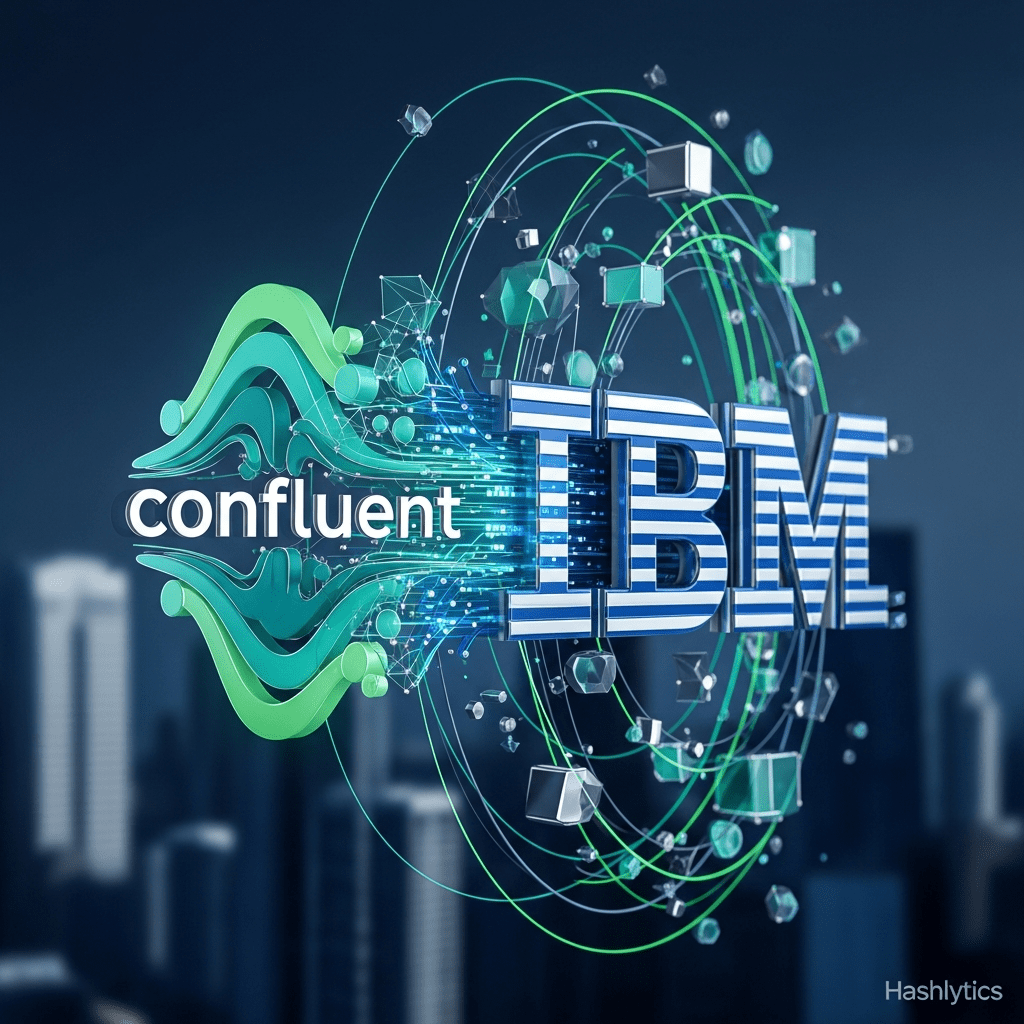
The future success of generative AI (Gen AI) hinges less on model size and more on the quality and immediacy of its input data. Addressing this critical data plumbing challenge is the primary motivation behind IBM’s reported $11 billion move to acquire Confluent, the market leader in real-time data streaming. This proposed transaction transcends a simple portfolio addition; it represents a fundamental, infrastructure-defining strategy designed to secure control over the essential data pipeline required for widespread enterprise adoption of agentic AI.
For IBM, which has dedicated the last decade to establishing itself as the authoritative provider for hybrid cloud solutions, this acquisition focuses squarely on controlling the operational engine room. If data is universally recognized as a valuable resource, then Confluent provides the necessary high-speed, low-latency infrastructure to transport it efficiently. This capability is vital, regardless of whether the data resides in traditional on-premise environments or is distributed across complex multi-cloud architectures.
The shift towards intelligent, autonomous systems demands data ingestion and processing speeds that traditional batch methods cannot match. Generative AI applications, particularly those focused on customer interaction, fraud detection, or dynamic supply chain management, require instantaneous insights. This necessity has elevated real-time data streaming from a niche technology to a core enterprise requirement.
This mandate is particularly acute for agentic AI, where autonomous systems must execute complex tasks based on dynamic environmental changes. The latency inherent in historical data storage severely limits the operational effectiveness of these advanced AI agents. Therefore, a seamless, continuous data flow is mandatory for enabling truly proactive and adaptive AI performance across the enterprise.
top 10 open source tech firms
The integration of Confluent’s streaming platform into IBM’s existing infrastructure, including Watsonx, will create a powerful end-to-end data fabric. This fabric ensures that foundational models are continuously fed with the freshest contextual information, dramatically improving accuracy and reducing hallucinations. This strategy directly addresses the primary bottleneck in enterprise AI adoption: the difficulty in operationalizing low-latency data streams at scale across disparate systems.
This combined offering positions IBM to provide a vertically integrated solution, encompassing the hardware, the cloud environment, the data streaming pipeline, and the AI models themselves. By controlling the entire stack, IBM can guarantee the performance, security, and compliance necessary for highly regulated industries. This consolidation reinforces IBM’s market strategy of providing trustworthy and mission-critical enterprise infrastructure.